

You did everything right. Aired down to 15 psi at the trailhead, floated over the sand, crawled the rocks with a fat contact patch, and had the run of your life. Then you rolled back to the pavement, remembered you’re sitting on four half-flat tires, and realized the only compressor you brought was the sad little emergency unit in the trunk that takes eleven minutes per tire. Now you’re standing in a dirt pullout watching the sun drop while a gauge crawls toward 35 psi one agonizing psi at a time.
Airing back up is the part nobody posts about. But it’s the difference between a clean end to the day and a 40-minute chore in the dark. The good news: the right compressor turns that chore into a five-minute footnote. This guide breaks down the three types of off-road compressors, the specs that actually matter, and where the real-world picks land so you can buy once and never think about it again.
 Photo: Quilia / Unsplash
Why You Need One (Beyond the Obvious)
Airing down is foundational to off-roading, not optional. Dropping from a typical highway pressure of 32 to 38 psi down to 15 to 20 psi on dirt (or 8 to 12 psi on soft sand) increases your tire’s contact patch by roughly 30 to 50 percent. More rubber on the ground means better traction, a smoother ride, and far less risk of slicing a sidewall on sharp rock.
The catch is that driving public roads at trail pressure destroys tires, risks unseating a bead, and tanks your fuel economy. So you need a reliable way to put the air back. A quality compressor also earns its keep well beyond the trailhead: seating a bead after a trailside repair, running air tools at camp, topping off inflatables, and correcting pressure after a cold snap.
Here’s the math that makes it click. A 35x12.50R17 tire holds roughly 5.3 gallons of air at 35 psi. Going from 15 to 35 psi means pumping about 3 gallons of compressed air into each tire, or 12 gallons for the whole set. Without the right tool, that’s a long wait. With it, you’re back to highway pressure before your buddy finishes coiling his recovery strap.
The Three Types of Off-Road Compressors
Every compressor worth owning falls into one of three buckets. Pick the category first, then shop within it.
1. 12V Portable Compressors
These are the default for most off-roaders, and for good reason. They either plug into a 12V outlet or clamp straight to your battery, require zero installation, and live in a bag behind the seat until you need them. Pull it out at the trailhead, air up, put it away.
- Pros: No install, moves between vehicles, affordable entry point.
- Cons: Lower airflow (roughly 1.0 to 2.5 CFM on the common units), limited run time before they need to cool, and cheaper ones can overheat.
- Best for: Weekend wheelers, stock-to-mildly-lifted trucks, tires up to about 37 inches.
If you’re buying your first real compressor, this is almost certainly the category you want.
2. Onboard Permanent-Mount Compressors
These hardwire into your electrical system with a relay and fuse and bolt into the engine bay. Many, like the ARB Twin, do double duty by powering air lockers and air tools, not just tires. The tradeoff is a real install and the space it takes up.
- Pros: Higher airflow (2.5 to 6.0+ CFM), always ready, powers lockers and tools, longer run times.
- Cons: Two to four hours to install, adds weight, occupies bay space, and stays with that one vehicle.
- Best for: Dedicated trail rigs, overlanders, anyone running air lockers, and 37-inch-plus tires.
3. CO2 Tank Systems
A 10 to 20 lb aluminum CO2 tank with a regulator inflates a set of 35s from 15 to 35 psi in under four minutes, faster than any electric unit and dead silent with no battery draw. The catch is that once it’s empty, it’s just weight until you get it refilled. A 10 lb tank yields roughly 16 to 20 full fill-ups on 35-inch tires, and refills run about $15 to $25.
- Pros: Blistering speed, zero electrical draw, silent.
- Cons: Finite supply, needs refills, bulky to store.
- Best for: Competition rigs, group runs where speed matters, or as a fast supplement to a 12V unit.
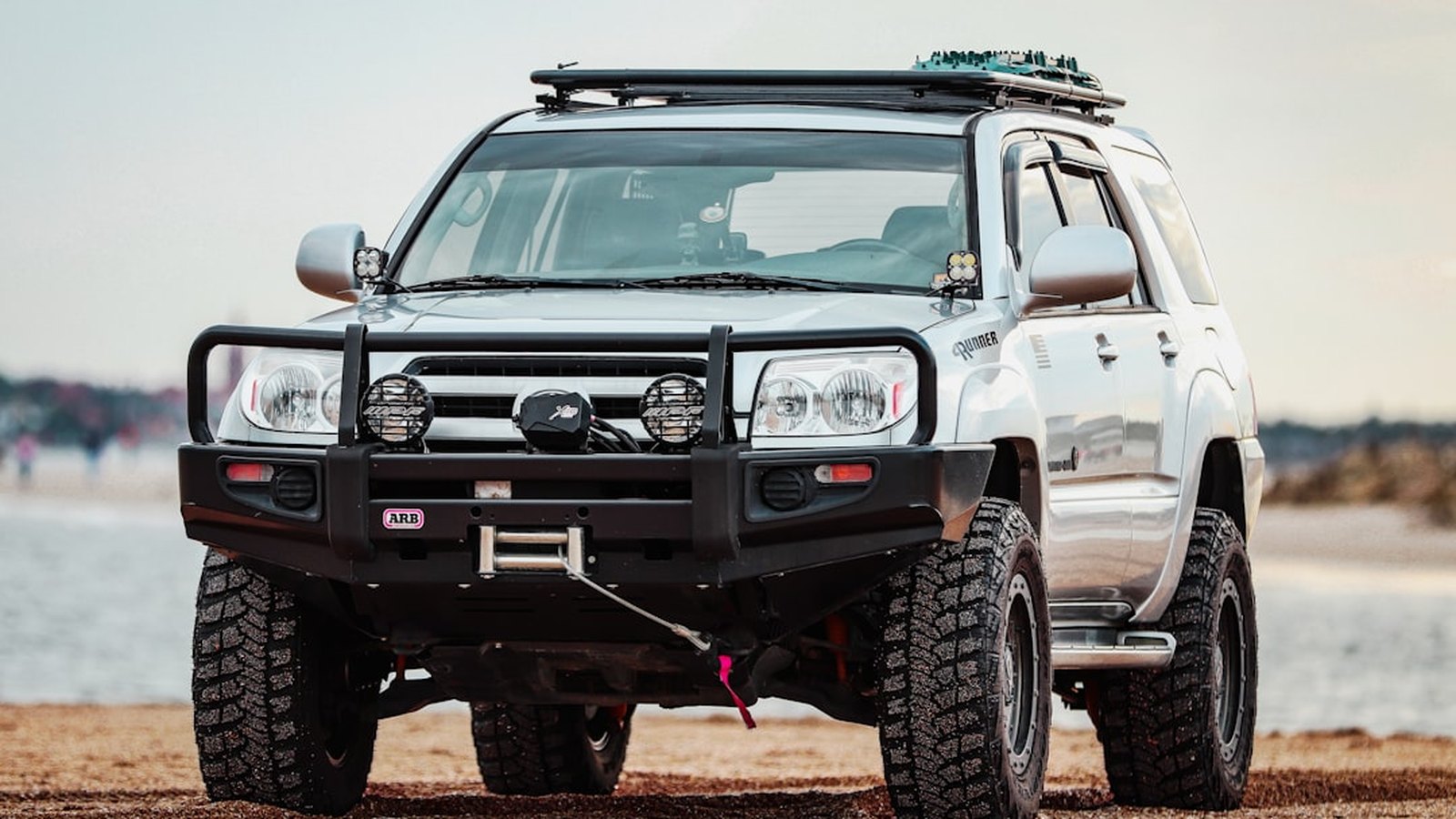 Photo: Lance Asper / Unsplash
The Specs That Actually Matter
Compressor marketing loves to shout about max PSI. Ignore it. Here’s what actually determines how long you stand around at the pullout.
CFM (cubic feet per minute) is the single most important number. It measures the volume of air the unit moves, which is what fills a big tire. Use this as your baseline: 1.5+ CFM handles 33-inch tires, 2.5+ CFM is the target for 35 to 37s, and 4.0+ CFM is what you want for 40-inch tires or running air tools. One important asterisk: most brands quote CFM at 0 psi (free flow), and real output drops as pressure builds, so treat the headline number as a best case and buy with a little margin.
Max PSI is the pressure ceiling, and it’s almost a non-factor. Virtually every off-road compressor hits 150 psi, and you’ll rarely put more than 40 psi in a tire. Don’t let a bigger max-PSI number sway you between two units.
Duty cycle is how long the unit runs before it needs to cool down. A 100 percent duty cycle is ideal; 50 percent means 30 minutes on, 30 off. Budget units often sit around 33 percent, which is fine for one vehicle’s worth of tires but gets tight on big rubber in hot weather. As a real example, the MORRFlate TenSix PSI Pro Gen2 quotes an 80 percent duty cycle, roughly 45 minutes of run time before a 10-minute break.
Amp draw determines how you power it. Under about 30 amps and you can run off a cigarette-lighter socket. Over 30 amps and you need to clamp directly to the battery. The bigger, faster units all fall into the second camp, so plan for battery leads.
Pro tip: Compare units on CFM at your target pressure and duty cycle. Those two specs, together, decide how fast you’re rolling on pavement again. Everything else is secondary.
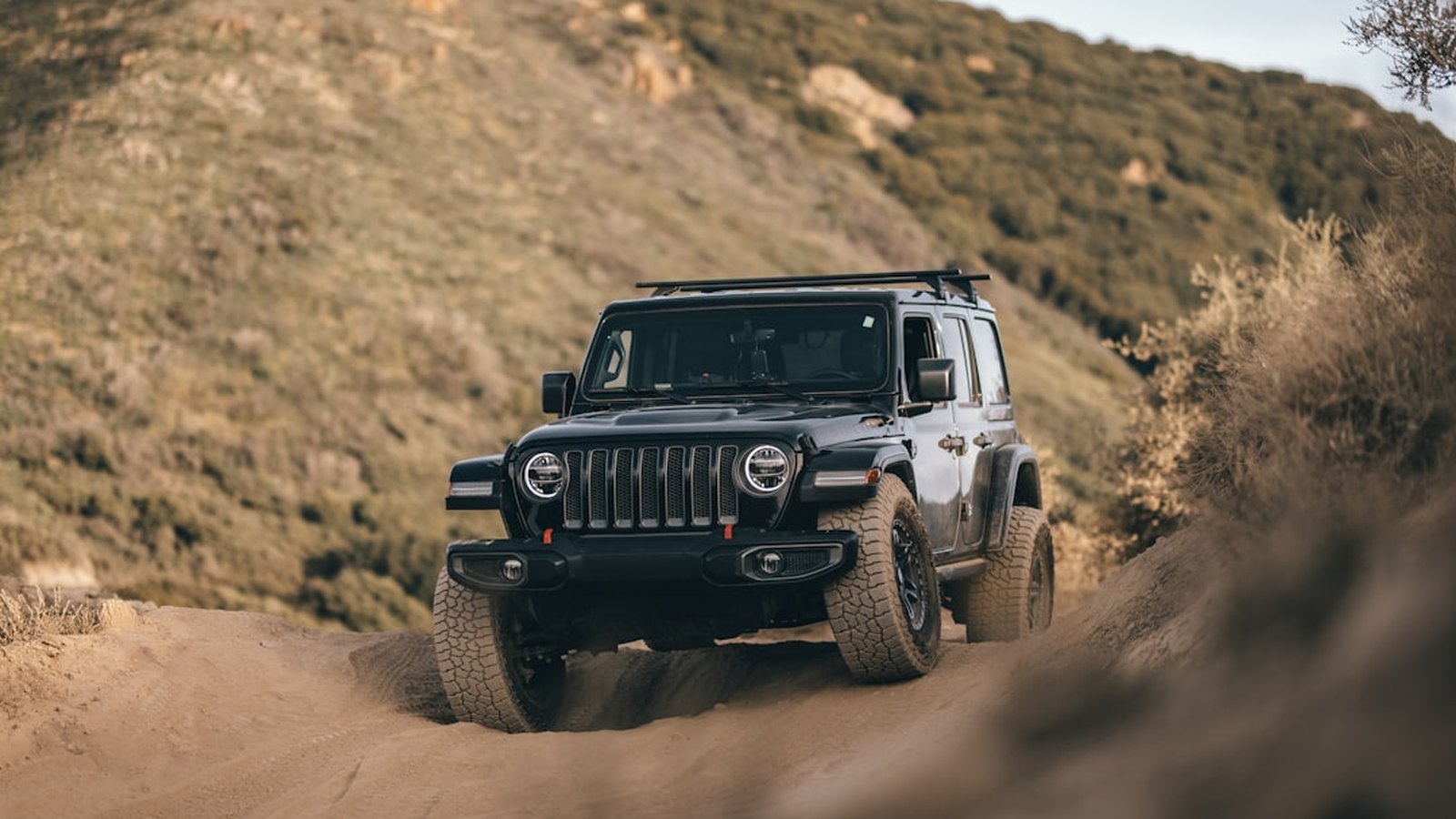 Photo: Josh Duke / Unsplash
Real-World Picks by Tire Size and Budget
These are proven, widely respected units that map cleanly to the categories above. Match the pick to your rig, not to the flashiest ad.
Stock to Mildly Lifted (Tires up to 35 inches)
The Viair 400P is the unit that built Viair’s off-road following. It moves 2.4 CFM, caps at 150 psi, and is rated for tires up to 35 inches, with owners routinely reporting decade-long lifespans. It’s the default recommendation for JK/JL Wranglers, Tacomas, and 4Runners on stock-to-mild setups. Its main limit is a 33-minute duty cycle that can feel cramped on 33-inch-plus tires in summer heat.
If you want the premium version of this class, the ARB CKMP12 single-motor portable moves 2.65 CFM, ships in a hard case with clamps and a coiled hose, and is built to outlast the rig. It costs roughly twice a comparable Viair, but it’s the buy-once option for most people.
Running 37s and Bigger
Step up to the Viair 440P, the 400P’s bigger sibling at 3.0 CFM and rated for tires up to 37 inches. It’s heavier and pricier, and its duty cycle drops to about 20 minutes, but it handles 37s without straining.
For serious speed without an onboard install, the ARB Twin Motor Portable (CKMTP12) puts two high-output motors in one case for 4.68 CFM, inflating 35s from 20 psi in roughly half the time of a single-motor unit. It’s around 35 lbs and lands near $1,000 bundled with a case, so it’s for impatient overlanders who want onboard-class airflow that still travels.
Big Tires, Group Runs, or Maximum Speed
When you’re airing up four 35s (or a whole convoy) and every minute counts, high-CFM specialty units like the MORRFlate TenSix PSI Pro Gen2 deliver 10.6 CFM at 0 psi and can inflate four 35-inch tires from 10 to 40 psi in under five minutes. It draws around 50 amps, so it’s a battery-clamp unit, and its multi-hose design airs all four corners at once. This is overkill for a solo weekend rig and exactly right for a group that hates waiting.
Built Rigs with Lockers
If your rig runs air lockers or you want air tools in the bay, go onboard. The ARB Twin Onboard (CKMTA12) moves 6.16 CFM, mounts permanently, and powers lockers, tools, and inflation from one system. It’s a real install with wiring and usually an air tank, but you never dig a case out of the back again.
The Budget Play
If cost is the deciding factor and you only air up occasionally, the Smittybilt 2781 is a 5.65 CFM portable at roughly a third the cost of the twin ARB. The build quality is a clear notch below ARB or Viair and long-term reliability is more of a gamble, but for a wheeler who airs up a handful of times a year, the value is hard to argue with. For truly light-duty use on stock tires up to 31 inches, the little Viair 77P at 1.26 CFM is a fine sub-$100 starter, just don’t ask it to do 35s.
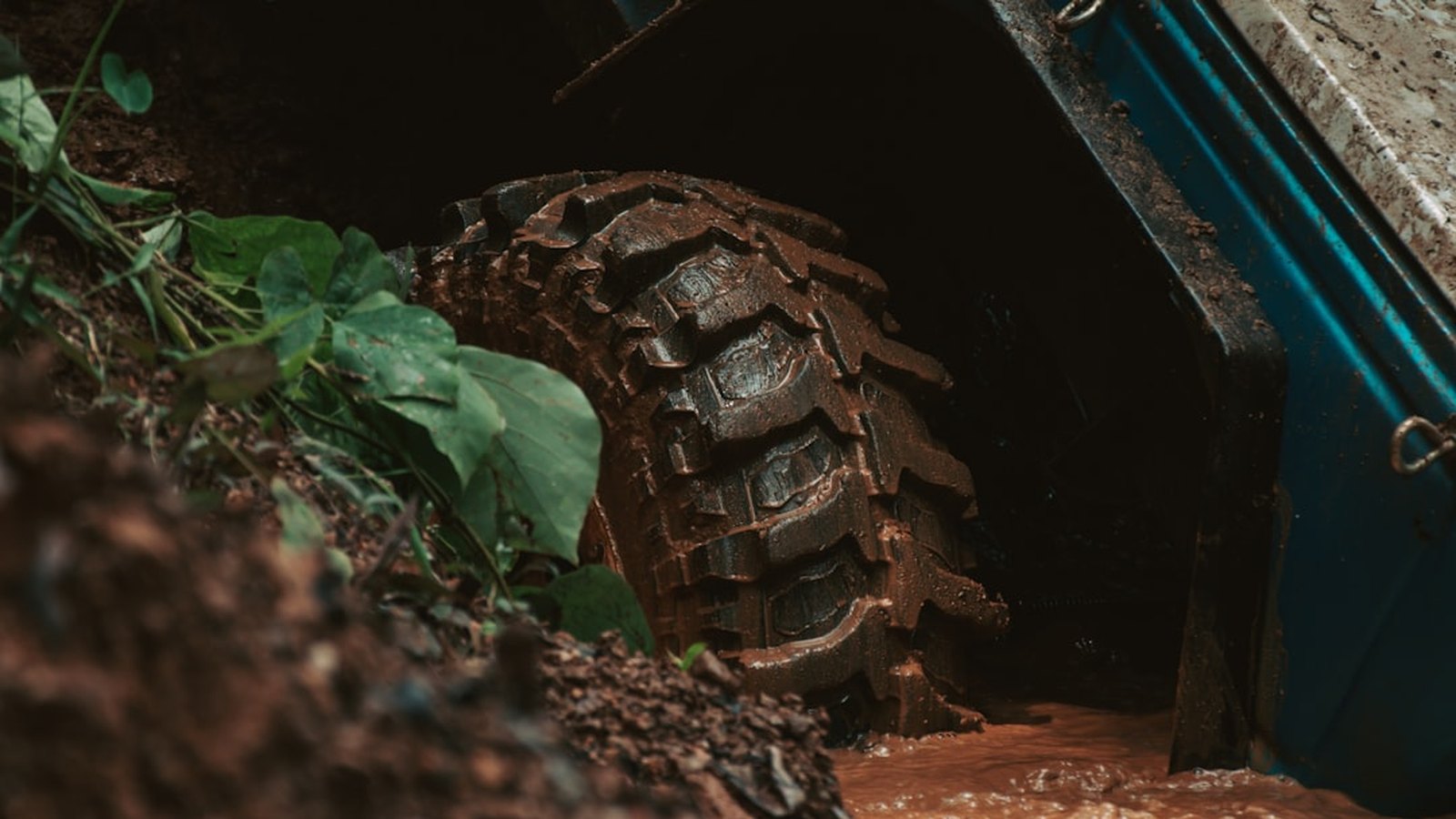 Photo: Johann Noby / Unsplash
Accessories Worth Adding
A compressor is only half the system. A few cheap add-ons make the whole air-up painless:
- A quality tire deflator or gauge so airing down is as fast and accurate as airing up.
- Long, kink-resistant hose and a locking air chuck so you’re not fighting a short coil at each corner.
- Heavy-gauge battery leads if your unit draws over 30 amps, so you’re not smoking a cigarette-lighter socket.
- A four-tire manifold hose kit if you air up in a group and want all four corners filling at once.
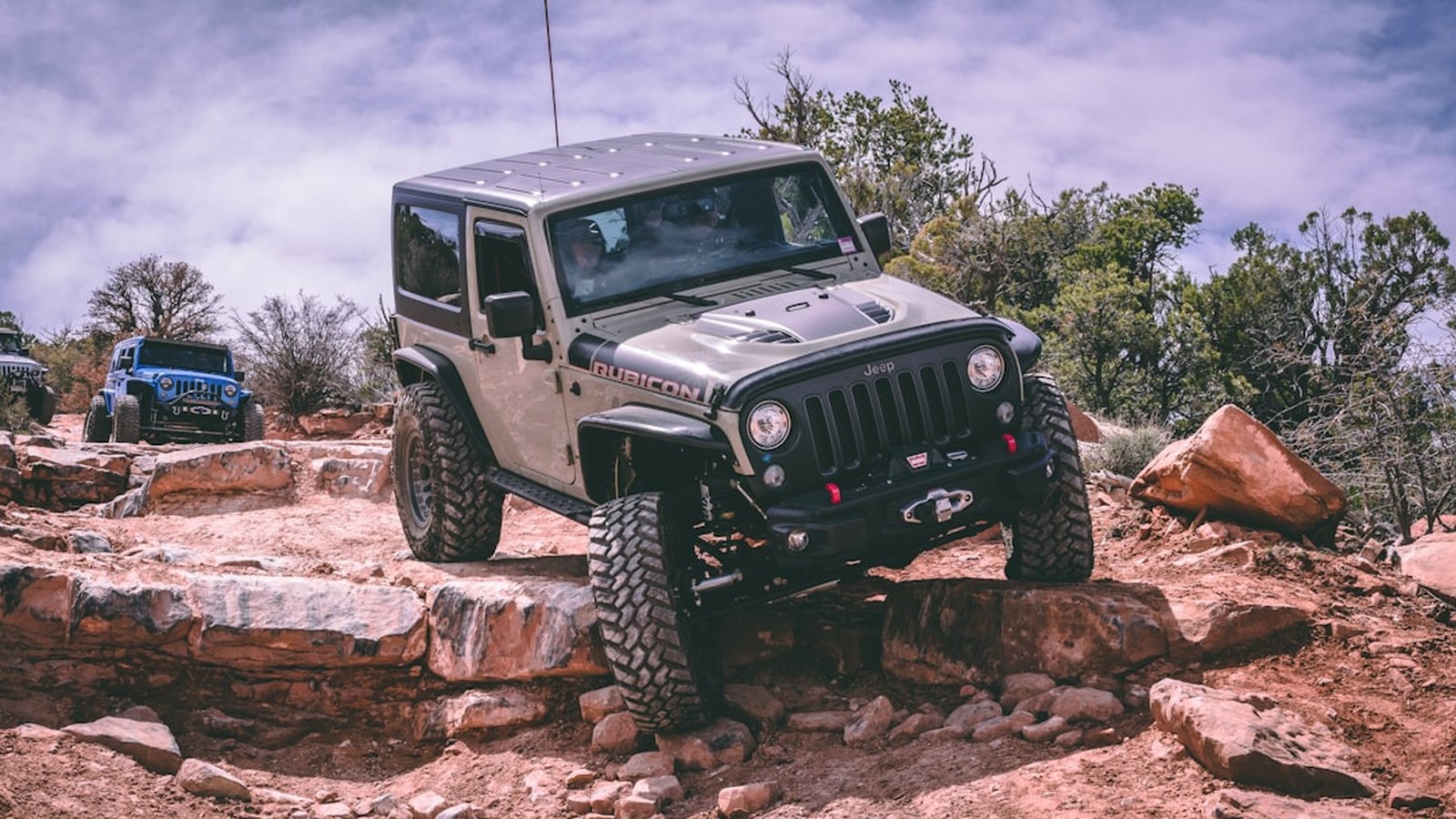 Photo: cody lannom / Unsplash
How to Actually Choose
Strip away the noise and it comes down to three questions. First, how big are your tires? That sets your CFM target: 1.5+ for 33s, 2.5+ for 35 to 37s, 4.0+ for 40s. Second, how often do you air up, and are you willing to install something? Occasional wheelers want a 12V portable; dedicated rigs with lockers should go onboard. Third, how much does your time in the pullout matter? If you hate waiting or run with a group, buy up in CFM or add a CO2 tank for speed.
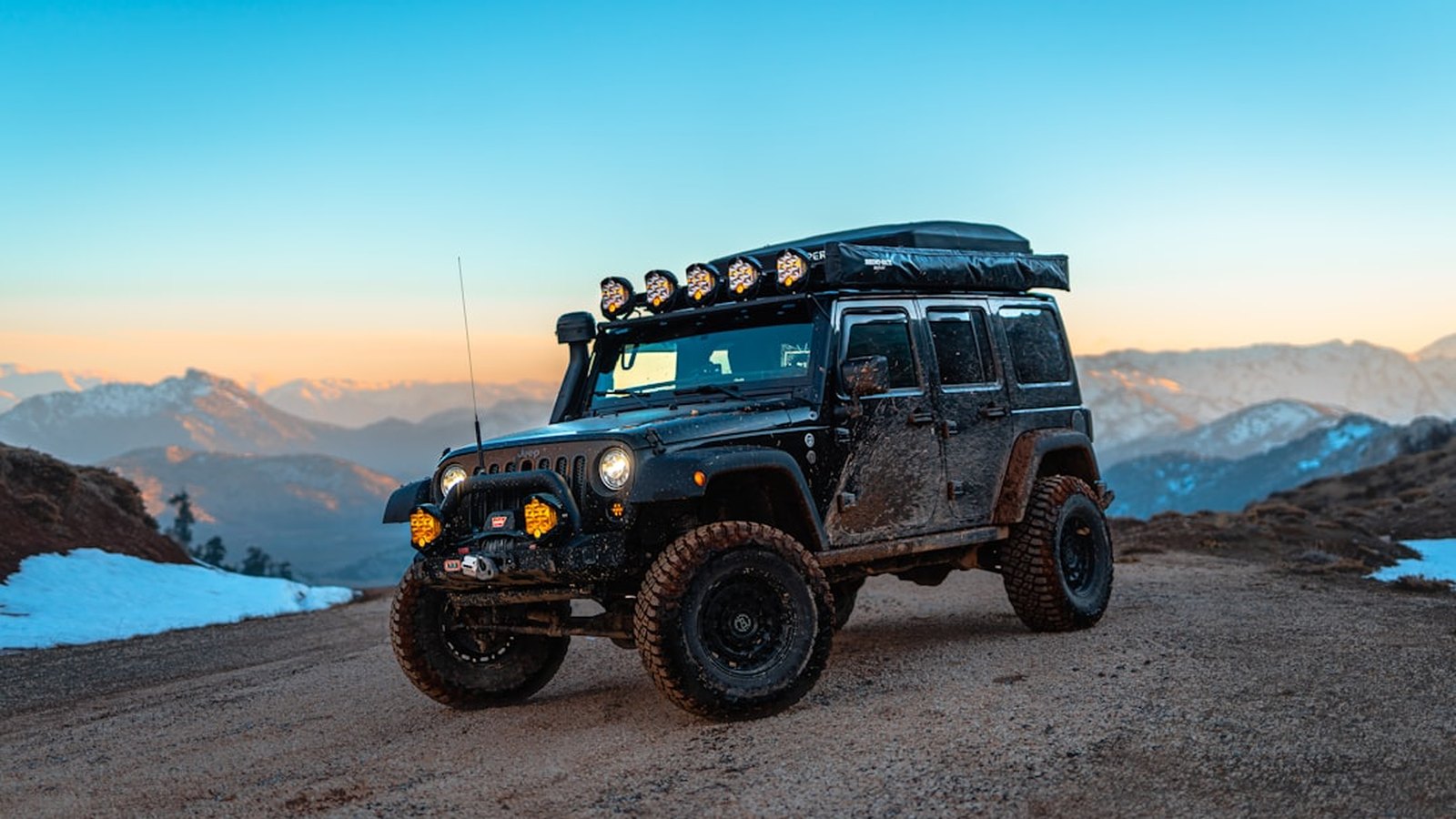 Photo: Thomas Tucker / Unsplash
Buy a hair more capability than you think you need. Tires get bigger, the group gets larger, and nobody has ever stood at a trailhead wishing their compressor were slower. Get the airflow right, respect the duty cycle, and airing back up stops being the annoying end of the day and becomes the five minutes you barely notice.
Hero photo: Cedrik Wesche / Unsplash