

Walk into any trailhead conversation about tires and you will eventually hit the fault line: all-terrain versus mud-terrain. It is the debate that ends friendships, or at least ride-alongs. One guy swears his mud-terrains crawl anything. The other guy just wants his commute back and his fuel economy intact. Both of them are kind of right, which is exactly why this argument never dies.
Here is the thing nobody at the trailhead tells you straight: the “best” off-road tire does not exist. The best tire for how YOU wheel exists, and that is a very different question. So let us actually break it down. No badge loyalty, no marketing fluff, just how these two categories behave and which 2026 models are worth your money.
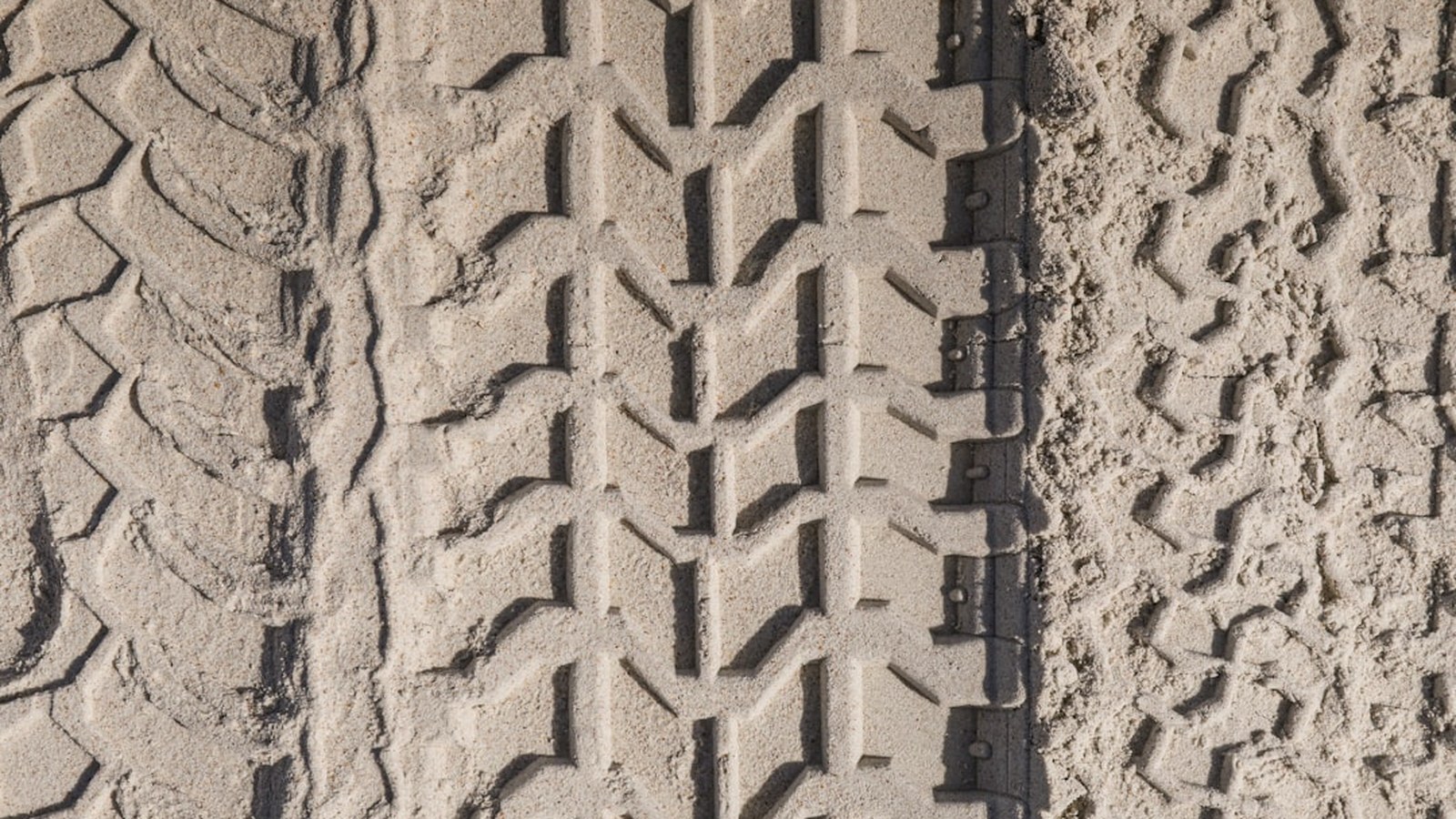 Photo: Mick Haupt / Unsplash
What Actually Separates an AT From an MT
Forget the names for a second and look at the rubber. Three things define the difference, and they cascade into everything else.
First, the tread pattern. All-terrains run tighter tread blocks with smaller gaps (a lower “void ratio,” if you want the industry term). Mud-terrains run big, chunky blocks with wide gaps between them. Those gaps are the whole point of an MT: they let mud, clay, and rocks pack in and then sling right back out as the tire rotates, so the tread keeps biting instead of turning into a slick.
Second, siping. Sipes are those thin little slits cut into the tread blocks, and they matter more than people realize. They give the tire extra biting edges for wet pavement, ice, and packed snow. All-terrains are covered in them. Mud-terrains have few or none, because sipes trade off against the big-block rigidity that makes an MT chew through slop. That single design choice is why most mud-terrains are noticeably worse in the rain than a good AT.
Third, the rubber compound and sidewall. Mud-terrains use tougher compounds and beefier, more aggressive sidewalls built to survive sharp rock and low-pressure airing-down without cutting or puncturing. That toughness is great on the trail and a liability on the highway, where it adds weight, noise, and rolling resistance.
That is the real fork in the road. Everything else, the noise, the wear, the fuel economy, the snow performance, flows downstream from those three decisions.
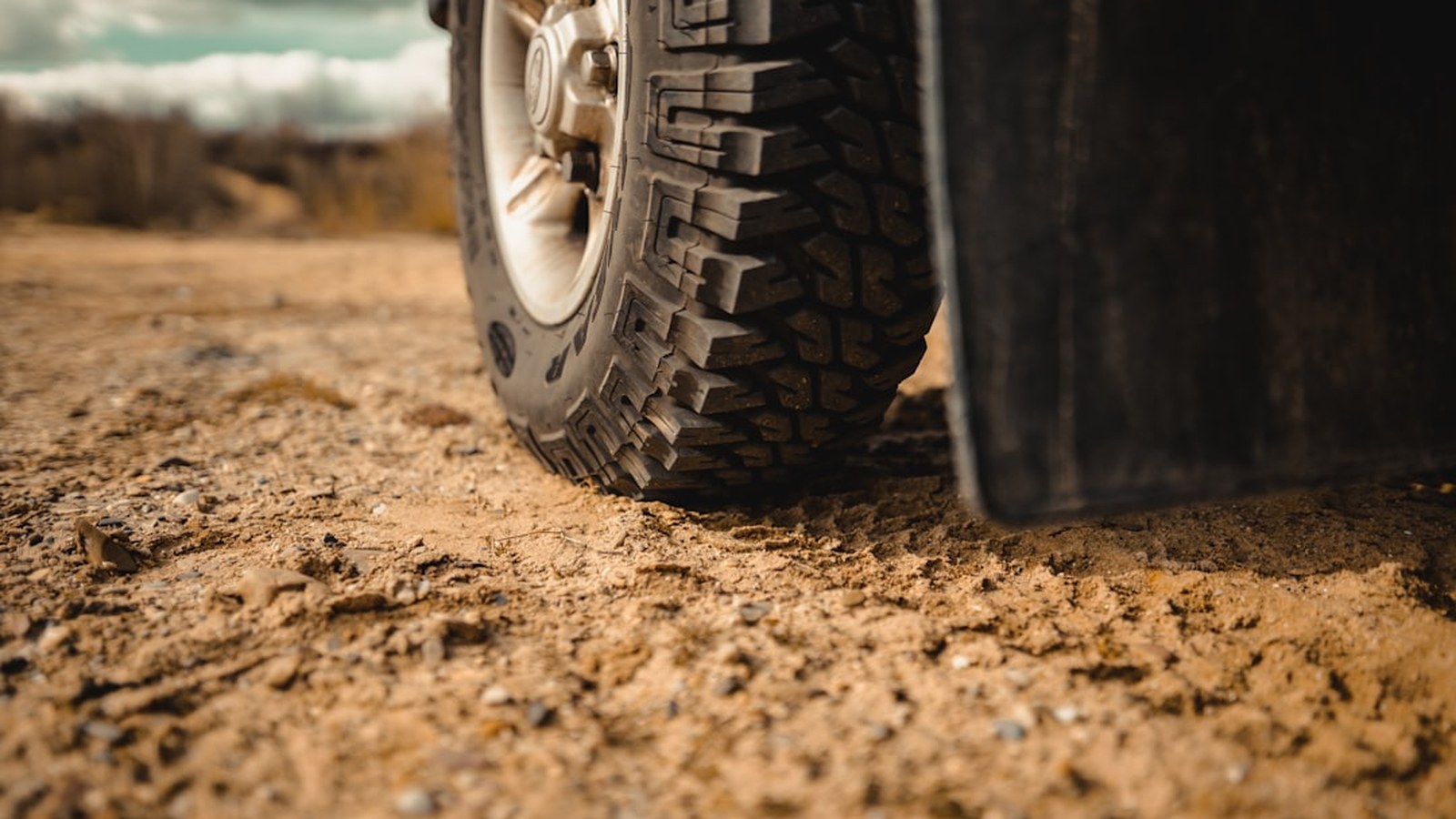 Photo: Cedrik Wesche / Unsplash
When an All-Terrain Is the Right Call
For most people reading this, the honest answer is an all-terrain, and that is not a cop-out. It is math.
If your rig spends most of its life on pavement getting you to the trailhead, and the trail itself is dirt roads, gravel, packed clay, grass, and the occasional rocky section, an AT does all of that without making you hate your daily drive. All-terrains are dramatically quieter on the highway, wear more evenly, return better fuel economy, and most of the good ones now carry the 3PMSF (Three-Peak Mountain Snowflake) rating for real winter capability. That last part is a genuine 2026 story: the modern AT is a legitimate four-season tire in a way it simply was not a decade ago.
The trade-off is that in deep, sticky mud an AT will pack up and spin. The tread gaps are too tight to clear the muck, so the tire glazes over and you are along for the ride. If deep mud is your regular Saturday, keep reading. If it is a once-a-season thing you can air down and pick a smart line through, an AT is still your tire.
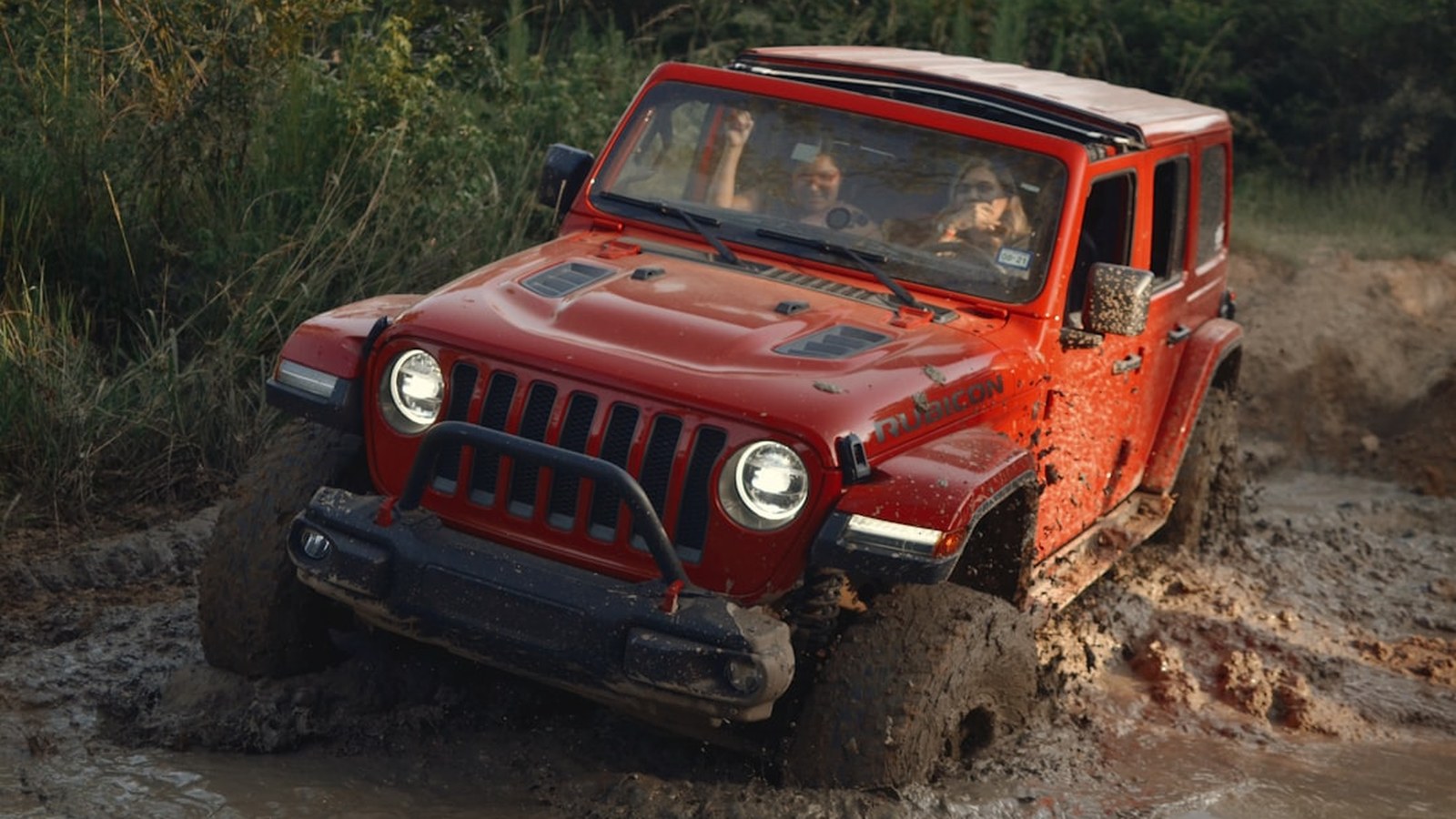 Photo: Jeff James / Unsplash
When You Actually Need a Mud-Terrain
Mud-terrains earn their keep when the terrain gets genuinely nasty. Deep sloppy mud, sticky clay, deep ruts, loose rock, and technical crawling are where those big open tread blocks and tough sidewalls pull ahead. If your build regularly gets pushed into that kind of terrain, an MT is not overkill, it is the right tool.
But be honest about the tax you pay for that capability every single day. Mud-terrains are loud. Those big tread blocks slap the pavement and produce a persistent hum or growl that gets genuinely tiring on a long highway drive. They wear faster, they cost you fuel economy, and because they run few or no sipes, a lot of them are worse in the rain than the all-terrain you passed over. Winter is a mixed bag too: some modern MTs now carry 3PMSF, but plenty do not, and even the rated ones can feel greasy on packed snow and ice compared to a siped AT.
The rule of thumb that has held up for years: if you are asking whether you need mud-terrains, you probably do not. The people who genuinely need them already know it.
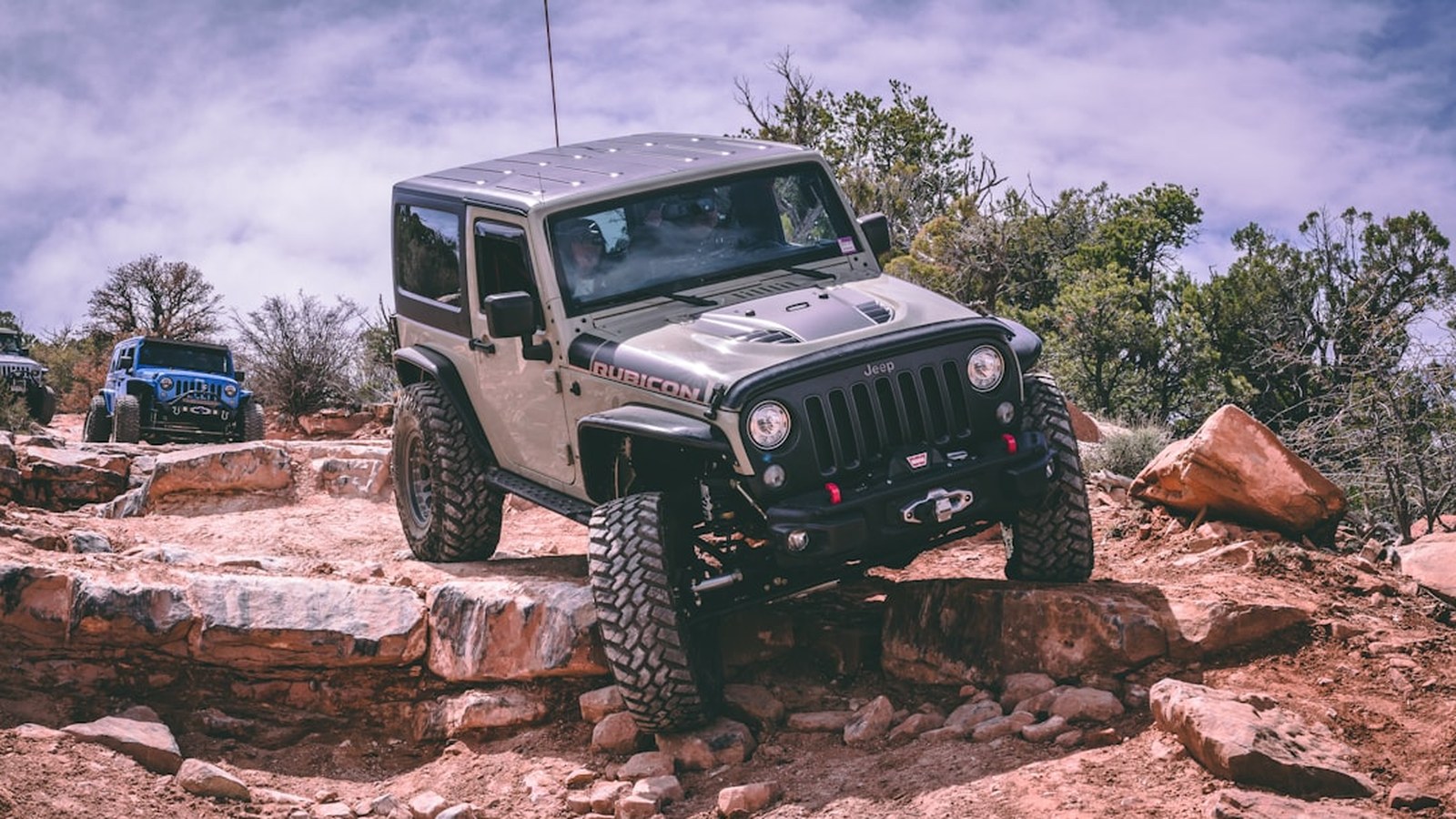 Photo: Cody Lannom / Unsplash
The Hybrids Nobody Warned You About
There is a whole middle category now that muddies the AT-vs-MT line (pun fully intended): the rugged-terrain or hybrid tire. These split the difference with an aggressive, MT-looking tread that is engineered to stay quieter and last longer than a true mud-terrain. The Nitto Ridge Grappler is the poster child. It looks the part in the parking lot, crawls rock and handles moderate mud well, and stays livable on the highway in a way a full MT never will.
Hybrids are a smart pick if you want the aggressive look and better-than-AT off-road bite but cannot stomach a real mud-terrain as a daily driver. Just go in clear-eyed: a hybrid is a compromise, and compromises give up a little at both ends. It will not clear deep mud like a dedicated MT, and it will not be as quiet or fuel-friendly as a proper AT.
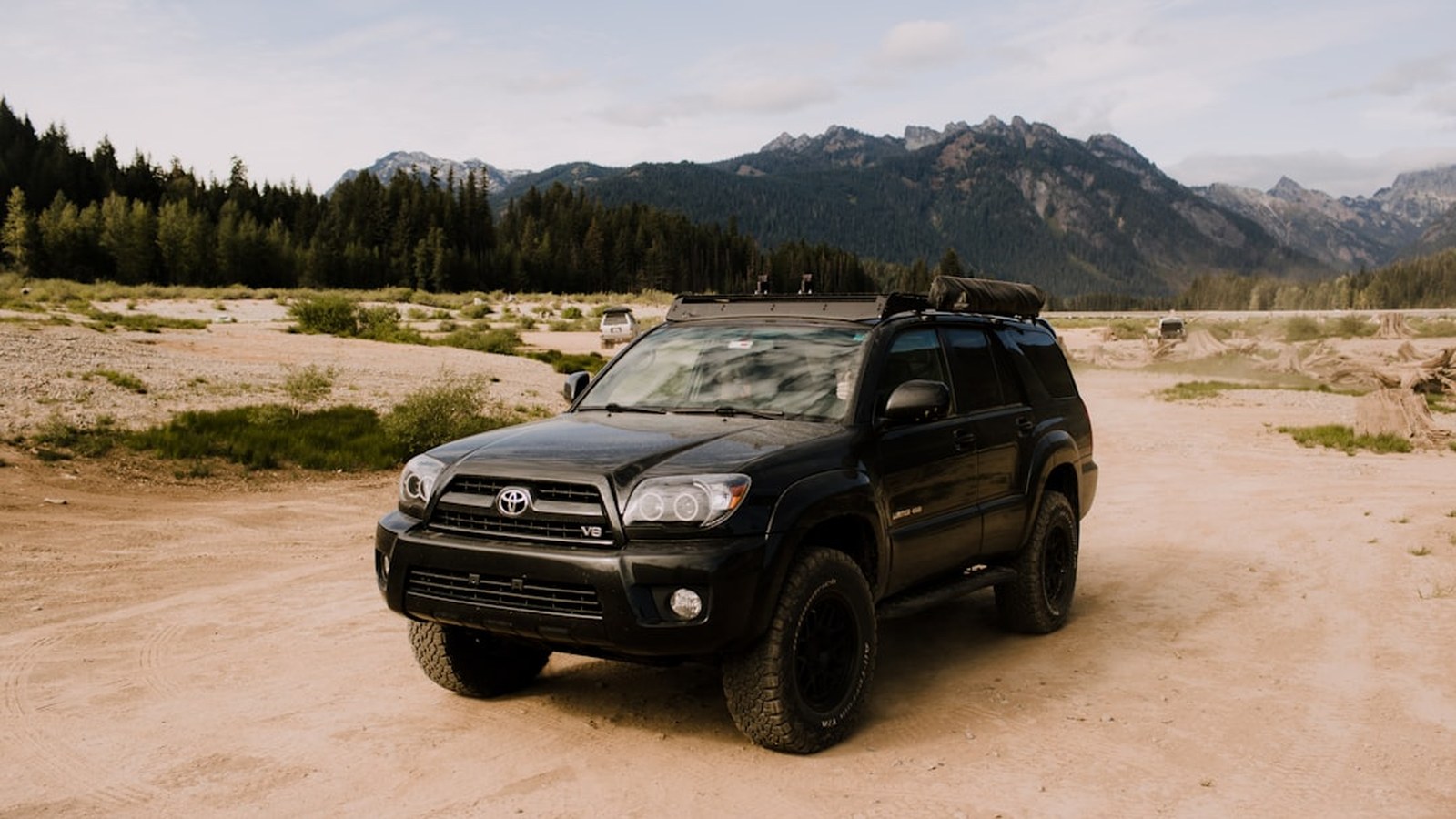 Photo: Blake Carpenter / Unsplash
The Best All-Terrain Tires for 2026
BFGoodrich All-Terrain T/A KO3. The KO3 is the long-awaited successor to the legendary KO2, and it leans on BFG’s proven CoreGard sidewall protection. It runs a 15/32” tread depth across the line, carries both 3PMSF and M+S winter ratings, and comes with a 50,000-mile treadwear warranty. In testing it shines in dry grip, handling, and fuel economy, and it does well in loose powdery snow. It is the safe, do-everything default that has anchored countless builds for good reason.
Falken Wildpeak A/T4W. The Wildpeak is the value champion that keeps punching above its price. It carries a longer treadwear warranty than the KO3 (65,000 miles on P-metric sizes, 60,000 on LT), is 3PMSF rated with M+S, and consistently wins praise for wet traction and tread longevity. Deeper tread on many sizes gives it an edge in mud and snow over a typical AT. If you want maximum miles and strong all-weather grip for the money, this is the one to beat.
Cooper Discoverer AT3 4S. An underrated four-season workhorse. It is 3PMSF rated, US-made, and built around Snow Groove technology and zigzag sipes for genuinely good winter and wet behavior, plus a 65,000-mile warranty. If your rig is a daily driver first and a trail rig second, especially somewhere with real winters, the AT3 4S deserves a hard look.
Goodyear Wrangler DuraTrac RT. The DuraTrac is the classic “aggressive AT that thinks it is more” and the newer RT (rugged terrain) version pushes further toward hybrid territory. It runs deep tread (up to 18/32” on some sizes), self-cleans well, and is a long-time favorite for people who want more mud and snow bite than a standard all-terrain without fully committing to an MT. Fair warning: it can wear a little unevenly if you skip rotations.
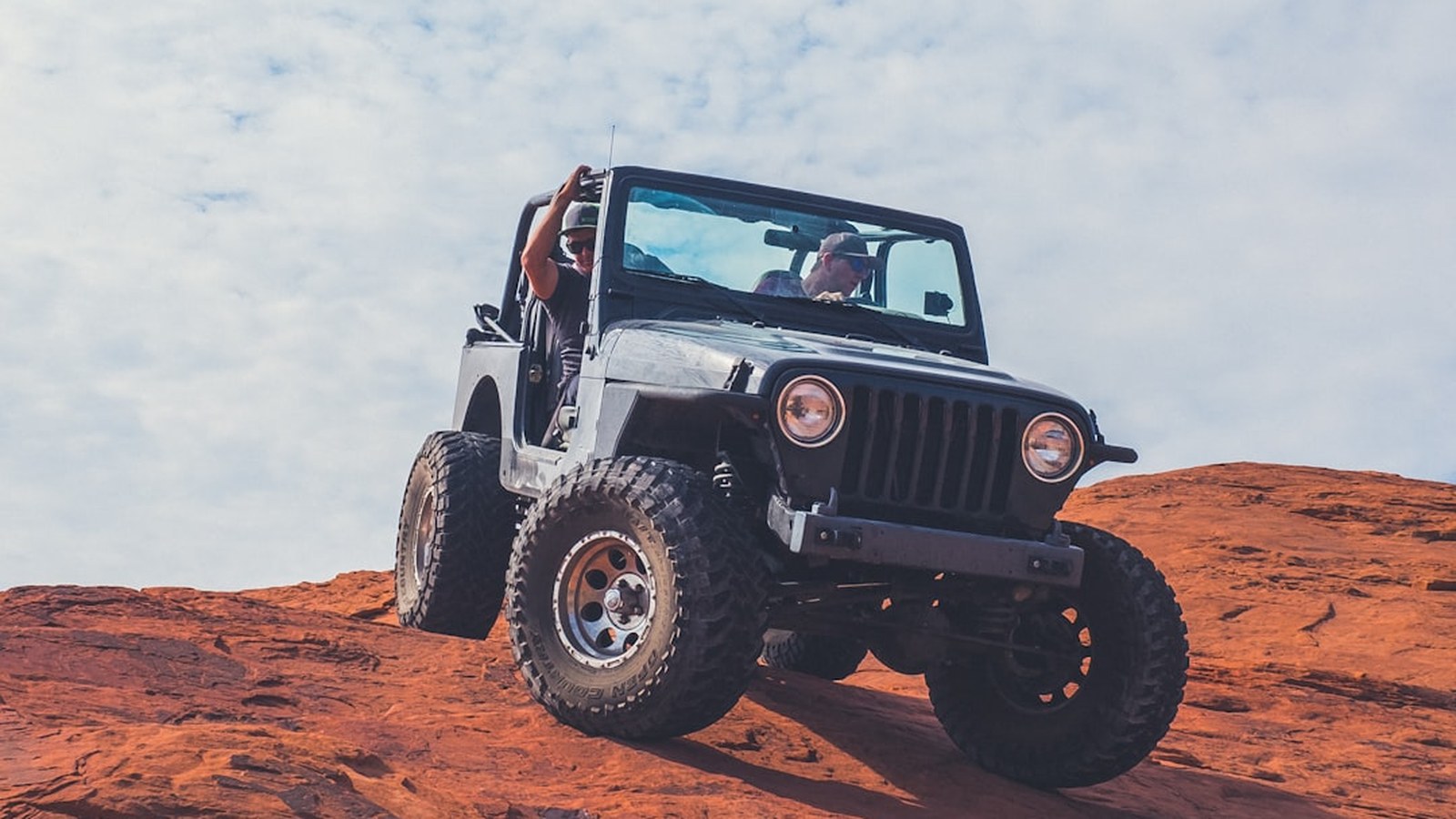 Photo: Quilia / Unsplash
The Best Mud-Terrain (and Hybrid) Tires for 2026
BFGoodrich Mud-Terrain T/A KM3. When you actually need a mud-terrain, the KM3 is the benchmark. Its Krawl-Tek compound is tuned for grip on rock and slick surfaces, and the aggressive Terrain-Attack tread with biting edges in every direction makes it a rock-crawling monster. Tough sidewalls shrug off abuse when you air down. For a dedicated off-road rig, it is the clear winner in serious terrain.
Nitto Ridge Grappler. The hybrid everyone name-drops, and for good reason. It delivers real off-road bite and rock-crawling capability while staying far more livable on the highway than a true MT, with strong tread life to boot. If you want the aggressive stance and serious trail capability but still daily your rig, the Ridge Grappler is the sweet spot.
Nitto Trail Grappler. Nitto’s dedicated mud-terrain, and a favorite on heavier rigs and Raptors for its tread life. Owners routinely report 30,000-plus miles with plenty of tread left, which is rare praise in MT land. It crawls and claws with the best of them while holding up better than most to daily abuse.
How to Actually Pick (and Size) Your Tire
Once you have settled AT versus MT, do not fumble the sizing. A few numbers on the sidewall decide whether your tire matches your rig and your use.
Load range and load index. Heavier rigs, towing, and rooftop tents want a higher load range (C, D, E) and a load index that covers your loaded weight. A load range that is too low is the number-one way people ruin an otherwise great tire.
Speed rating. Off-road tires run modest speed ratings (you will see a lot of T, R, and S). That is fine for how these rigs are used, just make sure it clears your normal highway speeds.
The 3PMSF snowflake. If you see winter, look for the Three-Peak Mountain Snowflake stamp, not just the “M+S” marking. M+S is a mud-and-snow tread-geometry claim; 3PMSF means the tire actually passed a snow-traction test. Big difference.
Size and fitment. Bigger is not automatically better. Going up in size can mean rubbing, regearing, and a hit to fuel economy and acceleration. Match the tire to your build, not to the parking-lot flex.
The Bottom Line
The AT-versus-MT debate is not really a debate once you are honest about how you drive. If pavement and mixed trails are your reality, a modern all-terrain like the KO3, Wildpeak A/T4W, or Cooper AT3 4S will do everything you actually need and keep your commute sane. If you live in the deep stuff and technical rock, a KM3 or a Trail Grappler earns every decibel. And if you are stuck in the middle, the hybrids exist for exactly that reason.
Pick the tire for the terrain you drive most, not the terrain you post about. Air them down right, keep them rotated, and the rest takes care of itself. Now go find some dirt.