

Sand is the terrain that humbles people the fastest. A stretch of beach or a dune field looks harmless from the driver’s seat, right up until your rig sinks to the frame and the wheels spin themselves a grave. The frustrating part is that the mistake almost always happens in the split second where your gut tells you to lift off the throttle. On sand, that instinct is exactly backwards.
Here is the truth that separates people who float over soft sand from people who spend their afternoon digging: sand rewards momentum and punishes hesitation. Once you understand why, the rest of it falls into place. Let’s walk through the whole playbook, from the parking lot to the dune crest.
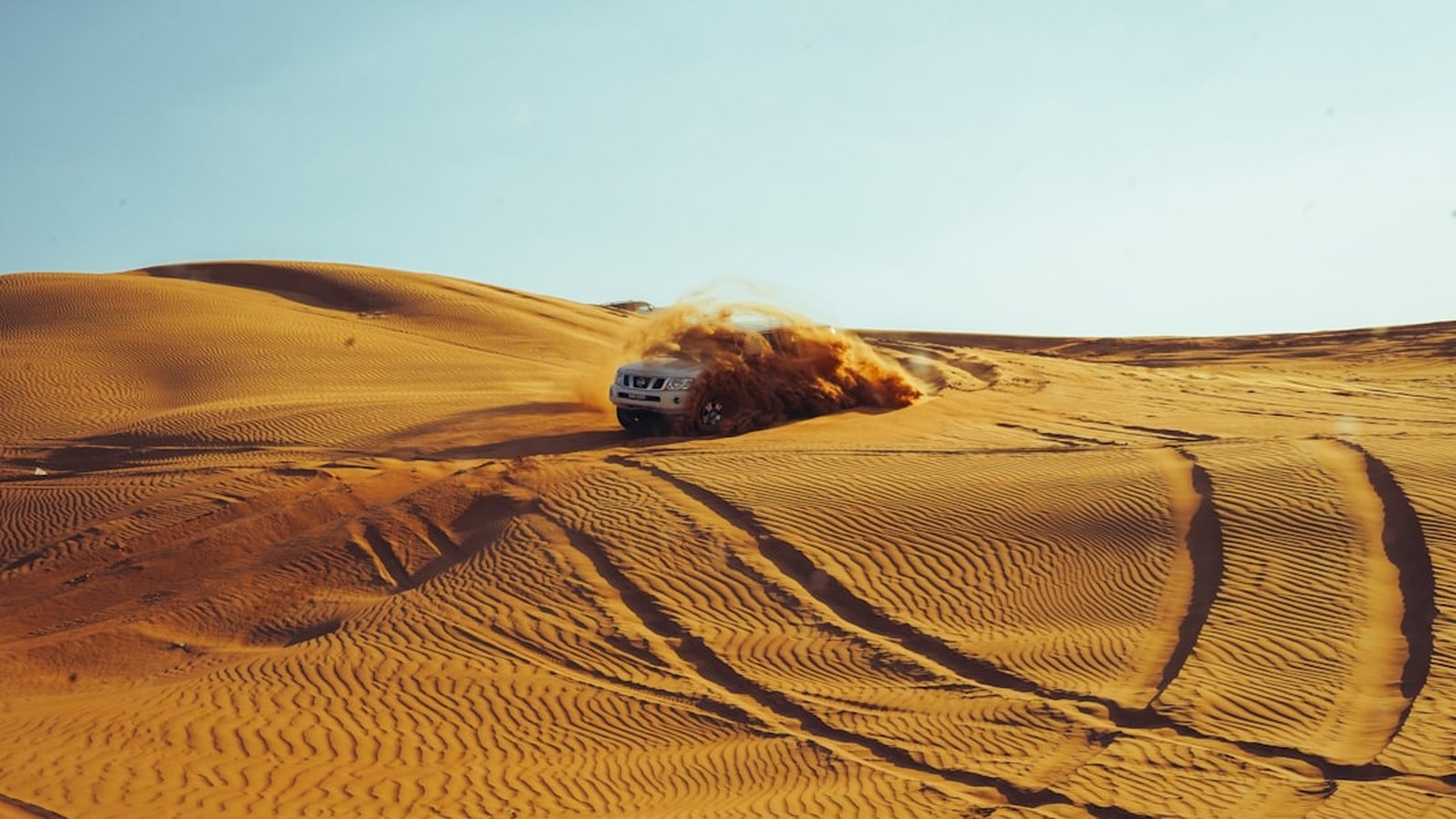 Photo: Abdul Haseeb M M / Unsplash
Why sand behaves nothing like dirt
On rock, your tires grip. On mud, you power through and let the tread clear itself. Sand plays by different rules entirely. It is a loose, shifting surface that compacts differently depending on temperature and moisture, and it will flow around a spinning tire and pack in tight before you even register what happened.
That is the core problem. A spinning wheel on sand does not claw forward. It digs a hole and drops you into it. So everything about sand technique is built around one goal: keep the tires floating on top of the surface instead of cutting down into it. Airing down, staying smooth, and carrying momentum are all just different ways of serving that single idea.
Airing down is not optional
Dropping your tire pressure is the most important thing you will do all day, and it happens before you ever touch the soft stuff. When you let air out, the tire’s contact patch (the part actually touching the ground) gets dramatically longer. That spreads your rig’s weight across far more surface area, so instead of pushing down into the sand like a knife, the tire floats across it like a snowshoe.
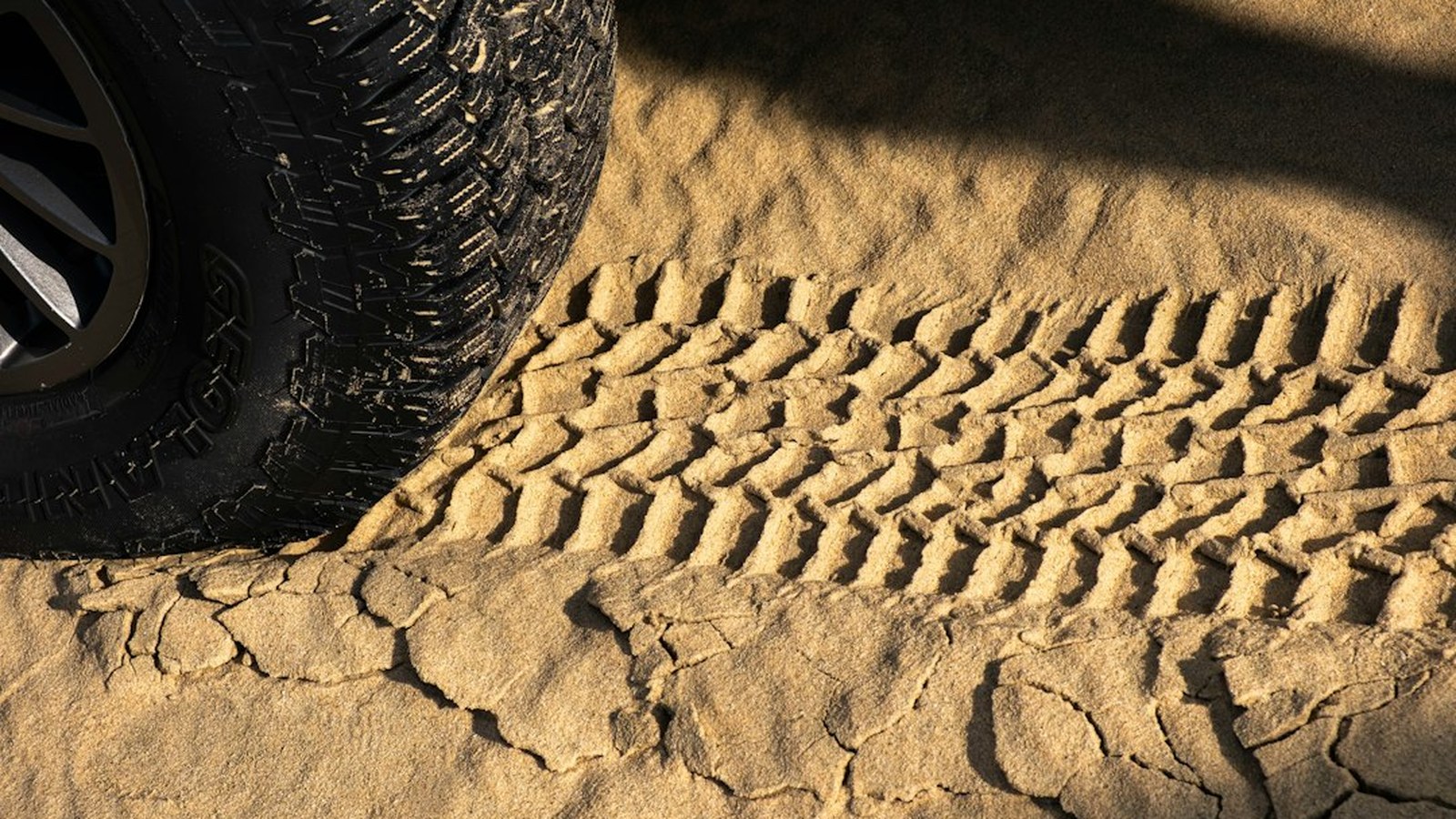 Photo: Lukhmanul Hakeem / Unsplash
Real numbers, because vague advice gets people stuck. For most 4x4s these are solid starting points:
- Hard-packed wet sand near the waterline: 25 to 28 PSI
- General beach and sand-track driving: 18 to 22 PSI
- Soft dunes and deep sand: 15 to 18 PSI
- Extreme soft or hot sand, with caution: as low as 12 to 15 PSI
Heavier rigs like a loaded Land Cruiser or Defender can run at the lower end of each range. The best move is to start conservative, drive a test section, and drop further if the tires are still knifing in. Air down evenly across all four, carry a decent deflator so it goes fast, and never skip the compressor. Running sand pressures on the highway is how you shred a sidewall in under a mile. Air back up to your normal street pressure, usually around 32 to 35 PSI for most light trucks and SUVs, before you point it home.
Set the rig up before you commit
Tire pressure is step one. A couple of quick settings before you drop onto the sand will save you a recovery later.
Put it in 4WD. Flat beach and firm sand tracks are fine in 4High where you will hold a steady pace. The moment you hit dunes or a steep climb, drop into 4Low for finer throttle control and more usable torque. That low-range pedal feel is exactly what you want when the surface under you keeps changing.
Know your traction control. A lot of modern systems cut engine power the instant a wheel slips, which is the last thing you want here. A little wheel spin keeps momentum alive on sand. Many rigs have a dedicated Sand mode that handles this for you. If yours does not, learn how to switch traction control off and when to do it. And dump any dead weight you do not need. The heavier the rig, the deeper it sits.
Momentum is the whole game
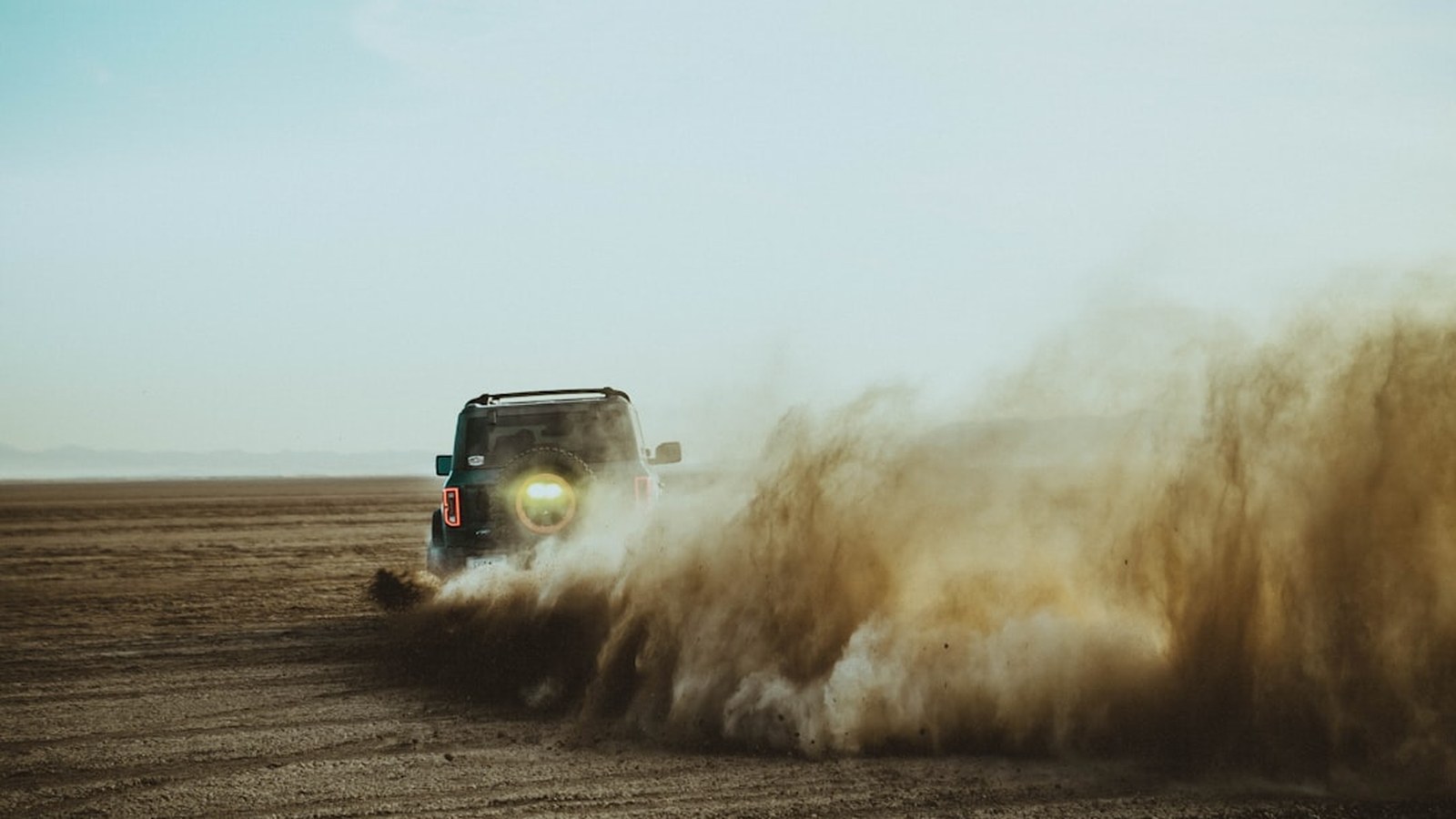 Photo: Bradley Dunn / Unsplash
Here is where instinct fights you. When you feel the rig start to bog, every fiber says lift off the gas. Do the opposite. Keep steady, deliberate throttle and let the momentum you already have carry you through to firmer ground.
The goal is a pace fast enough to float, slow enough to stay in control. When you approach a soft patch or the base of a dune, do not slow down right before you hit it. Carry your speed in so the rig has the energy to push across. If the tires start to dig, resist the brake, feed in gentle throttle, and steer out of it smoothly. Stabbing the throttle just spins you deeper, so this is finesse, not a full-send.
Momentum does not mean recklessness. On a beach with hidden soft sections or a drop-off you cannot see, too much speed erases your reaction time. The right pace is the one that keeps your tires riding on top of the sand rather than cutting into it.
Reading the sand before you drive it
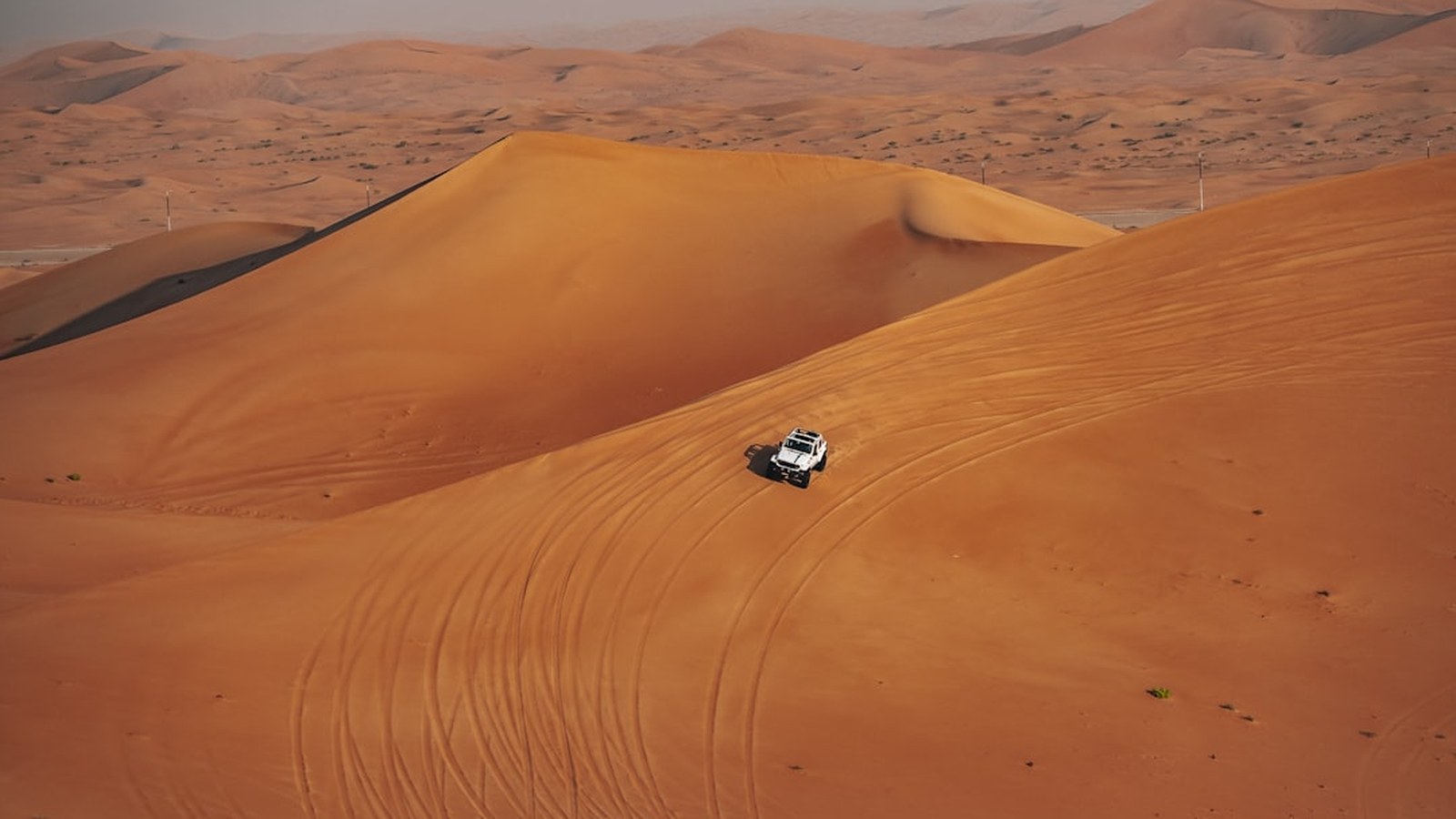 Photo: Nejc Soklič / Unsplash
Not all sand is equal, and learning to read it is what turns a nervous first-timer into someone who picks clean lines all day. Darker, coarser, damp sand is usually firmer and more predictable. Pale, fine, dry sand is the soft stuff that swallows tires. Wind-rippled sand tends to be looser than a smooth, crusted surface.
Time of day matters too. Early morning sand is cooler and holds more moisture, so it is often firmer than the same stretch baked out in the afternoon heat. Follow existing tracks when they look solid, since someone already proved that line will hold. And keep your steering smooth. Sharp, sudden inputs scrub speed and dig the front tires in. On sand you want gradual, deliberate turns.
Cresting a dune the right way
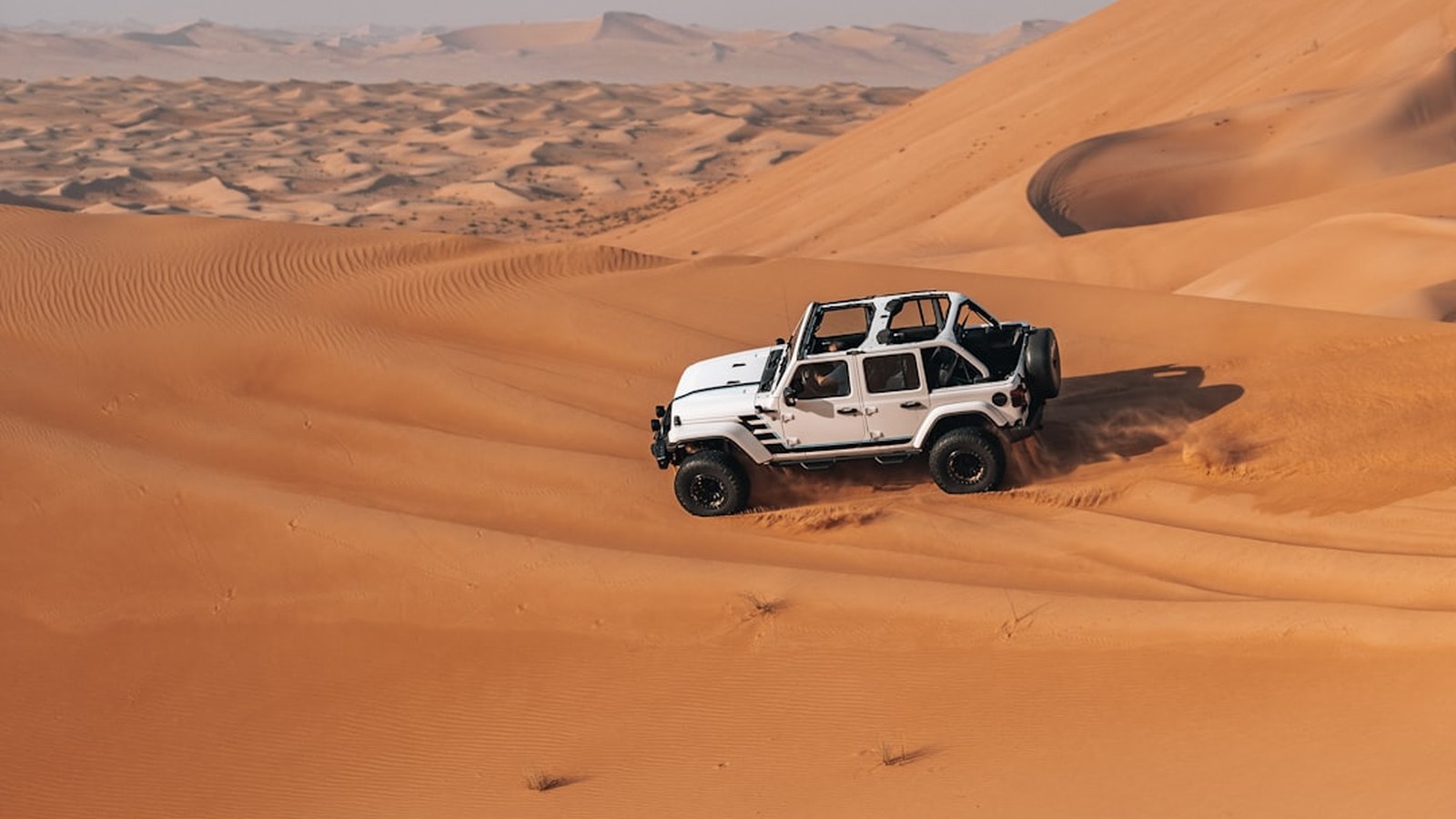 Photo: Nejc Soklič / Unsplash
Dunes are where sand driving gets genuinely serious, and the crest is where people get hurt. Approach a dune straight on, not at an angle. Hitting soft sand diagonally lets the rig slide sideways, and a sideways slide on a steep face is how vehicles roll.
Build your momentum at the base and carry enough speed to reach the top, downshifting if you need to hold engine speed on the way up. But here is the part people botch: you want just enough momentum to crest, not a full charge. Too little and you stall out and slide back down. Too much and you launch off the top blind, with no idea what is on the other side. The far side of a dune can be a gentle ramp or a near-vertical drop, and you cannot see it until you are there.
Ease over the top with just enough speed to keep from sinking, but slow enough that you can still stop or adjust if the descent is steeper than it looked. Arrive controlled, not committed past the point of no return.
When you do get stuck (and everyone does)
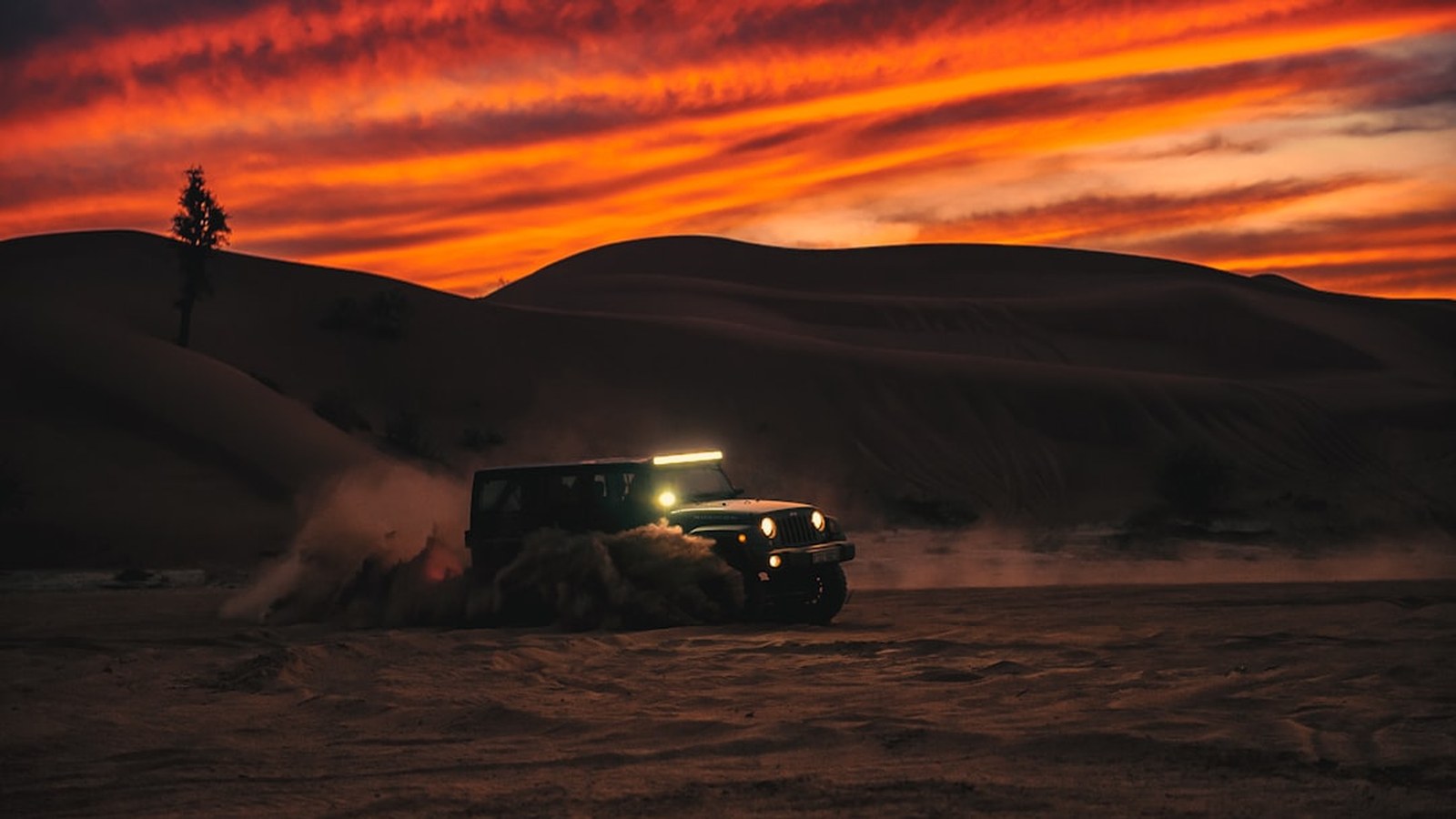 Photo: Abed Ismail / Unsplash
Get stuck enough times and it stops being a disaster and becomes a ten-minute chore. The instant you feel the rig stop making forward progress, get off the throttle. Spinning the tires only digs you deeper and packs the sand harder around them.
Then work the problem in order. Air down further, since even a few more PSI can widen the footprint enough to float you out. Clear the packed sand away from in front of each tire in the direction you want to go, and knock down any berm you have built up ahead of the wheels. This is tedious and it is not fun, but it is what works. Drop traction boards snug against the tires in your escape direction, then pull away with gentle, steady throttle rather than a big stab, so the tires grip the board instead of spinning it out.
If you have no boards, the rocking method can free a mild bog: ease forward and back to build a little momentum in a cleared trough, turning the wheel slightly to hunt for firmer sand, but never hammer the throttle. Once you are moving, keep moving until you reach ground you trust. Stopping in the same soft patch just buries you again.
The mindset that keeps you moving
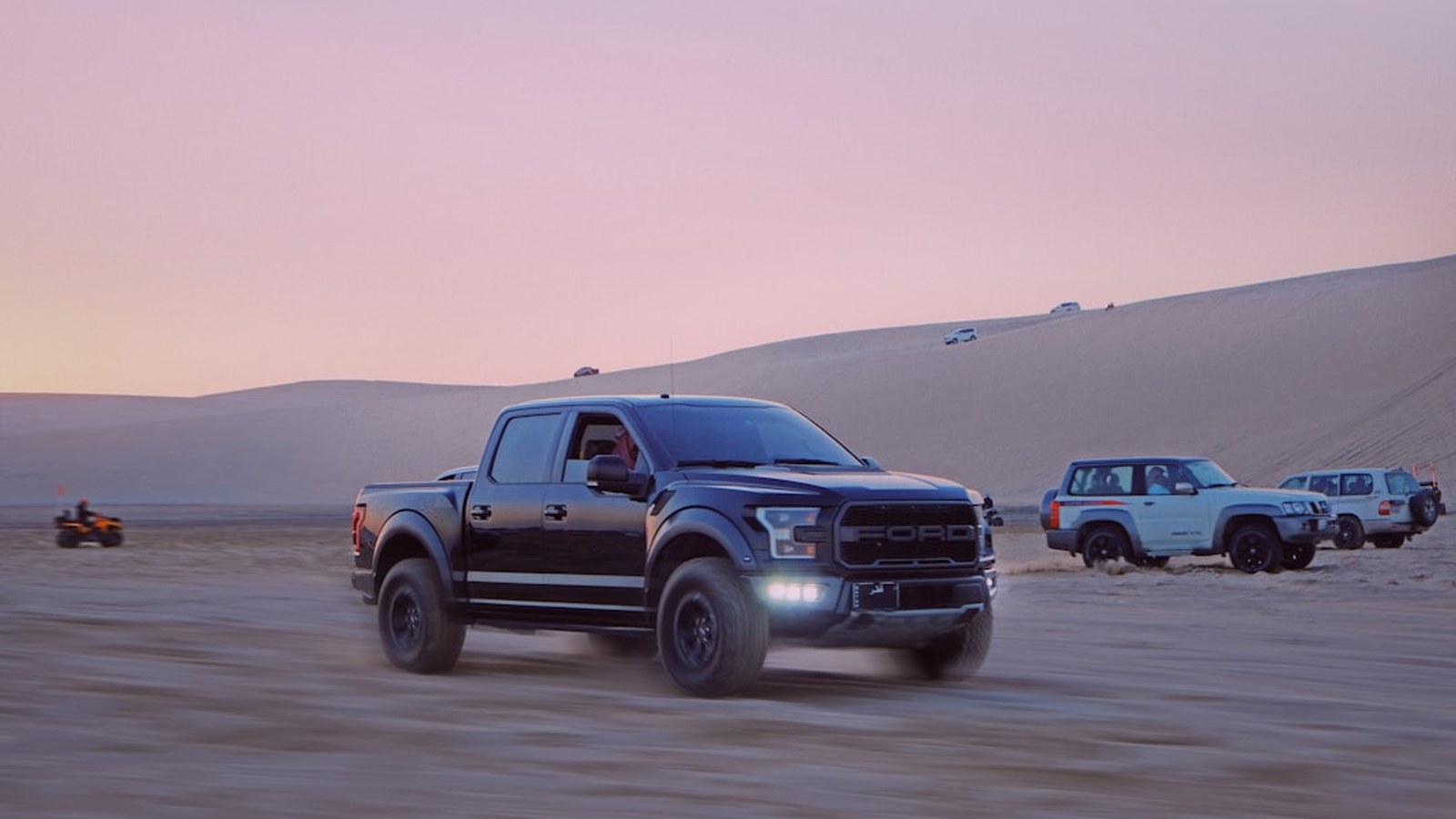 Photo: Vivek MV / Unsplash
Strip away all the specifics and sand driving comes down to a handful of habits. Air down before you commit. Stay smooth on the wheel and the pedal. Keep momentum alive and trust it when your gut tells you to quit. Read the surface and pick firmer lines. And never crest a dune faster than you can react to what is on the other side.
Do that, and the terrain that humbles most people becomes the most fun you can have with four wheels. Sand punishes hesitation, so the move that saves you is almost always the opposite of your instinct. Commit to the line, stay light, and float.
Hero photo: Abdul Haseeb M M / Unsplash