

Everybody budgets for tires, a lift, and a winch. Then they drag the transfer case across a granite ledge on their first real trail, hear that awful crunch, and suddenly understand why underbody armor exists. The stuff hanging under your rig is expensive, hard to reach, and absolutely not designed to take a direct rock strike. A cracked oil pan or a punctured fuel tank in the middle of nowhere is the kind of mistake that ends the trip and starts a tow bill.
Off-road armor is not glamorous. It bolts underneath where nobody sees it, it adds weight, and it does nothing at all until the day it saves you a few thousand dollars. But if you actually wheel your rig, it is some of the smartest money you can spend. The trick is understanding what each piece protects, what material makes sense for how you drive, and where the marketing stops and the real protection begins. Here is the whole picture.
 Photo: Brice Cooper / Unsplash
The Three Jobs: What Armor Actually Protects
Underbody armor is not one product. It is a group of parts that each guard a different vulnerable area, and knowing which is which keeps you from overbuying or leaving a weak spot.
Skid plates shield the stuff mounted under your belly: the engine oil pan, transmission, transfer case, fuel tank, and the front and rear differentials. The name says it all. When you high-center on a rock or scrape over a ledge, a skid plate lets the rig slide across the obstacle instead of letting that obstacle punch straight into a component that costs a fortune to replace. From the factory most trucks and Jeeps come with almost nothing down there, maybe a thin stamped-steel splash shield over the oil pan and bare metal everywhere else.
Rock sliders protect the sides of the vehicle, specifically the rocker panels and pinch welds along the bottom of the doors. On a narrow trail you will eventually set the side of the truck down on a rock or a ledge, and without sliders that force goes straight into sheet metal that crumples. Good sliders take the hit, carry the weight of the rig when you pivot on an obstacle, and double as a jack point and a step.
Differential and component guards are the smaller, targeted pieces: diff covers, control-arm skids, gas-tank skids, steering guards. These fill in the gaps a main belly skid does not cover, and they matter more the harder you wheel.
The reality is that a rig built for forest roads needs a very different armor package than one built for Moab slickrock. More on matching the kit to the driving later. First, materials, because that decision drives everything else.
 Photo: Chris Cordes / Unsplash
Steel vs Aluminum vs UHMW: The Material Debate
This is the argument that fills up every forum thread, and the honest answer is that all three materials work. They just make different tradeoffs between weight, cost, and how they behave when they meet a rock.
Steel is the old-school standard and still the choice for hardcore rock work. The sweet spot for most builds is 3/16-inch plate (about 0.188 inches, or 4.8mm). It is tough, it slides well over rock, it can be welded and repaired with basic equipment, and it is cheap compared to the alternatives. The downside is weight. A full steel belly package adds real pounds down low, and while a low center of gravity is not a bad thing, that weight costs you a little clearance, fuel economy, and payload. Steel also rusts, so it wants a good powder coat and the occasional inspection for chips and surface corrosion.
Aluminum trades some toughness for a big weight savings, roughly 30 to 40 percent lighter than steel for the same coverage. For aluminum to actually protect rather than just deflect splash, you want it thick: 4mm to 6mm is the range where it does real work. Anything thinner is closer to a splash shield than a skid plate. Aluminum does not rust, needs almost no maintenance, and is a favorite for overlanders carrying a lot of weight who want protection without piling on pounds. The catch is that aluminum dents and gouges more than it slides, and badly bent aluminum is harder to repair on the trail than steel. It is also more expensive per plate.
UHMW stands for ultra-high molecular weight polyethylene, and if you have never run it, it looks like a thick black cutting board bolted under your truck. Do not let that fool you. UHMW is self-lubricating, so it slides over rock and logs better than any metal, it absorbs impact and springs back instead of denting, it is quiet where metal clangs, and in pure abrasion resistance it dramatically outlasts steel. Typical thickness is 3/8-inch (9.5mm). The common knock is that a sharp point can still get through it on a hard enough strike, so a lot of builders run UHMW over a steel or aluminum backing plate to get the slide of plastic with the puncture resistance of metal. For sand, mud, and high-abrasion trails, UHMW is genuinely excellent.
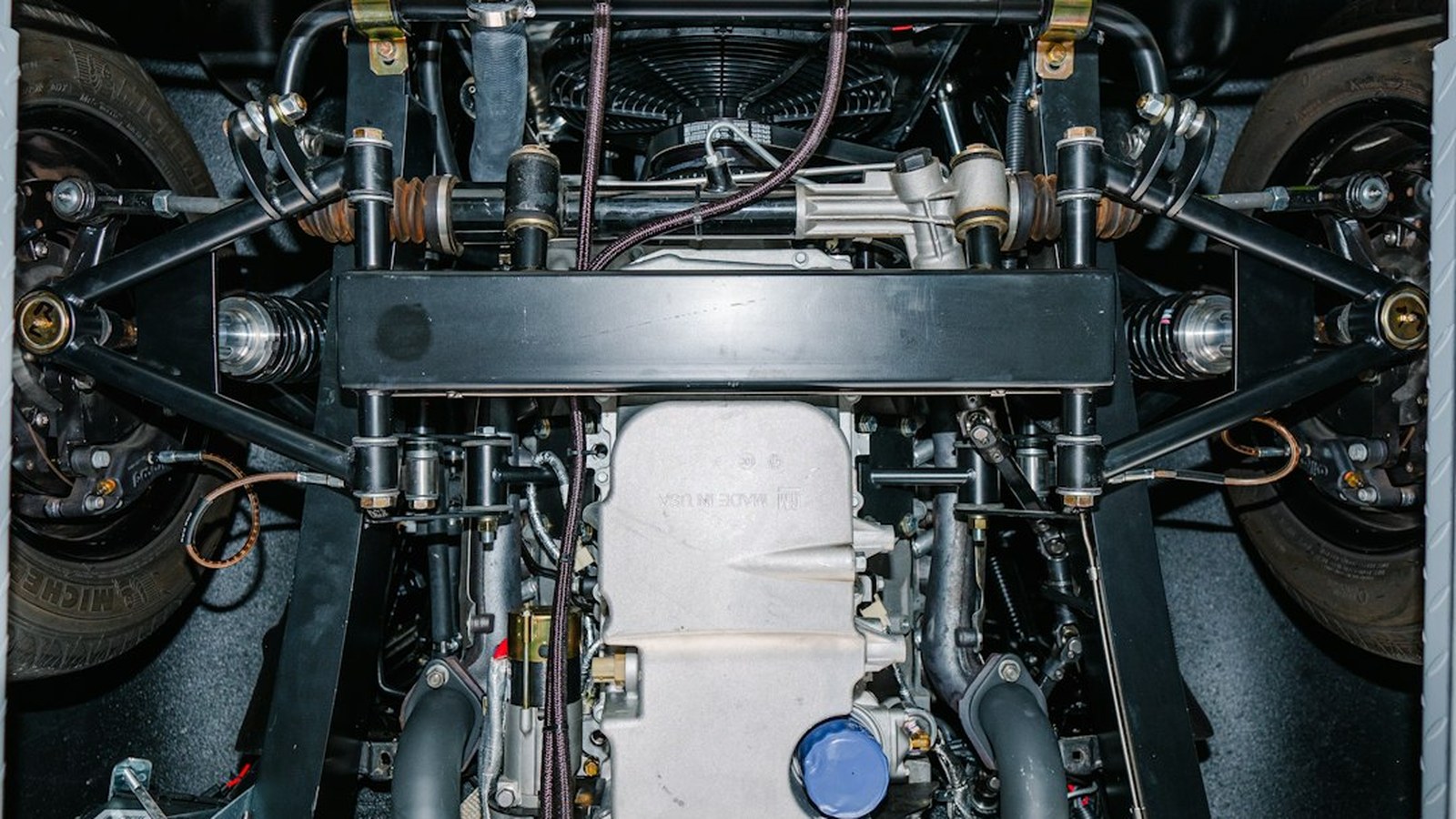 Photo: Wesley Tingey / Unsplash
No single material wins outright. Steel for maximum toughness on technical rock. Aluminum when weight is the enemy. UHMW when abrasion and sliding matter most. Many well-built rigs mix them, running steel on the diffs and transfer case where strikes are hardest and UHMW on the big belly pan where sliding is king.
Skid Plates: Factory, Modular, or Full Belly
Once you pick a material you still have to decide how much coverage you want, and the options run from cheap and partial to expensive and total.
Factory or partial skids cover one or two components, usually the oil pan and sometimes the transfer case. If you stick to graded forest roads and mild trails, bolting a single front skid over the most exposed parts is a reasonable, affordable start. It is not full protection, but it covers the stuff most likely to catch on a mild trail.
Modular kits are individual plates for each component, the oil pan skid, transmission skid, transfer case skid, fuel tank skid, bolted on piece by piece. The advantage is you can build it up over time and tailor it to your rig, and you can drop a single plate to service a component without pulling the whole system. This is how most people end up armoring a truck.
Full belly pans are the heavy hitters. A belly pan runs frame rail to frame rail in one continuous smooth surface, often with its own crossmembers, turning the entire underside of the rig into one flat sled. Nothing snags because there are no edges to catch. This is what dedicated rock rigs run, and it is the most protection money can buy, but it is also the heaviest and most expensive option and it makes component access more involved.
 Photo: Cody Lannom / Unsplash
Most people land in the middle. Start with the front skid and transfer case, add the fuel tank and diffs as you push into harder terrain, and only reach for a full belly pan if you are genuinely crawling difficult rock where high-centering is a regular event.
Rock Sliders: Bolt-On vs Weld-On
Sliders are where the install method matters as much as the slider itself, and this is another debate that gets more heated than it needs to.
Weld-on sliders attach permanently to the frame, and if your absolute top priority is rigidity, they are unmatched. Welded directly to the frame rails, the slider becomes a structural extension of the vehicle with essentially zero flex, which matters when you are putting the full weight of the rig on one slider during a pivot on a ledge. They also tend to sit tighter to the body for a cleaner fit and slightly better clearance. The downsides are real, though: the install is permanent and hard to reverse without cutting, it requires a skilled welder (bad welds actually weaken the frame), and heat from welding can damage brake lines or wiring if the job is rushed.
Bolt-on sliders attach to the frame with graded hardware, and here is the part that surprises people: with properly sized, properly graded bolts from a reputable manufacturer, bolt-on sliders are effectively as strong as weld-on for the vast majority of trail use. They are DIY-friendly, removable, and do not void frame warranties or require a welder. The tradeoffs are that they can loosen or rattle over time if not torqued correctly, and they sometimes hang a touch lower than a welded set. For most people building a trail truck or overland rig, a quality bolt-on set is the right call.
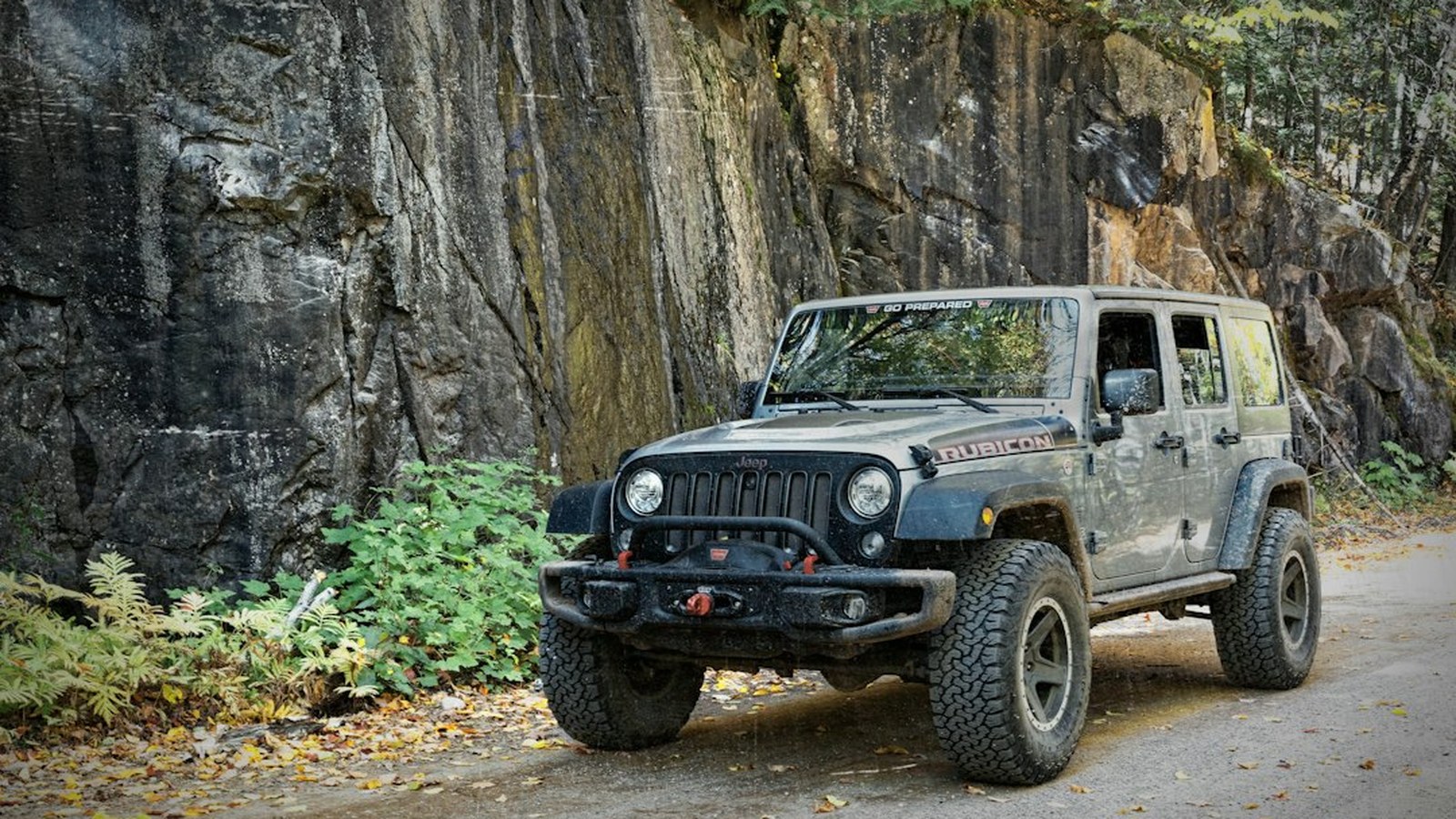 Photo: Dan Gomer / Unsplash
One more spec worth knowing: slider construction. Better sliders use DOM tubing (drawn over mandrel), which is mild steel cold-drawn over a mandrel to produce a stronger, more consistent tube than standard welded tube. Bent-plate or formed sliders are lighter and often cheaper, while tube sliders with a step or kick-out give you a rock-sliding surface plus a step up to the roof rack. If you plan to set the weight of your truck on these, spend the money on real DOM construction.
Differential Covers and the Rest of the Package
The big belly skid and sliders cover most of the exposure, but a few targeted pieces finish the job.
Differential covers replace the thin stamped cover on your axle with heavy cast or fabricated steel, protecting the ring and pinion gears from a direct hit and, on better covers, adding fluid capacity for cooler running. On any rig that sees rock, a diff cover is cheap insurance for an expensive, trip-ending failure.
Gas tank skids matter more than people think. A punctured fuel tank is one of the few trail failures that can genuinely strand you and create a fire hazard, and on a lot of trucks the tank hangs low and exposed. If your belly pan does not already cover it, a dedicated tank skid is high on the priority list.
Control-arm and steering guards protect your suspension links and steering components from rock strikes that can bend a tie rod or crack a control arm. These come into play on harder technical terrain and are usually a later addition once you are wheeling difficult trails regularly.
What It Costs and How to Prioritize
Armor is not cheap, but you do not have to buy it all at once. Expect individual plates to run roughly $300 to $835 each depending on material and vehicle, with a full aluminum belly package landing somewhere in the $900 to $1,300 range, and steel often less for the material but more in weight. Rock sliders vary widely with construction, from a few hundred dollars for basic bolt-on plate sliders to well over a thousand for heavy DOM tube sets. Shop installation adds labor on top, roughly an hour per section for bolt-on work and considerably more for welding.
If you are building up over time, this is a sane order of operations. Start with rock sliders, because body damage is common and expensive and sliders also give you a jack point and step. Add the front skid and transfer case skid next, since those are the components most likely to catch on moderate trails. Then the fuel tank skid and differential covers as you push into harder terrain. Save the full belly pan, control-arm guards, and steering skids for when you are genuinely crawling difficult rock and high-centering regularly.
 Photo: Isaac Mitchell / Unsplash
The honest truth is that most weekend trail rigs never need a full belly pan and a complete steel armor package. Match the armor to the terrain you actually drive, not the terrain you watch on YouTube. A set of good sliders and a front skid will carry a lot of people through years of moderate wheeling without a single trail-ending underbody failure. Buy the protection you need, bolt it on right, and then forget it is there until the day it earns its keep.
Hero photo: Photo: Quilia / Unsplash