
A broken bone twenty miles from pavement is a completely different animal than one in your driveway. In town, you dial 911 and an ambulance is on scene in minutes. Out on the trail, you might be two hours from a cell signal and another two from a road an ambulance can actually reach. You are the first responder, and for a while, the only one.
That reality should change how you think about your first aid kit. Most of the kits sold at the checkout counter are built for scraped knees and hangnails. They are fine for a picnic. They are useless when someone slices a hand open on a broken jack handle or rolls a rig on a shelf road. This is about building a kit that handles the emergency that actually happens out there, and knowing what to do with it.
Two kits, two jobs
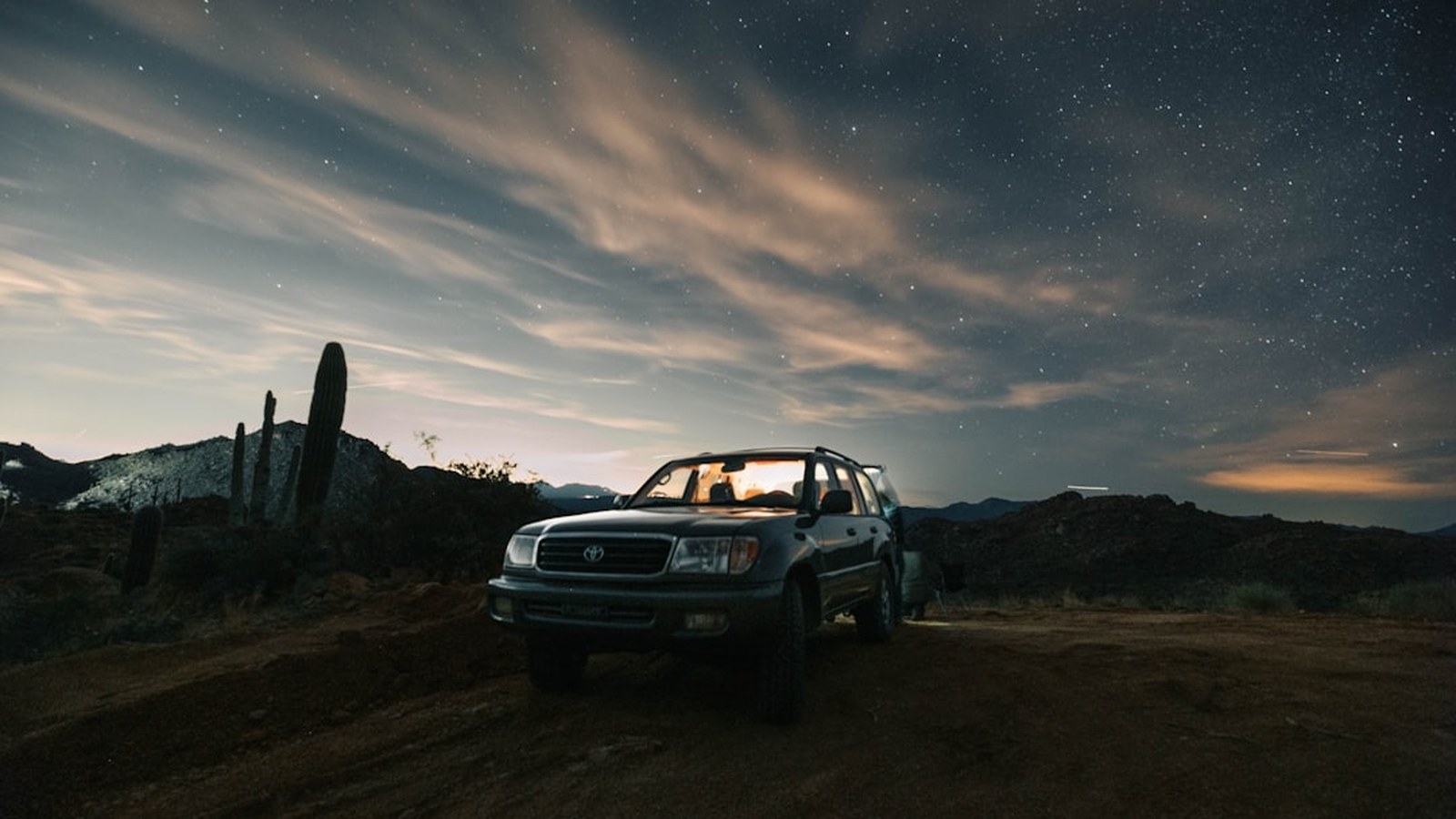 Photo: Jefferson Sees / Unsplash
The single biggest mistake people make is trying to build one do-everything kit. It ends up bloated, disorganized, and when the moment comes you are digging through band-aids looking for the thing that matters. Split it into two.
The first is your boo-boo kit: blister care, small bandages, tweezers, antiseptic wipes, pain relievers, antihistamines, tape. This is the stuff you reach for ninety-five percent of the time. Keep it accessible, near the front seats, easy to grab for the small stuff.
The second is your trauma kit: the gear you hope you never open. Serious bleeding control, a splint, an emergency blanket, gloves. This one lives somewhere you can grab it instantly and hand off to someone else, because when you need it, seconds matter and you may not be the one using it. Bright color, labeled, always in the same place.
The part that actually saves lives: bleeding control
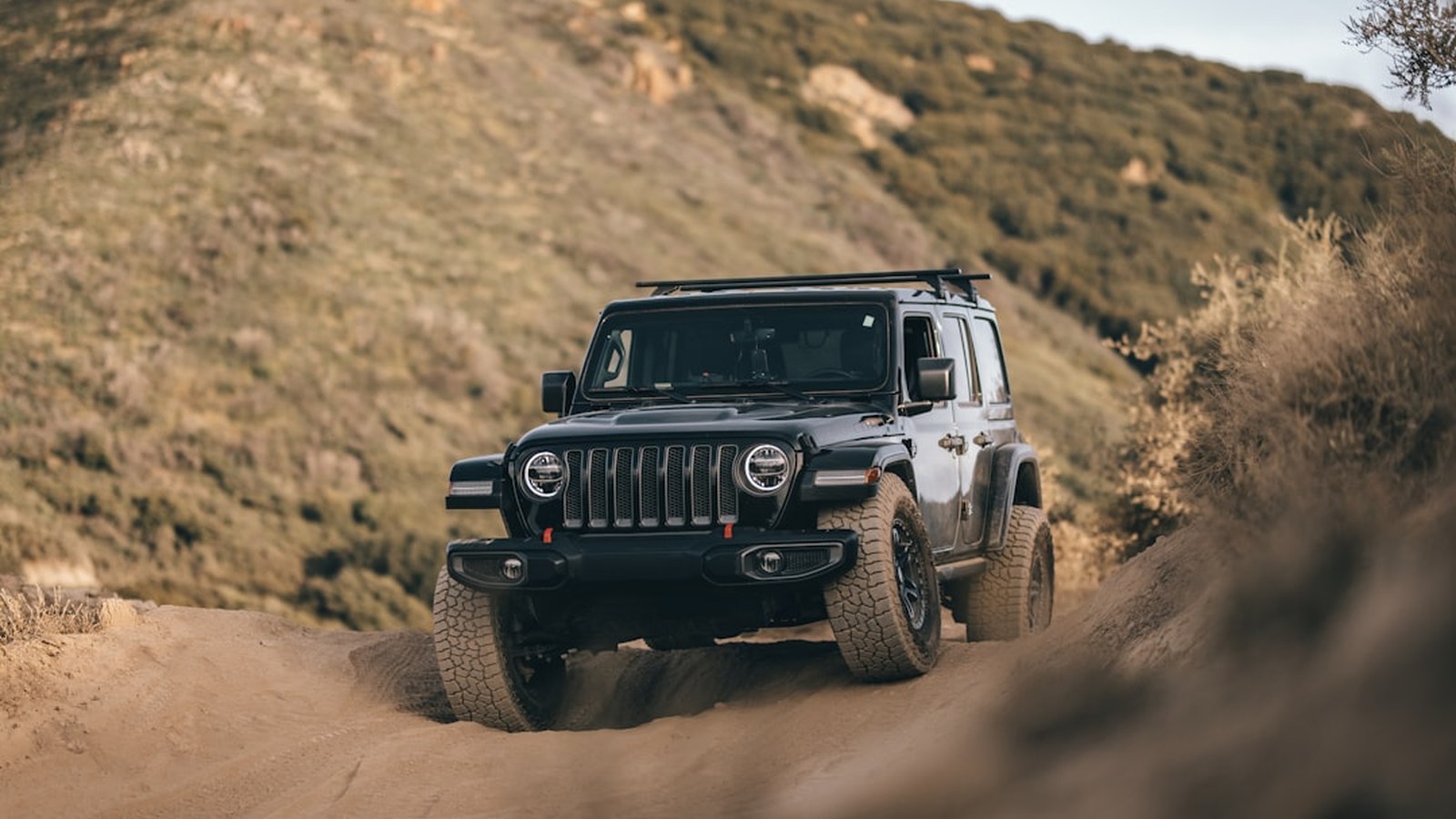 Photo: Josh Duke / Unsplash
Here is the uncomfortable truth. The most likely way someone dies on a trail before help arrives is bleeding out from an injury that was survivable. A femoral or arm artery can empty a person in a matter of minutes. That window is shorter than any realistic rescue time in the backcountry. This is exactly why the American College of Surgeons built the national Stop the Bleed program around teaching ordinary people to control hemorrhage.
Three things belong in every trauma kit, and you should know how to use all three before you ever leave the driveway:
- A commercial tourniquet. Not a bandana, not a belt. A real windlass tourniquet like a CAT (Combat Application Tourniquet). Improvised tourniquets fail far more often than they work. Buy a genuine one, because counterfeits are a known problem and they break under load.
- Hemostatic gauze. Products like QuikClot use a mineral (kaolin) that accelerates clotting. You pack it directly into a deep wound and hold pressure. A single Z-fold dressing carries several yards of treated gauze in a package smaller than your phone.
- A pressure dressing and plain gauze. For packing, wrapping, and holding pressure on everything the other two do not cover.
How to actually use a tourniquet
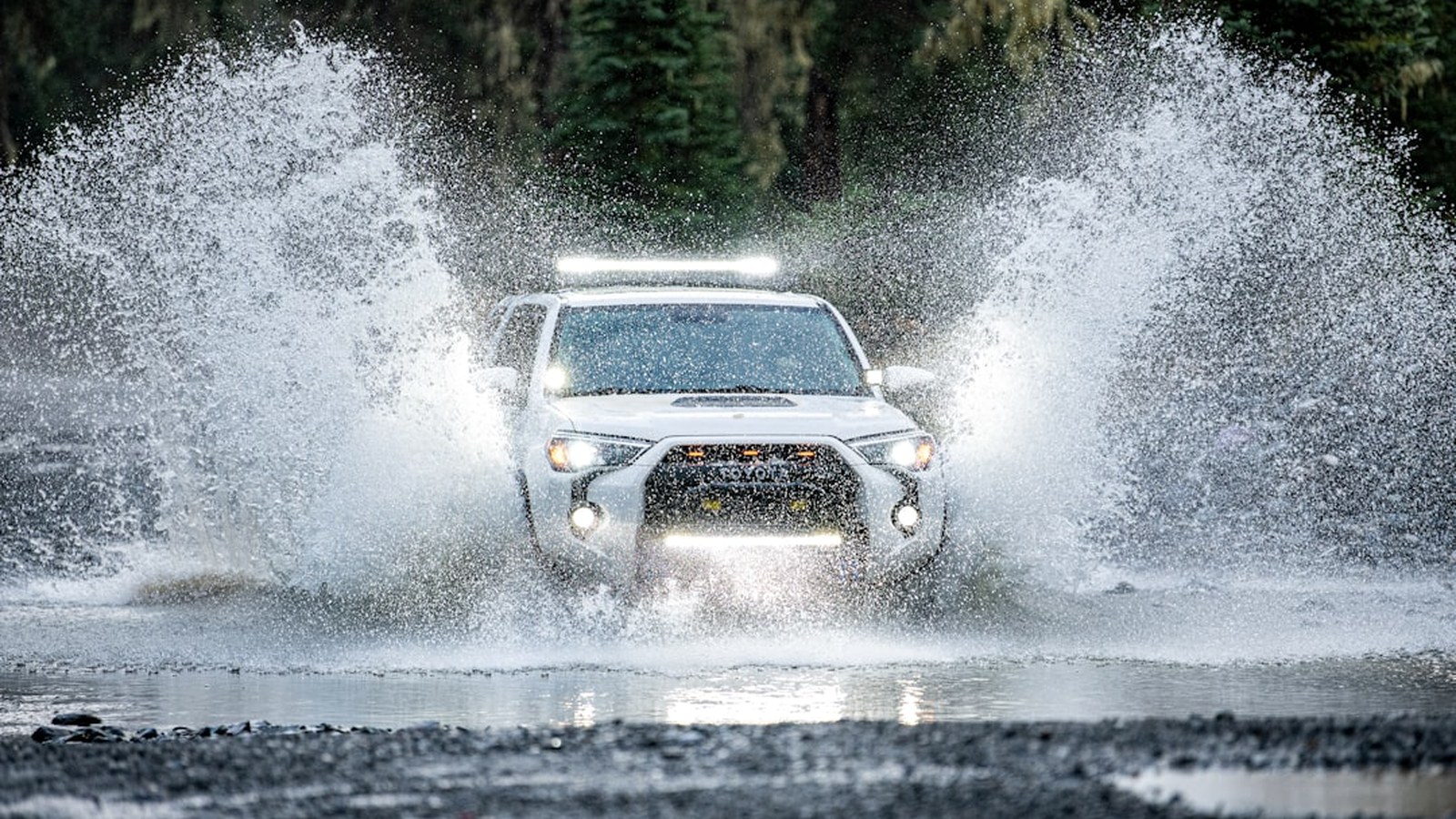 Photo: Kyle Grozelle / Unsplash
If bleeding from an arm or leg is severe and will not stop with direct pressure, a tourniquet goes on high and tight, above the wound, and you crank the windlass until the bleeding stops. It is going to hurt. That is normal and it is not a reason to loosen it. A tourniquet that is not tight enough is worse than none at all, because it can restrict veins while letting arteries keep pumping.
Then do the one thing most people forget: write down the time you applied it. Mark it on the tourniquet, on the person’s skin, anywhere. Modern trauma guidance treats tourniquets as safe for a couple of hours, and definitive surgical care should ideally happen within roughly two hours of application. The rescue team needs that clock. Once it is on and working, leave it on. You do not take a tourniquet off in the field.
Broken bones and the long ride out
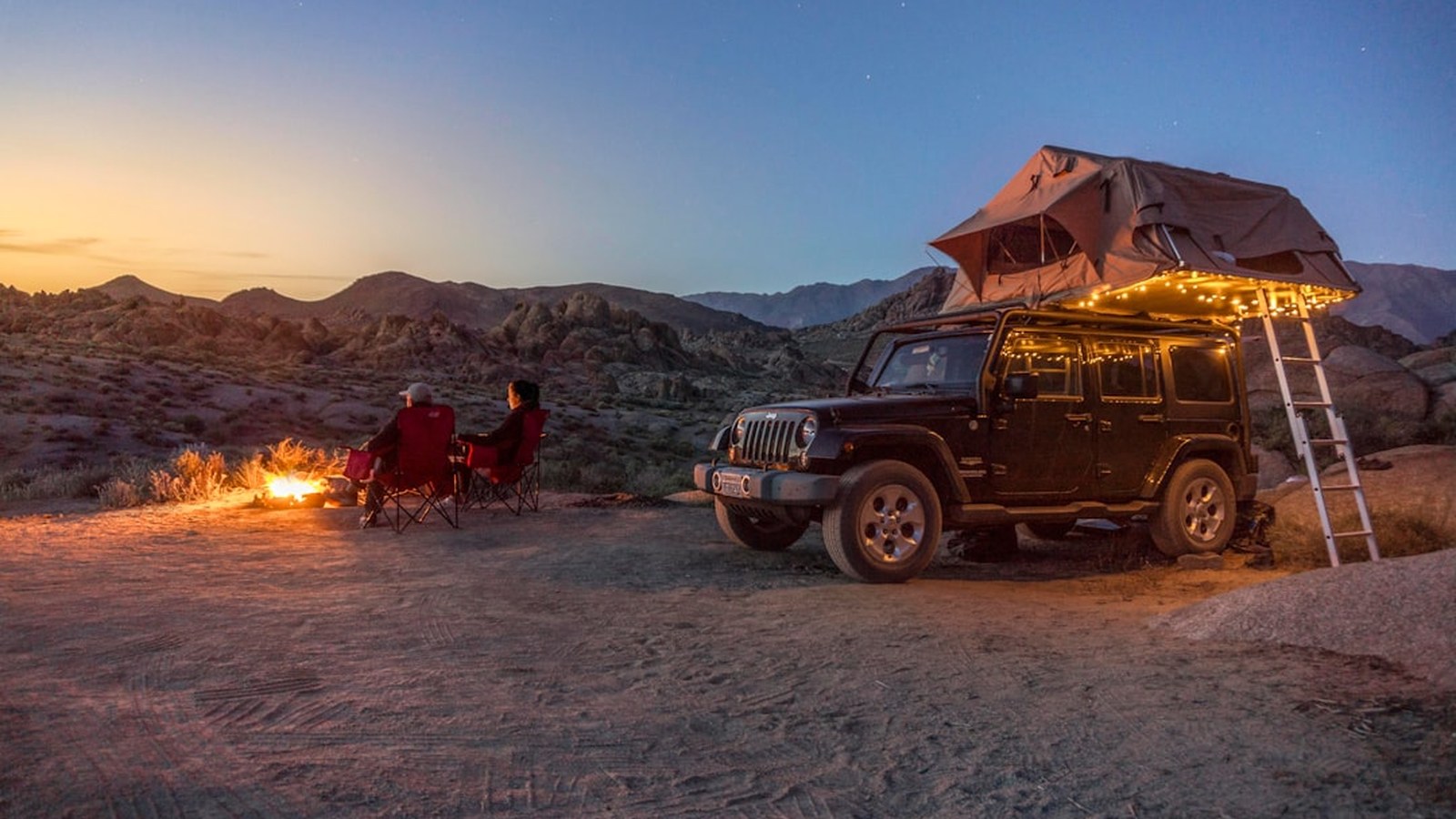 Photo: Stephan Widua / Unsplash
A fracture is rarely life-threatening, but it will end your day and it makes the drive out miserable if you handle it wrong. The rule from wilderness medicine is simple: do not move someone on a fractured leg unless it is splinted. A splint stabilizes the bone, controls pain, and prevents a closed fracture from becoming a far worse open one on a bumpy two-track.
A SAM splint is the gold standard for the kit. It is a thin aluminum core sandwiched in foam that you can bend into a rigid C-shape and mold around almost any limb. It is waterproof, reusable, and weighs almost nothing. That said, you can improvise a splint from trail junk, a tent pole, a tire iron, a rolled magazine, padded with clothing and lashed with the tape or wrap you already carry. Know the technique either way. Splint it in the position you found it, pad the bony parts, and check that fingers or toes stay warm and pink after you wrap.
Sprains, which are far more common than fractures, do not need a splint. They need rest, compression with an elastic wrap, and elevation. Carry the wrap.
The unglamorous items that matter more than you think
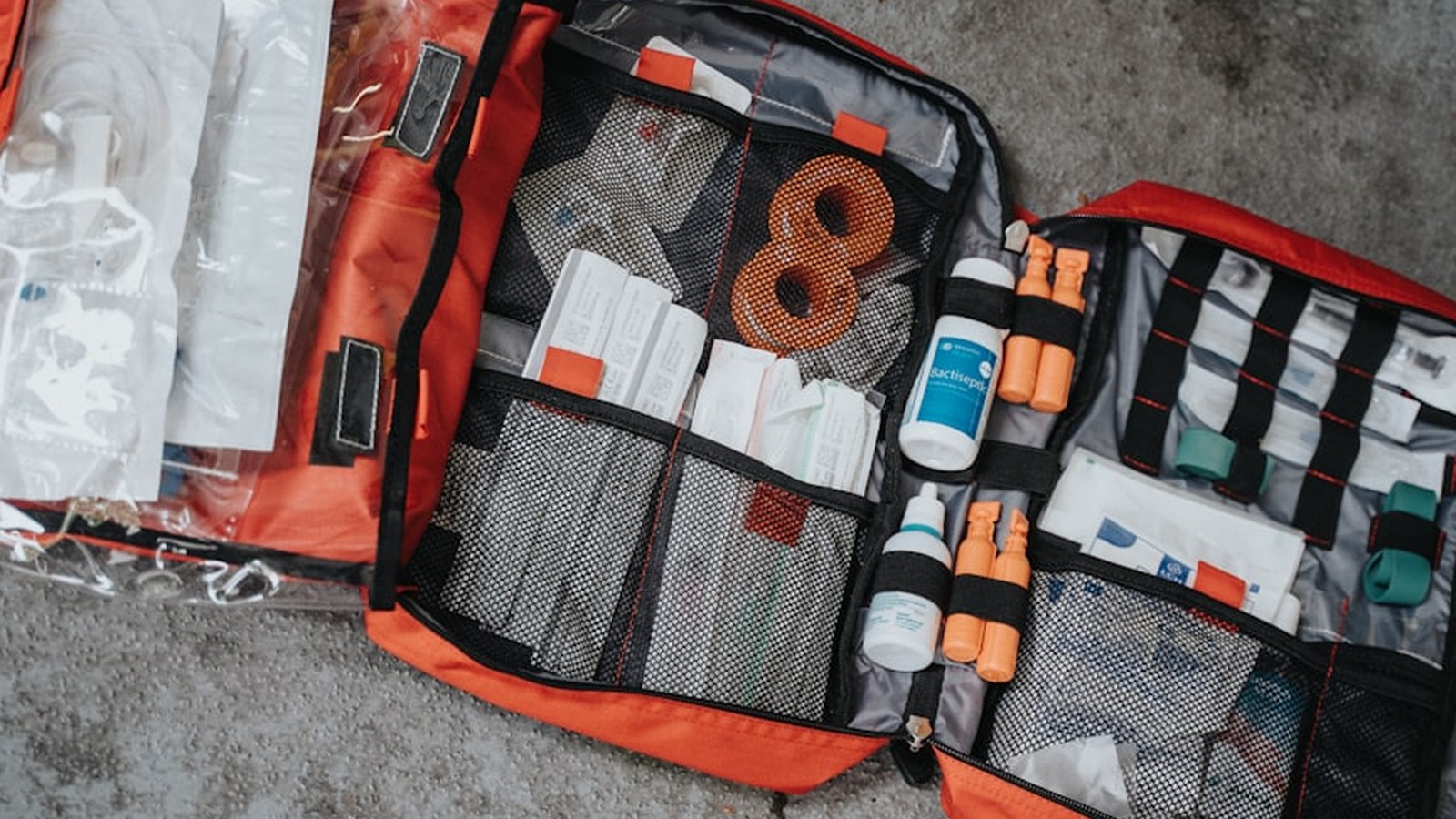 Photo: Mathurin NAPOLY / Unsplash
The dramatic gear gets all the attention, but the boring stuff earns its place every single trip:
- Nitrile gloves, several pairs. Bleeding is messy and you will go through more than one pair. Nitrile over latex to avoid allergy problems.
- Trauma shears. You cannot treat a wound you cannot see. Shears cut through a jacket sleeve or pant leg in seconds without moving the injury.
- An emergency blanket (space blanket). Shock and cold are real dangers after any serious injury, even in summer once the sun drops. A person in shock loses heat fast, and keeping them warm is genuine treatment, not a comfort item.
- An irrigation syringe. The single best thing you can do for a wound in the dirt is flush it hard with clean water. Irrigation prevents infection better than any ointment, and infection is what turns a trail cut into a hospital visit days later.
- Medications. Ibuprofen, an antihistamine like Benadryl for allergic reactions and stings, any personal prescriptions, and an EpiPen if anyone in your group has a known severe allergy.
Gear is half the equation. Training is the other half.
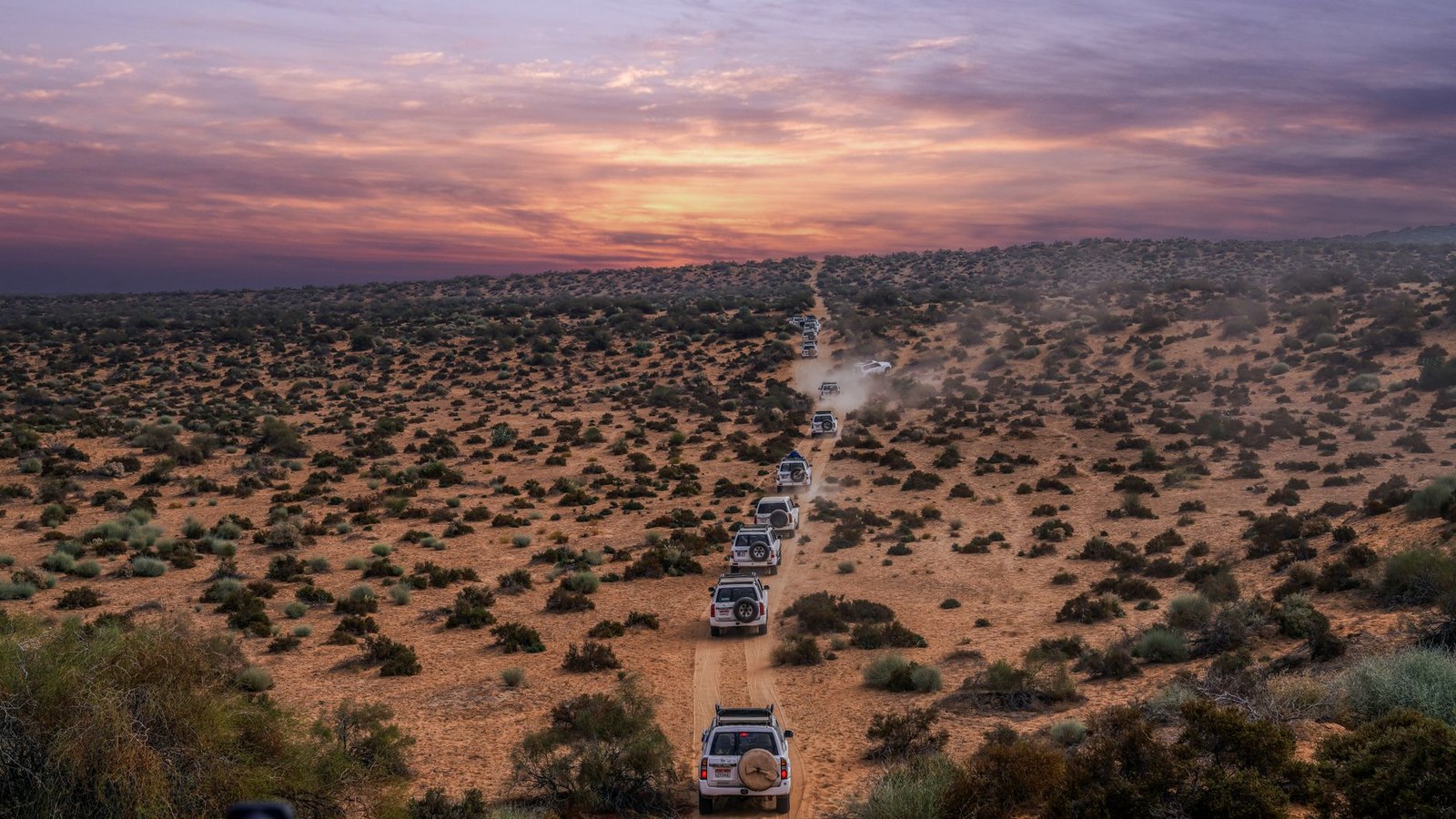 Photo: Tauseef Kazmi / Pexels
Here is the part nobody selling kits wants to say out loud: a trauma kit you do not know how to use is just weight. A tourniquet in the wrapper does nothing. Packing a wound, splinting a leg, recognizing shock, and managing a patient for hours until help arrives are skills, and skills fade.
Take a Wilderness First Aid (WFA) course. It is typically a two-day class, offered by outfits like NOLS and Wilderness Medical Associates, and it is built specifically for the situation off-roaders and overlanders live in: real injuries, a long way from definitive care, with limited gear. It teaches you to assess a patient, make decisions, and improvise, which is exactly what the backcountry demands. If you spend serious time on remote trails, it is the best money you will spend on safety, better than any winch or lightbar.
Round it out with communication
None of this matters if you cannot call for help. A first aid kit stabilizes the patient. It does not get them to a hospital. Carry a way to reach the outside world from a dead zone, a satellite messenger like a Garmin inReach or the satellite SOS built into newer phones, so that after you have done your job, the professionals can start doing theirs. Tell someone your route and your expected return time before you leave, every time.
Build the kit for the emergency that actually happens. Learn to use it. Carry a way to call for help. Then go wheel, knowing that if the worst day comes twenty miles from pavement, you are ready for it.
Hero photo: Thomas Tucker / Unsplash