
The best wheelers on the trail are almost never the ones with the biggest tires or the loudest engine. They are the ones who sit at the bottom of an obstacle for an extra thirty seconds, staring at it, before they ever touch the throttle. They are reading the terrain. And once you learn to read it too, you will start to see the same thing they do: a clean path through the mess that everyone else drives straight into.
Picking a line is the single most transferable skill in off-roading. It does not care what you drive. A well-placed stock 4Runner will out-crawl a poorly-driven built rig every single time, because the line does more work than the lift kit ever will. This is how to actually see it.
Slow Down Before You Speed Up
The first rule of reading terrain has nothing to do with driving. It is stopping. Before any obstacle you are unsure of, get out and walk it. Look at where the ruts go, where water has cut channels, where rocks stick up, and where the ground looks soft or undercut. On anything technical, this is not optional. If you cannot see the bottom of a mud hole or a water crossing, walk it first, because there may be a hidden ledge or a diff-killing rock waiting under the surface.
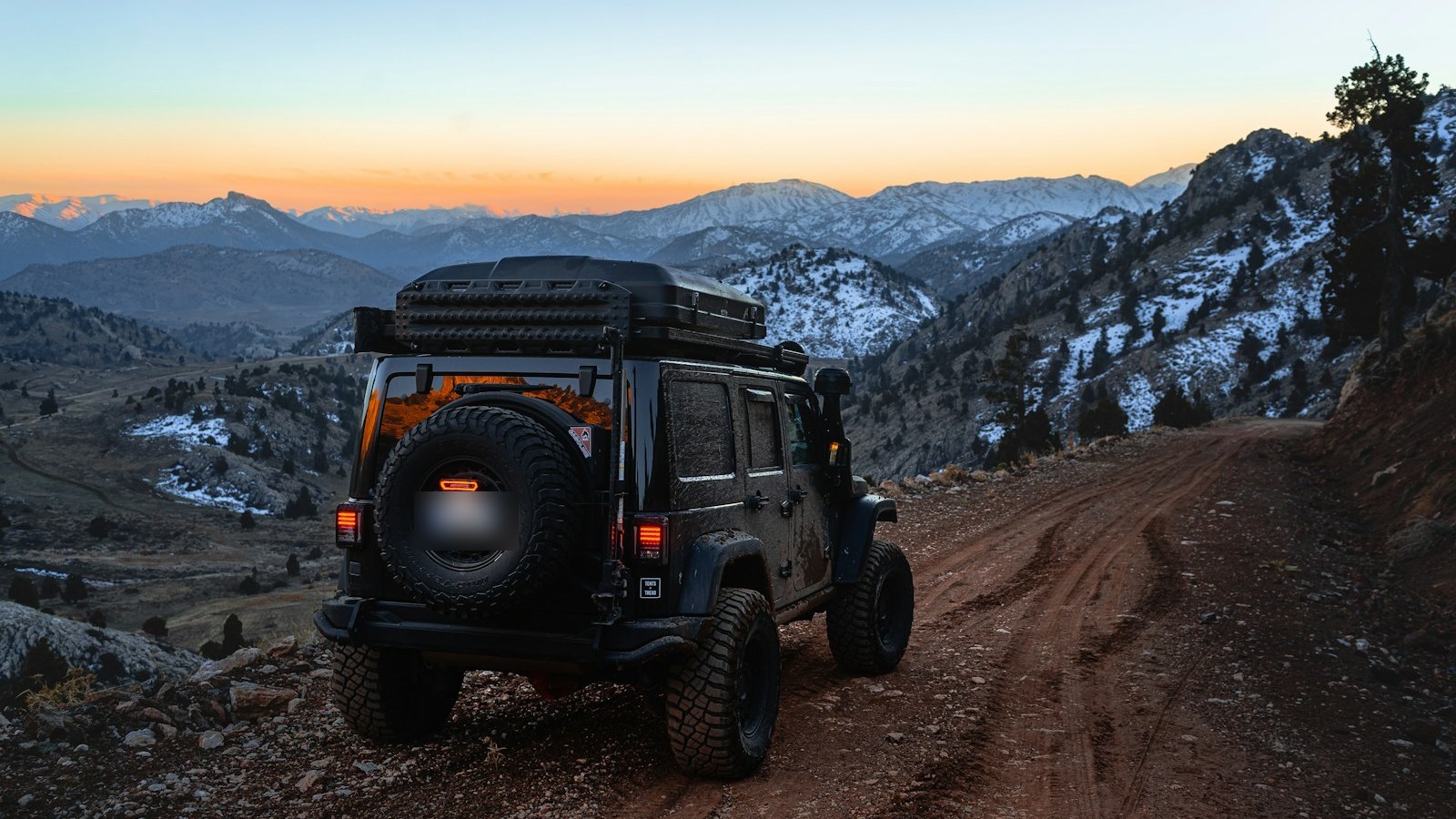 Photo: Thomas Tucker / Unsplash
Walking the obstacle does two things. It shows you the actual surface instead of the flattering view you get from behind the windshield, and it forces your brain to plan the whole move before you commit. Most trail carnage happens because someone reacted halfway through instead of having a plan going in.
The One Idea That Ties It All Together
Every type of terrain rewards a different technique, but they all share one principle: you are protecting the most vulnerable parts of your rig while keeping your tires on whatever gives the best grip. The lowest, softest, most exposed parts of your truck are the differentials, the transfer case, and the belly. Your line exists to keep those parts clear while your tires do the climbing, floating, or clawing.
That is where the idea of breakover angle matters. Breakover is the sharpest ridge or crest your vehicle can straddle before the belly catches on the peak. Understand that one concept and half of line-reading clicks into place. When you look at a rock ledge or a sharp mound, you are really asking one question: can I get my tires up and over this without hanging my frame on top of it?
Rocks: Drive On Top, Not Around
Rocks are where line-reading gets the most precise, and where beginners get it exactly backwards. The instinct is to steer around every rock and thread the tires through the gaps. On real rock obstacles, that is often the wrong call.
The counterintuitive truth, confirmed by tire engineers and rock-crawling instructors alike, is that you frequently want to place your tires directly on top of the large rocks. BFGoodrich puts it plainly for solid-axle rigs: putting a tire on top of an obstacle lifts the critical components underneath up and out of harm’s way. If you drive around the rock, your tire drops into the low gap while the rock you avoided slides right under your diff or your rocker panel. Put the tire on the rock and the whole truck rises with it.
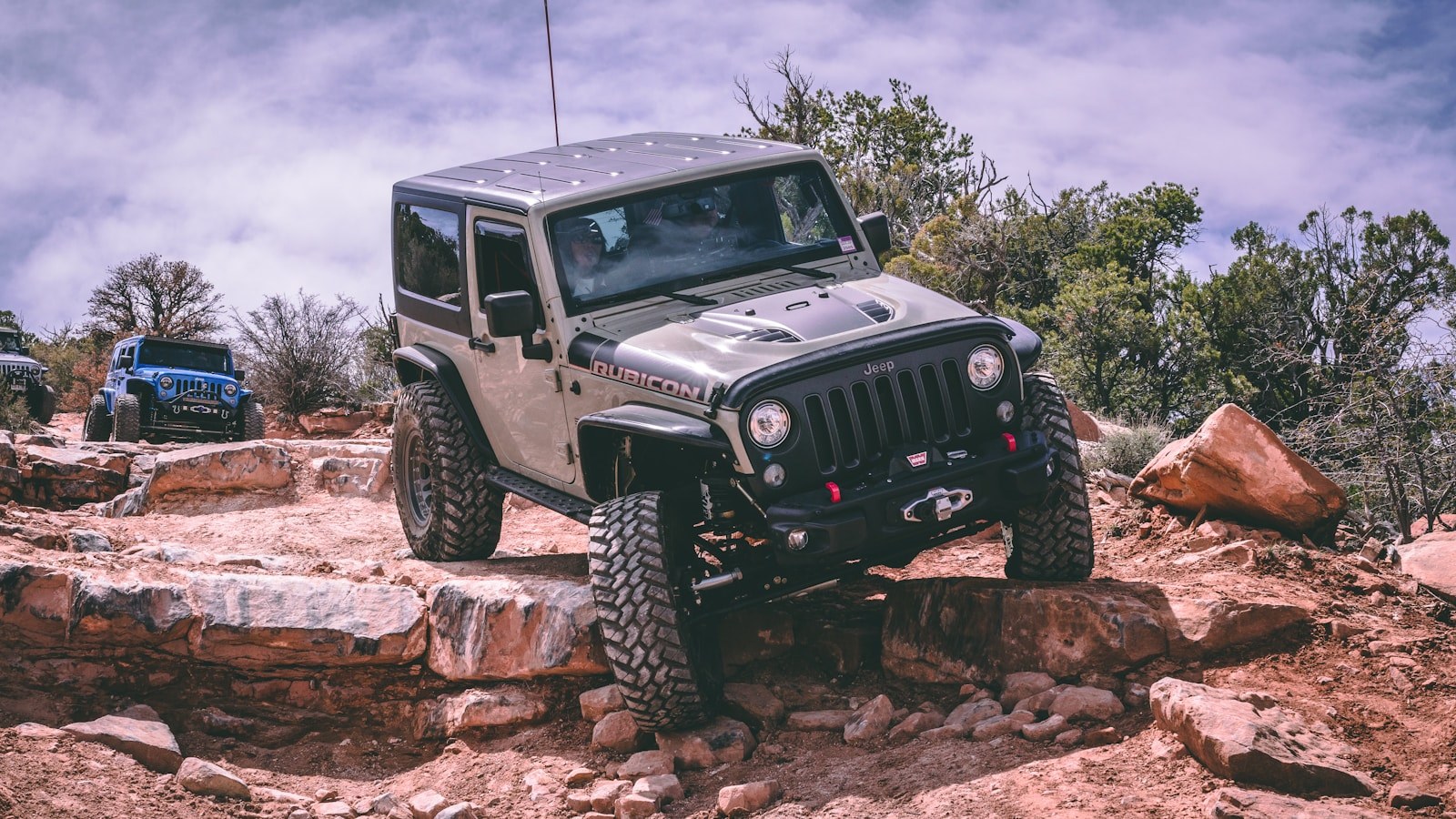 Photo: cody lannom / Unsplash
The technique that goes with it is patience. Crawl. Use the lowest gear you have, feather the throttle, and let the tires find grip a fraction of a rotation at a time. A useful trick from technical drivers is to ride the brake lightly while giving a touch of throttle. That loads the drivetrain, forces the nose down for traction, and keeps you from lurching off a ledge when a tire suddenly gains grip.
And here is the part your ego will hate: get a spotter. From the driver’s seat you cannot see your front tires, let alone place them on a specific rock. Someone standing outside can see all four corners, direct you inch by inch, and warn you the instant a rock shifts. The best rock drivers on the planet still use spotters. It is not a crutch, it is the tool.
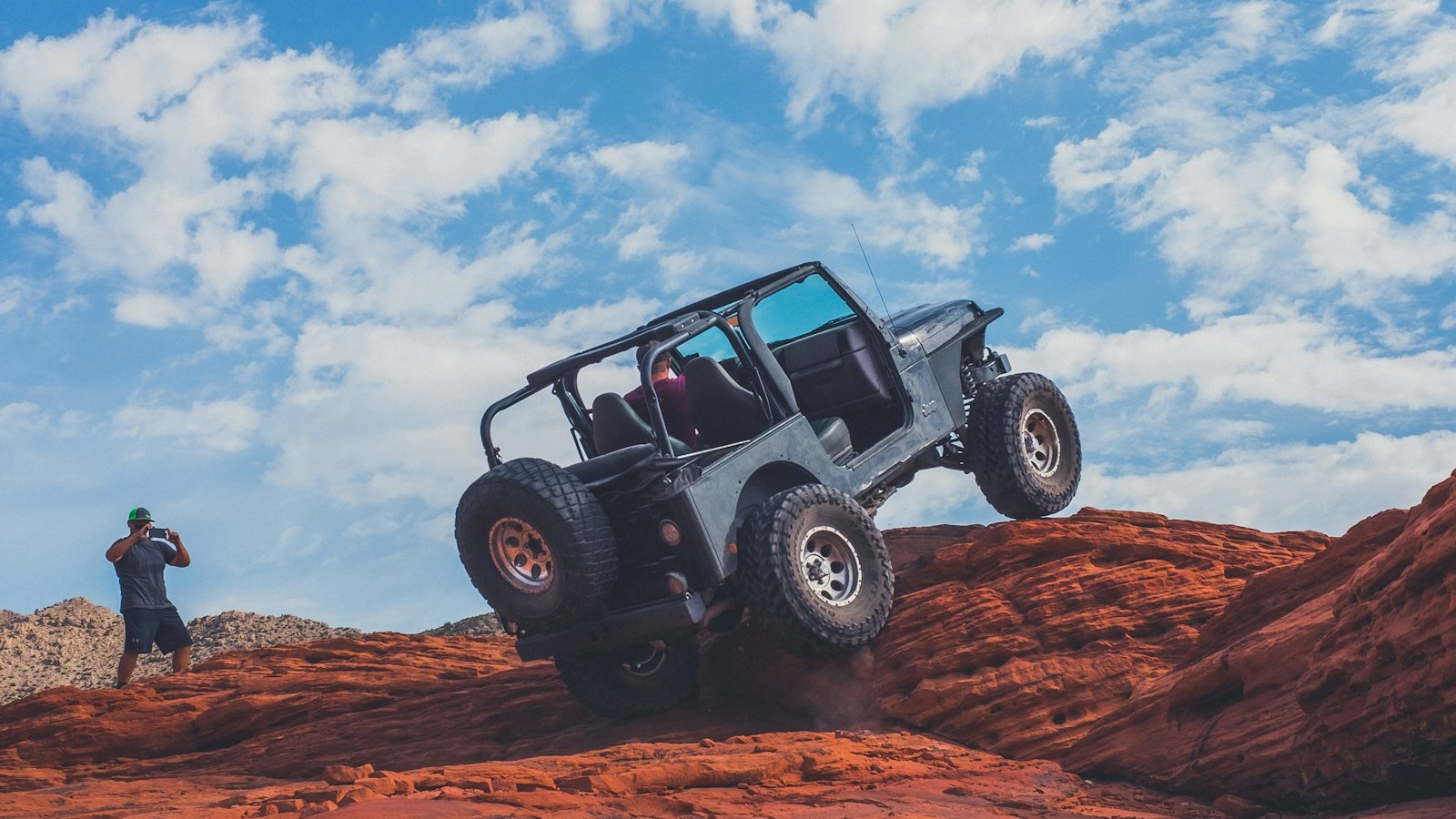 Photo: Quilia / Unsplash
Sand: Float, Do Not Dig
Sand flips the rulebook. Where rocks reward crawling and precision, sand rewards airing down and momentum. The whole game in sand is to float on top of it instead of digging into it, and two things get you there.
First, air down. This is the biggest single lever you have in sand, bigger than anything else you can do. Dropping your tire pressure spreads the tire’s contact patch out longer and wider, so the truck floats instead of plowing. A sane starting point is around 20 PSI, then air down further based on how the truck feels. For very soft dunes many drivers run 12 to 15 PSI, while firmer, packed beach sand is happy around 18 to 20. Do not dump all the air at once. Drop to 20, drive into the sand, and see if it feels floaty and holds speed. If it still bogs, let out a little more.
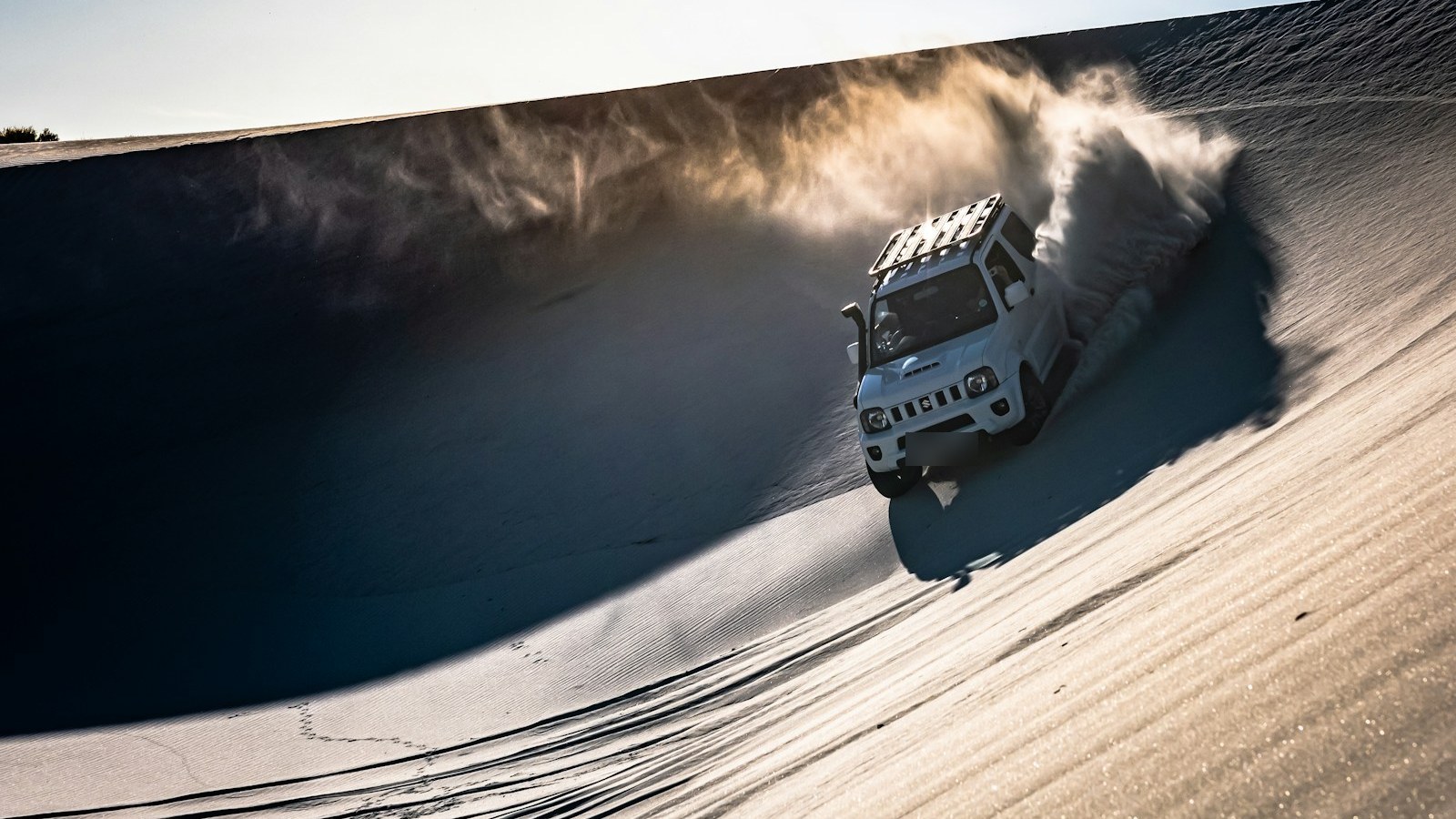 Photo: Joshua Ellish / Unsplash
Second, momentum. Sand grabs you the moment you slow down, so you keep a steady, consistent throttle and let the truck carry its speed. Reading a sand line means looking ahead: pick a smooth, continuous path and commit to it, because stopping to reconsider in soft sand is how you get buried. On dunes, the read is about the crest. You want enough speed to reach the top but not so much that you launch blindly over a ridge into a drop you cannot see. Crest the dune at an angle when you can, ease off as you approach the top, and always assume the far side is steeper than it looks.
One rule that saves tires: air back up before you hit pavement. A floppy, aired-down sidewall builds heat fast at highway speed and can fail quickly. Get back to your normal street pressure, usually somewhere around 32 to 35 PSI for most light trucks and SUVs, before you point the rig home.
Mud: Straight Lines and Honest Tracks
Mud is the great humbler. It looks harmless and then swallows a rig to the axles. Reading a mud line comes down to two questions: how deep and gooey is it, and where does the firm ground run underneath.
Start by reading the tracks. If you can see clean tire-tread or boot imprints holding their shape in the mud, that usually means the surface is firm enough that an easy, steady approach will carry you through. If the mud is the thick, brownie-batter kind that fills tracks back in and leaves no clear imprint, treat it with respect. That is the stuff that sticks you to the bottom.
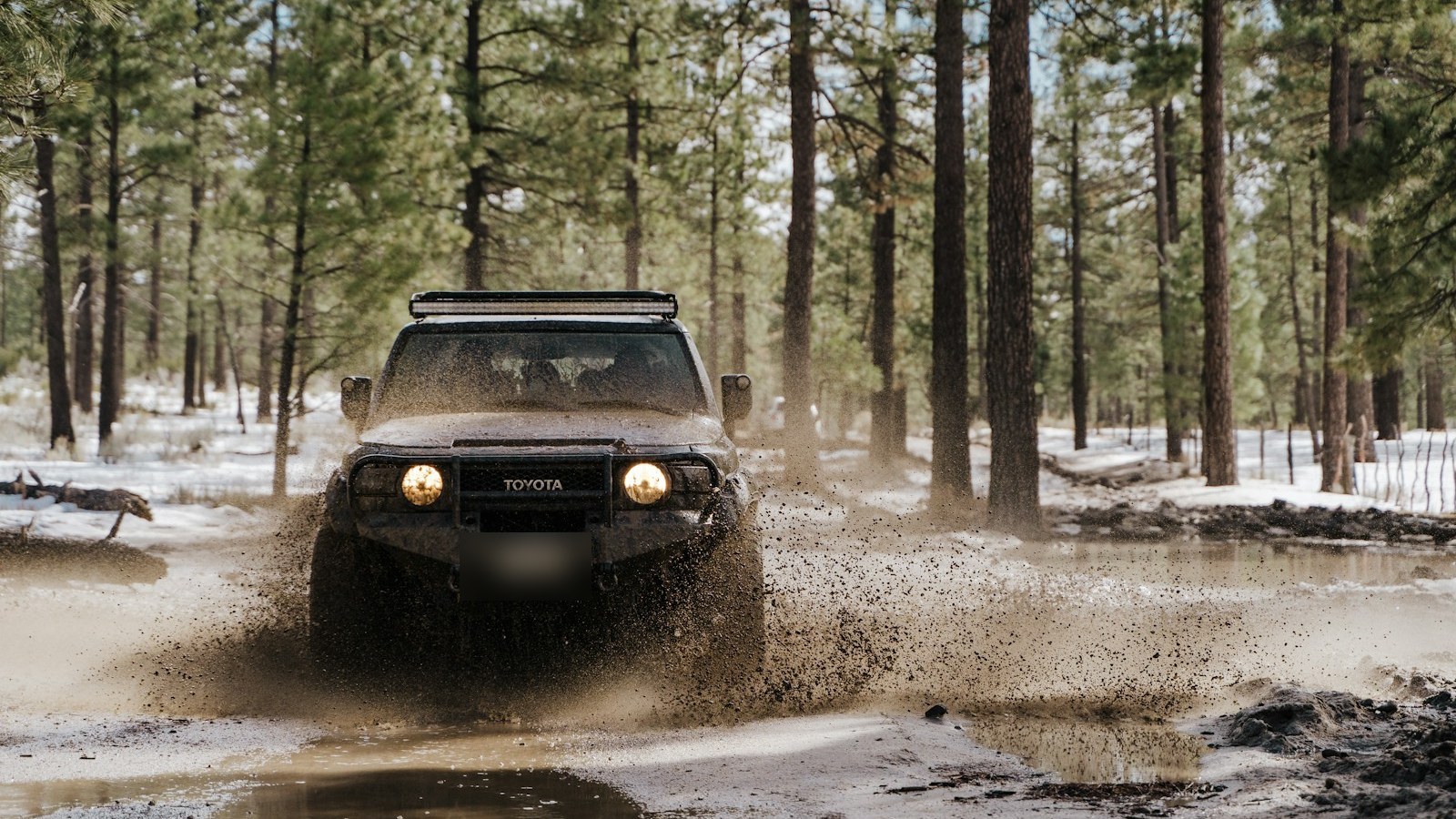 Photo: Josue Michel / Unsplash
When you commit, keep your line as straight as possible. Turning the wheels in mud just adds drag and digs you down, so you want to point straight through the sludge with steady momentum rather than sawing at the wheel. If there are established ruts, use them. Deep ruts work like tram rails, keeping you tracking straight and stopping the truck from sliding sideways. The danger is getting crossed up on a rut, so keep the nose pointed where you want to go and never let the rig slew sideways on a slope, where a slide can turn into a rollover.
Momentum matters here too, but it is a gentler momentum than sand. Deep mud wants a steady pull in a low gear, second or third in low range for many rigs, so you keep moving without spinning the tires into a hole. If you feel the truck start to bog, resist the urge to floor it. Spinning tires just dig you deeper and polish a slick trough around each tire. Steady and straight beats fast and frantic every time.
Reading Water and Ruts You Did Not Cut
A quick word on the two things that combine all of the above. Water crossings are really a mud-and-rock read with a blindfold on. Walk it if you possibly can, feel for the firm bottom and any drop-offs, and pick the shallowest, firmest line across. Never assume the far bank has the same exit angle as your entry.
Ruts left by other rigs are gifts and traps at once. They show you where people have gone before, which is genuinely useful information. But a rut cut by a lifted rig on 37s may be far deeper than your stock truck can straddle, and dropping a tire into a too-deep rut can hang your belly on the crown between the tracks. Read the rut’s depth against your own ground clearance before you trust it.
The Skill Is Just Seeing
Everything above is really one habit dressed up in four kinds of terrain: look before you leap, protect the vulnerable parts of the truck, and put your tires where the grip and the clearance are. Rocks want your tires up high and a spotter’s eyes. Sand wants low pressure and steady speed. Mud wants a straight line and honest tracks. Water wants your feet in it first.
The reason the calm drivers look fearless is that they are not guessing. They walked it, they read it, and they already know where the truck is going before it moves. That is the whole trick. Slow down at the bottom, read the terrain honestly, and the line everyone else missed will be sitting right there in front of you.
Hero photo: Simon Berger / Unsplash