
Your phone dies past the last cell tower. Or worse, it never dies, it just sits there with a full battery and zero bars while the truck ahead of you disappears over a rise and the truck behind you takes the wrong fork. That is the exact moment a radio stops being a nice-to-have and becomes the thing holding your whole day together.
If you have spent any time reading trail forums, you already know the comms debate is a religious war. CB guys, GMRS converts, ham radio evangelists, all of them convinced everyone else is doing it wrong. The truth is less dramatic. Each of these three does a specific job, each has a real cost, and the “best” one depends entirely on who you wheel with and how deep you go. Let me break it down the way I wish someone had broken it down for me before I wasted money on the wrong setup.
The three options, in one breath
There are really three radio services worth caring about for trail use: CB, GMRS, and amateur (ham) radio. FRS and MURS exist too, but for keeping a convoy together on the trail these three are the conversation.
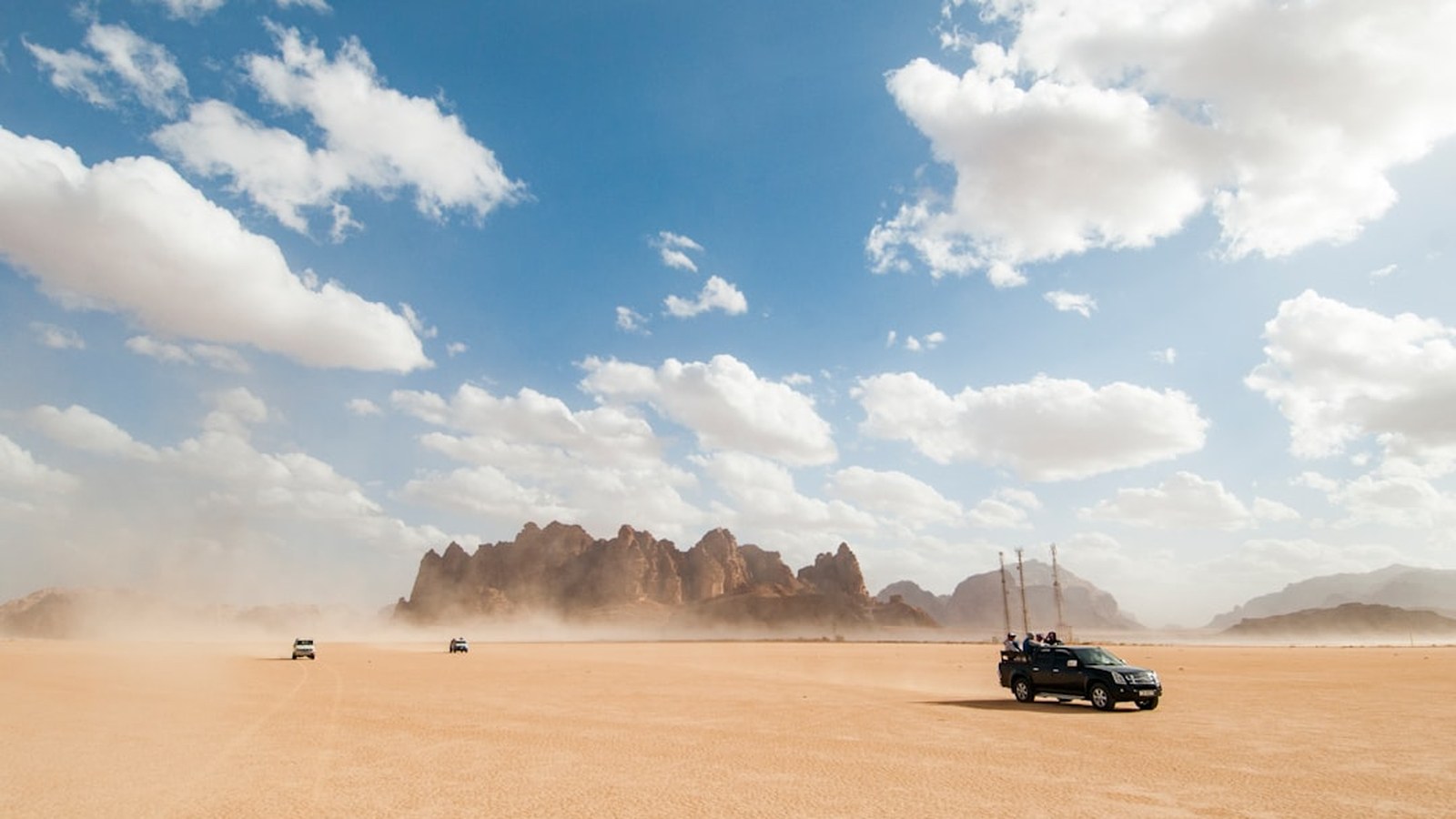 Photo: Juli Kosolapova / Unsplash
CB is the old standby. GMRS is where most of the off-road world has landed in the last few years. Ham is the deep end, more capable and more work to get into. None of them are wrong. They are just tuned for different missions.
CB radio: the veteran that refuses to die
CB, or Citizens Band, runs under FCC Part 95 Subpart D. Forty channels sitting around 27 MHz in the HF band, and the number people care about most: no license required. You buy the radio, you mount it, you talk. That simplicity is the whole reason CB dominated trail comms for decades.
 Photo: Bill Cypher / Unsplash
The catch is power. The FCC caps CB at 4 watts output on AM and 12 watts on single sideband (SSB). That is not a lot, and because CB lives down in the HF band, its performance is quirky. On open ground you might get a few miles. Drop into a canyon or thread through heavy timber and that range can collapse to almost nothing. Antenna quality and tuning matter more on CB than almost any other factor, and a poorly tuned CB antenna will make an already modest radio feel useless.
A few CB channels carry unwritten traditions worth knowing. Channel 9 is the informal emergency channel. Channel 19 is the trucker highway channel, handy for road conditions on the drive to the trailhead. Off-road groups often pick their own working channel and just tell everyone the number before airing down.
CB’s honest advantages today: zero licensing friction, cheap used gear everywhere, and the fact that a lot of old-school trail groups and guided runs still default to it. If your crew runs CB, you run CB. Simple as that.
GMRS: where most overlanders have landed
The General Mobile Radio Service is the one that has quietly taken over the off-road world, and for good reason. It lives up in the UHF band, on 30 channels around 462 and 467 MHz, under FCC Part 95 Subpart E.
 Photo: Tim D / Unsplash
Here is the number that wins arguments: GMRS allows up to 50 watts on some channels. Compare that to CB’s 4 watts and you understand why a GMRS rig punches through terrain that eats a CB signal alive. UHF also behaves better around buildings, rock, and the kind of cluttered environments off-roaders actually drive through.
GMRS does require an FCC license, but this is where it gets genuinely friendly. The license costs $35, lasts 10 years, and there is no exam. None. You fill out an online application, you pay, you get a call sign. Better still, one license covers your entire immediate family. Your spouse, your kids, your parents, all legal to transmit under your call sign. For a family or a small trail crew, that is about as painless as government paperwork gets.
The other GMRS ace is repeater access. A repeater is a radio installed somewhere high, a mountaintop or a tower, that listens on one frequency and re-broadcasts on another. Hit a repeater and your handheld’s reach jumps from a couple miles to potentially across a whole region. The FCC lists realistic GMRS range as anywhere from 1 to 25 miles depending on your station, the terrain, and whether you are using a repeater.
One rule worth knowing so you do not get surprised: the FCC prohibits linking GMRS repeaters over the internet to stitch together giant networks. GMRS is meant to stay local. That is a feature, not a bug, for trail use.
GMRS also overlaps with FRS, the little bubble-pack walkie-talkies from the sporting goods store. FRS shares many GMRS channels but is capped at 2 watts and needs no license. Those cheap blister-pack radios will technically talk to a GMRS rig on shared channels, which makes GMRS an easy on-ramp for a group where not everyone has invested yet.
Ham radio: the deep end, and worth the swim
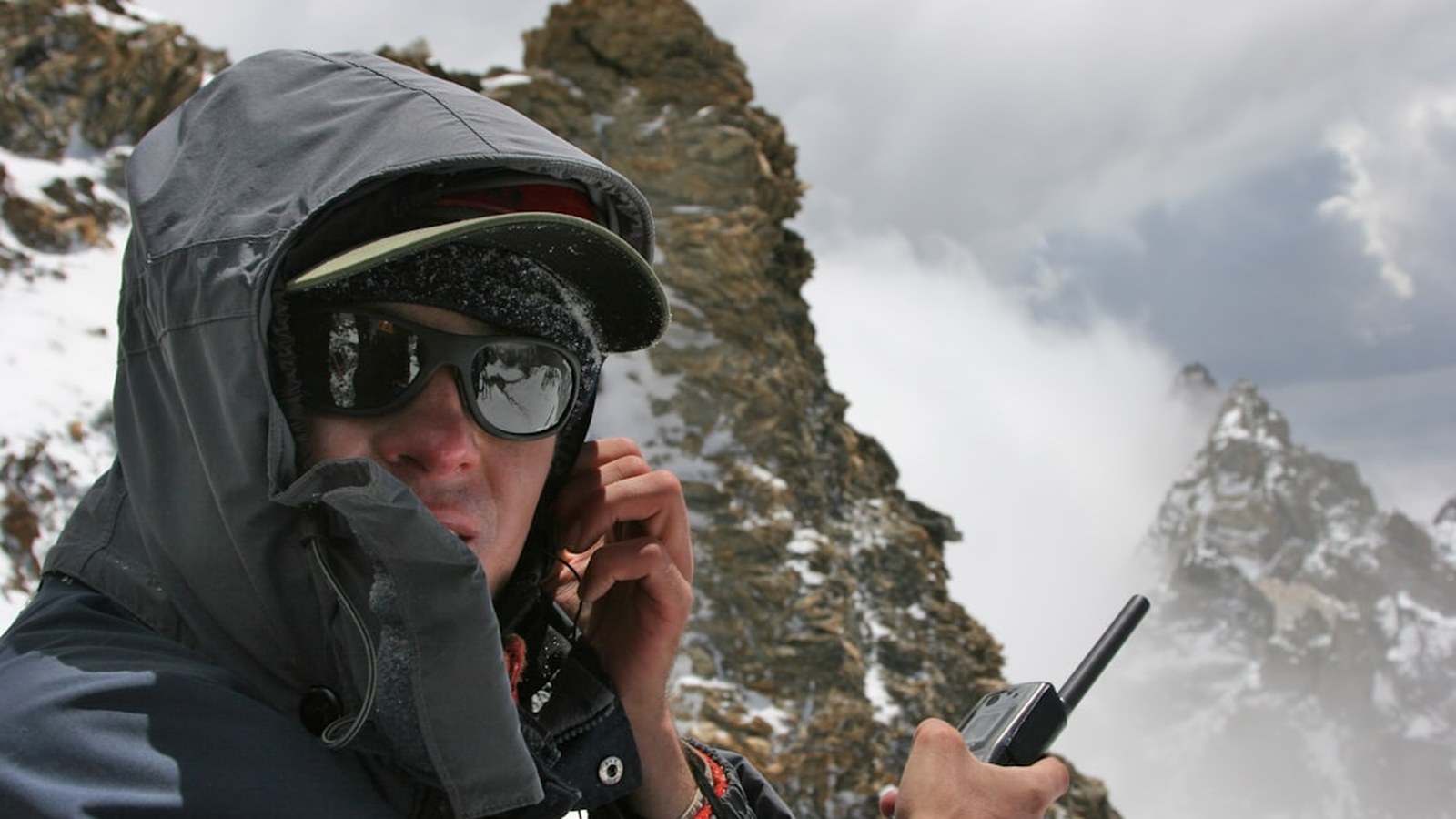 Photo: Dmitriy Suponnikov / Unsplash
Amateur radio, ham, is the most capable option and the one that asks the most of you. To transmit legally you need at least a Technician class license, and that means passing an exam.
Do not let the word “exam” scare you off. It is 35 multiple-choice questions pulled from a published question pool, and you need 26 correct, which is 74 percent, to pass. There is no Morse code requirement anymore. That was dropped back in 2007. The whole question pool is public, and free practice tests will have you ready in a week or two of casual studying. Cost is roughly $50 all in: about $15 for the exam session with a volunteer examiner group, plus the one-time $35 FCC application fee.
What you get for that effort is a different tier of capability. Ham opens up huge swaths of spectrum. For trail use the two you care about most are the 2 meter (VHF) and 70 centimeter (UHF) bands, and ham lets you run far more power than GMRS on those bands. Ham repeaters are everywhere, well maintained by local clubs, and can extend your reach to 50 miles or more. Get into the HF bands with the right gear and you are talking hundreds or thousands of miles with no infrastructure at all, which is the kind of thing that matters when you are genuinely remote.
The entry cost for the radio itself is almost comically low. A Baofeng UV-5R, which covers both 2m and 70cm, runs under $30 and is the classic first ham handheld. That means the license is the real investment, not the hardware.
The honest downside: ham has a learning curve and a culture. There is etiquette, there are conventions, and the licensing gate means not everyone in a casual trail group will bother. Ham shines for the serious overlander who goes far, goes remote, and wants the reach and flexibility nothing else offers.
So which one do you actually buy?
 Photo: Alexander Gluschenko / Unsplash
Here is the framework I give people who ask.
If your crew already runs something, run that. Comms only work if everyone is on the same system. The best radio in the world is useless if you are the only one transmitting on it. Match your group first, optimize later.
If you are starting fresh and want the best balance of range, ease, and legality, get GMRS. The $35 no-test family license, the 50-watt ceiling, the repeater access, and the FRS compatibility make it the sweet spot for the vast majority of overlanders. It is genuinely the modern default for a reason.
If you go deep, remote, and often, and you like understanding your gear, get your ham Technician license. The reach and capability are on another level, and once you are in, you unlock a whole world of repeaters, emergency nets, and long-distance comms that GMRS simply cannot touch.
And if you already own a CB and your group uses it, there is nothing wrong with that. It still works, it still keeps a convoy together, and it costs you nothing to keep running.
A few things that matter more than the badge on the radio
 Photo: Stephan Widua / Unsplash
Whatever you pick, the install matters more than most people admit. A properly mounted and tuned antenna will beat a fancier radio on a bad ground plane every single time. Spend your money and your patience there.
Agree on a channel before you air down. Sounds obvious. It is the single most common failure I see on the trail, three trucks on three different channels wondering why nobody is answering.
And carry a backup. A cheap handheld in the glovebox, a fully charged phone, a paper map, some way to signal if the primary system goes down. Redundancy is the whole point of good trail comms. The convoy stays together because you planned for the moment it might not.
Past the last cell tower, the radio is how the group stays a group. Pick the one your people will actually use, install it right, and agree on the channel before the pavement ends. Do that and you will never again watch the truck ahead vanish over a rise wondering if you just got left behind.
Hero photo: Photo: Finding Dan | Dan Grinwis / Unsplash