
There is a specific kind of joy that only shows up when your dog figures out what is happening. The rooftop tent comes off the wall, the bins start filling the cargo area, and somewhere in there they connect the dots and lose their entire mind. Adventure. For them. Right now. If you have a trail dog, you already know that look. If you are thinking about bringing one along for the first time, buckle up, because a good dog is the best co-pilot you will ever have.
But here is the honest part. Overlanding with a dog is not the same as overlanding with a buddy who can read a map and open their own water bottle. Your dog cannot tell you their paws are burning. They cannot tell you they are overheating until they are already in trouble. They will happily follow you off a ledge because you are their whole world. That trust is the thing that makes it magic, and it is also the thing that puts the entire responsibility on you.
So let us do this right. Here is what to pack, how to keep them safe, and where you can actually take a dog without running into a ranger and a fine.
Start With the Dog You Actually Have
Before we talk gear, talk about your dog honestly. Age, fitness, coat, and breed all change the game. A young lab with a working-dog engine is built for long days in the dirt. A senior dog with hip issues, a flat-faced breed like a bulldog or pug, or a heavy-coated northern breed in the desert is a different conversation entirely.
Flat-faced (brachycephalic) breeds cannot cool themselves efficiently because dogs shed most of their heat by panting, and short muzzles make panting far less effective. Those dogs overheat faster and harder. That does not mean they stay home. It means you plan cooler routes, shorter pushes, and you watch them like a hawk.
If your dog has never done a full day outside, do not make their first outing a three-day remote run. Build up. Day trips, then an overnight close to home, then the real thing. You are learning their limits together, and it is a lot easier to bail on a shakedown run twenty minutes from the house.
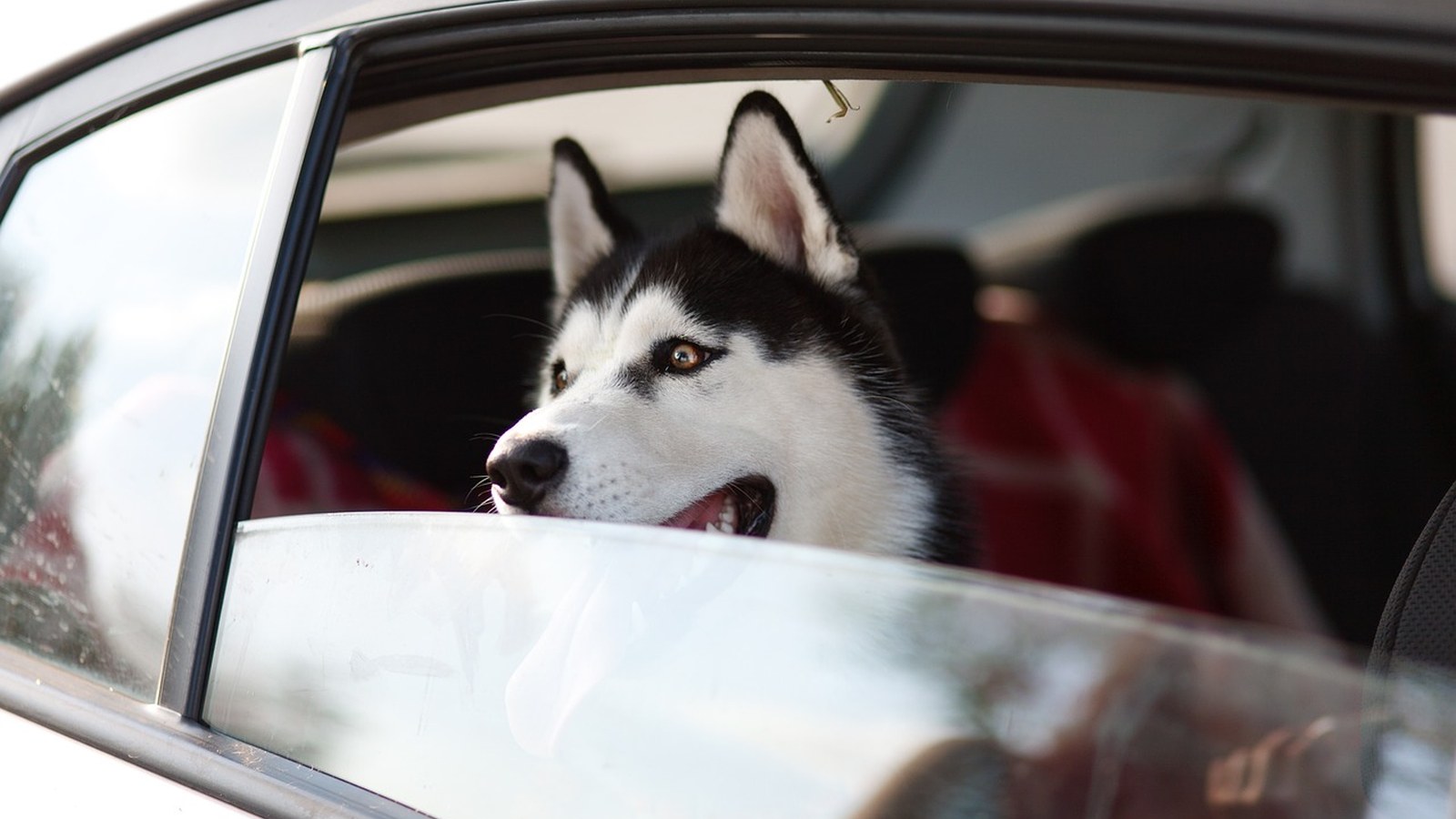 Photo: Pixabay
Secure Your Dog in the Rig (This Is Not Optional)
An unrestrained dog in a vehicle is a projectile in a crash and a distraction every other minute of the drive. On rough trails, all that bouncing and body-tossing is hard on their joints too. Loose in the back seat is not a plan.
You have two solid options, and both have been put through real crash testing by the Center for Pet Safety, an independent nonprofit that runs pet restraints against the same kind of standards used for child seats. The first is a crash-tested travel crate anchored down, which many overlanders prefer because it also gives the dog a den to settle into. The second is a crash-tested safety harness that clips into your seatbelt system. A regular walking harness is not the same thing. Look specifically for a restraint the Center for Pet Safety has certified, because plenty of products claim “crash tested” with nothing to back it up.
Whatever you choose, mount it so your dog is not getting thrown around when the trail gets technical. Their body will thank you, and so will your focus behind the wheel.
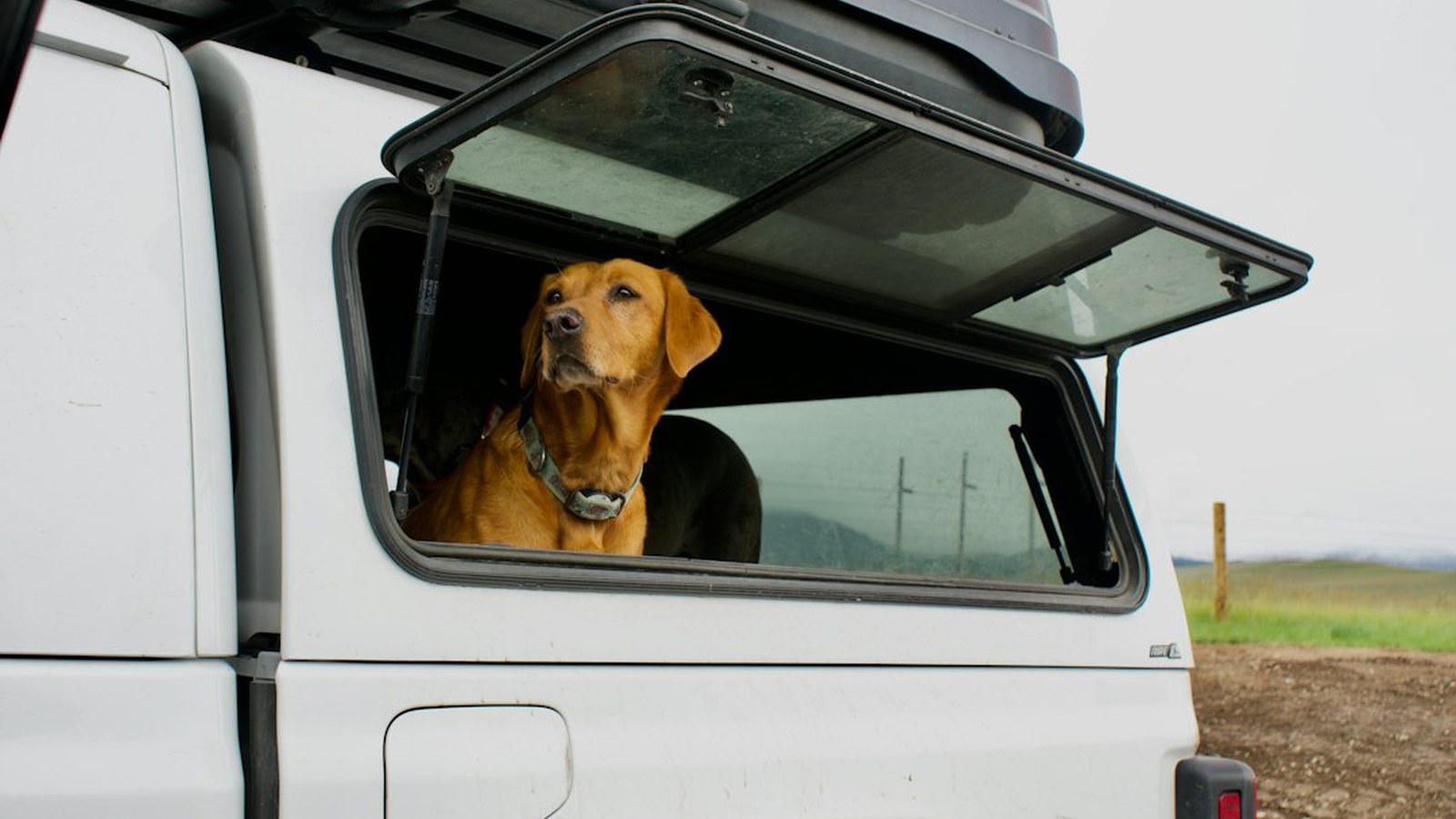 Photo: Unsplash
Water Is the Whole Ballgame
If you remember one thing from this article, make it this. Dogs need roughly one ounce of water per pound of body weight per day just at rest. On a hot, active day on the trail, that need can climb by 50 to 100 percent or more. A 50 pound dog that normally drinks about 50 ounces can easily need to push toward a gallon on a hard desert day.
Do the math for your dog, then carry extra. Do not count on finding water on the trail, and be careful about letting them drink from stagnant sources, which can carry giardia and blue-green algae that is genuinely dangerous. Pack a collapsible bowl, offer water constantly, and do not wait for your dog to look thirsty. By the time a dog is showing you they need water, they are already behind.
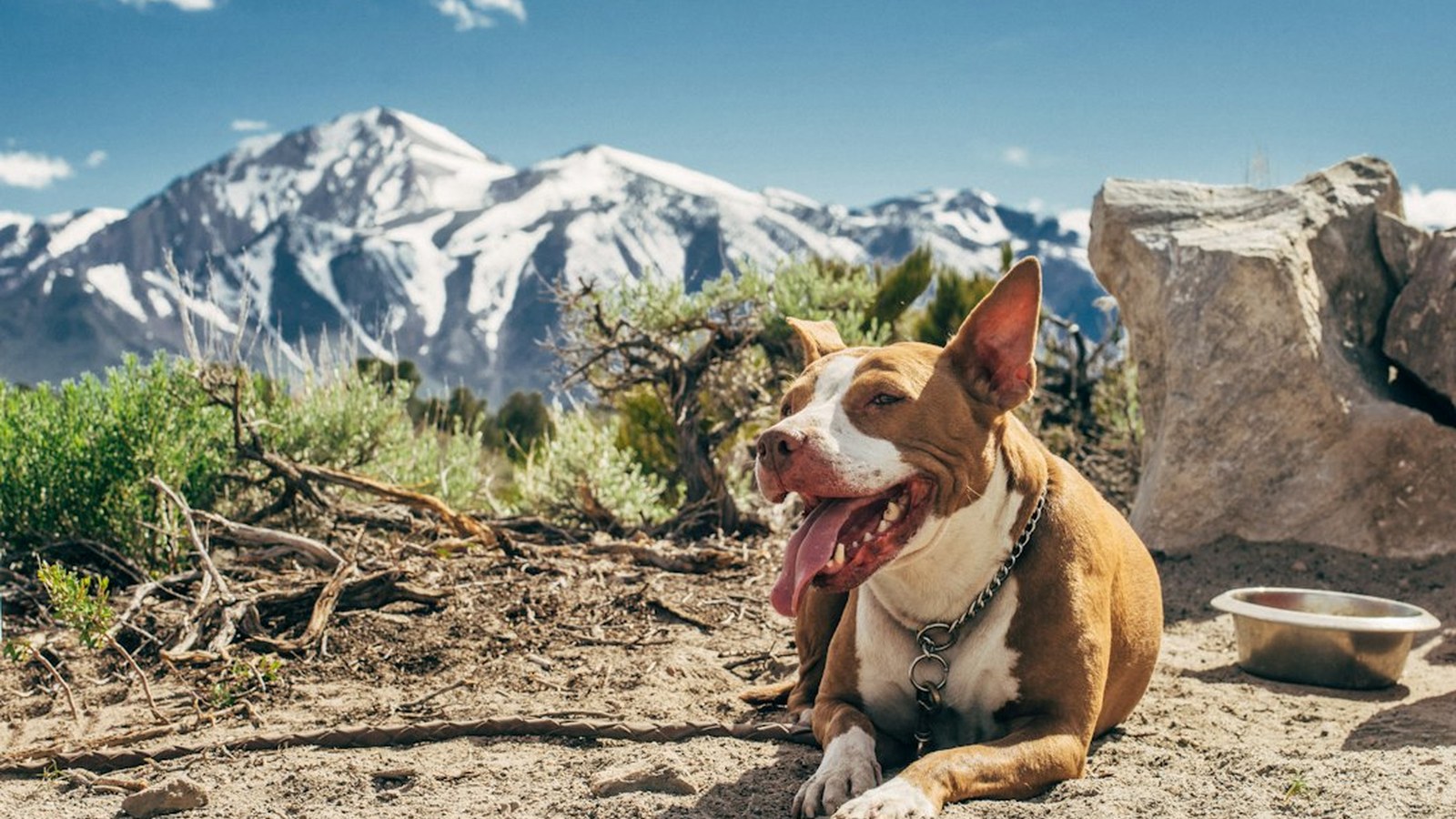 Photo: Unsplash
Know Heatstroke Cold
This is the one that kills dogs, and it happens fast. A dog’s normal body temperature runs around 101 to 102.5 degrees Fahrenheit. Once it climbs past about 105, you are into heat exhaustion sliding toward heatstroke, and above roughly 105 to 106 it is a true emergency that can cause organ damage or death.
Learn the warning signs so you catch it early: heavy, frantic panting, thick drooling, bright red gums or tongue, wobbly or stumbling movement, glazed eyes, vomiting, or collapse. If you see these, act immediately. Get the dog into shade, offer cool (not ice-cold) water, and start cooling the body with tepid water, focusing on the belly, armpits, and paws. Do not dunk them in ice water, which can cause blood vessels to constrict and actually trap heat. Then get to a vet, even if they seem to recover, because internal damage is not always visible.
The single most important prevention rule is one you already know but people still break: never leave a dog in a parked vehicle on a warm day. A closed cabin becomes an oven in minutes, and cracking the windows does almost nothing. If you cannot bring the dog with you, do not stop somewhere you cannot.
Protect Those Paws
Dog paw pads are tougher than skin, but they are not fireproof. Sun-baked rock, sand, and especially dark trail surfaces can hit temperatures that cause burns. The field test is dead simple: press the back of your hand flat against the ground for seven seconds. If you cannot hold it there comfortably, it is too hot for your dog’s paws.
On genuinely rough or hot terrain, dog boots are worth the fight it takes to get your dog used to them. Start at home, short sessions, treats involved, before you need them in the field. Sharp volcanic rock, cactus country, and blistering slickrock will shred unprotected pads. Even without boots, check their paws at every stop for cracks, cuts, foxtails wedged between the toes, and hot spots. A limping dog fifteen miles from the trailhead is a problem you want to prevent, not solve.
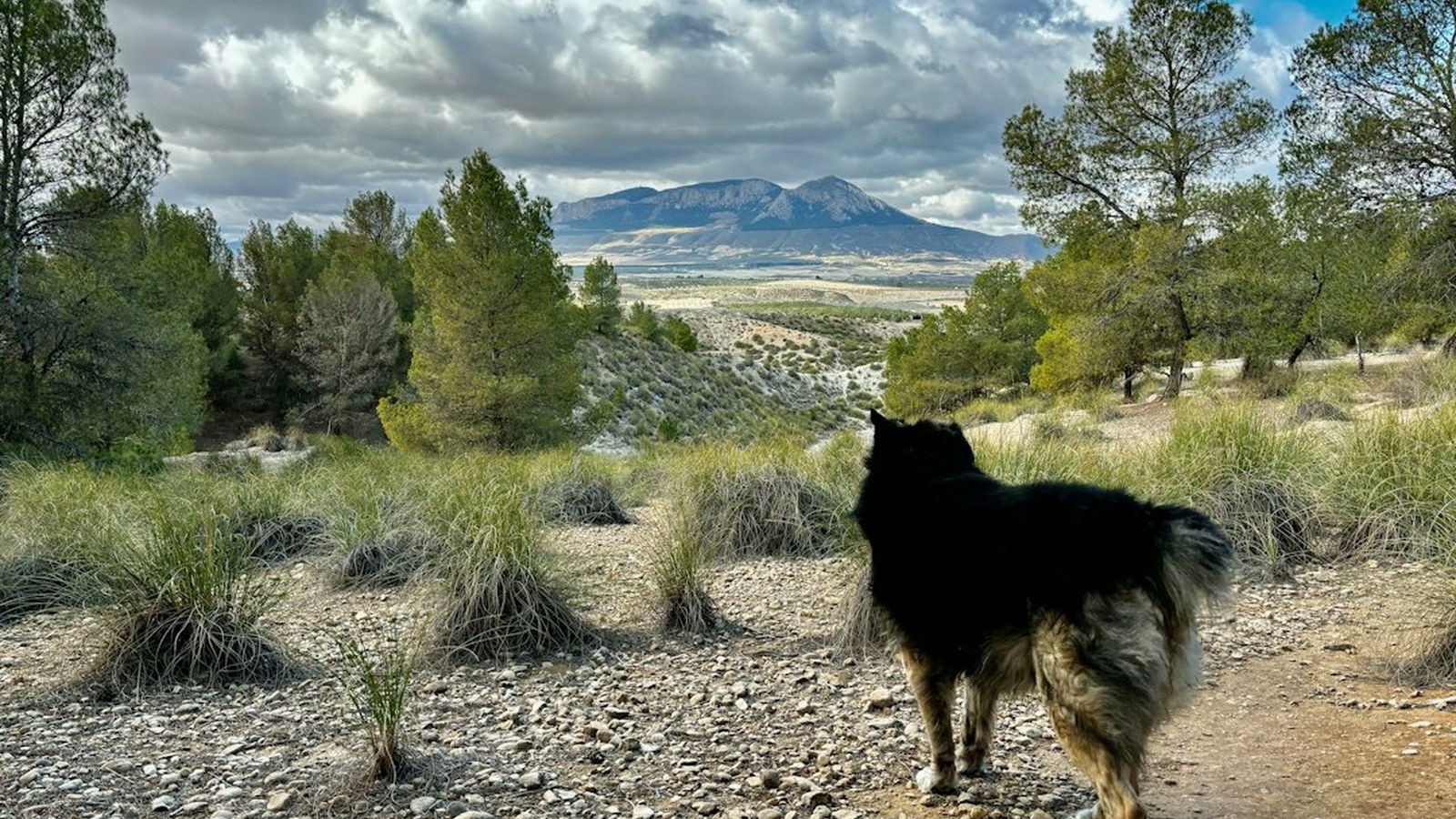 Photo: Unsplash
Build a Dog-Specific First Aid Kit
Your human trauma kit is a great start, but add dog-specific items. A tick remover, because backcountry ticks carry disease. Vet wrap and gauze for paw cuts. Tweezers for cactus spines and foxtails. Styptic powder for a torn nail. Saline for flushing eyes and wounds. Any medications your dog takes, plus a copy of their vaccination records in case a vet or a campground needs them.
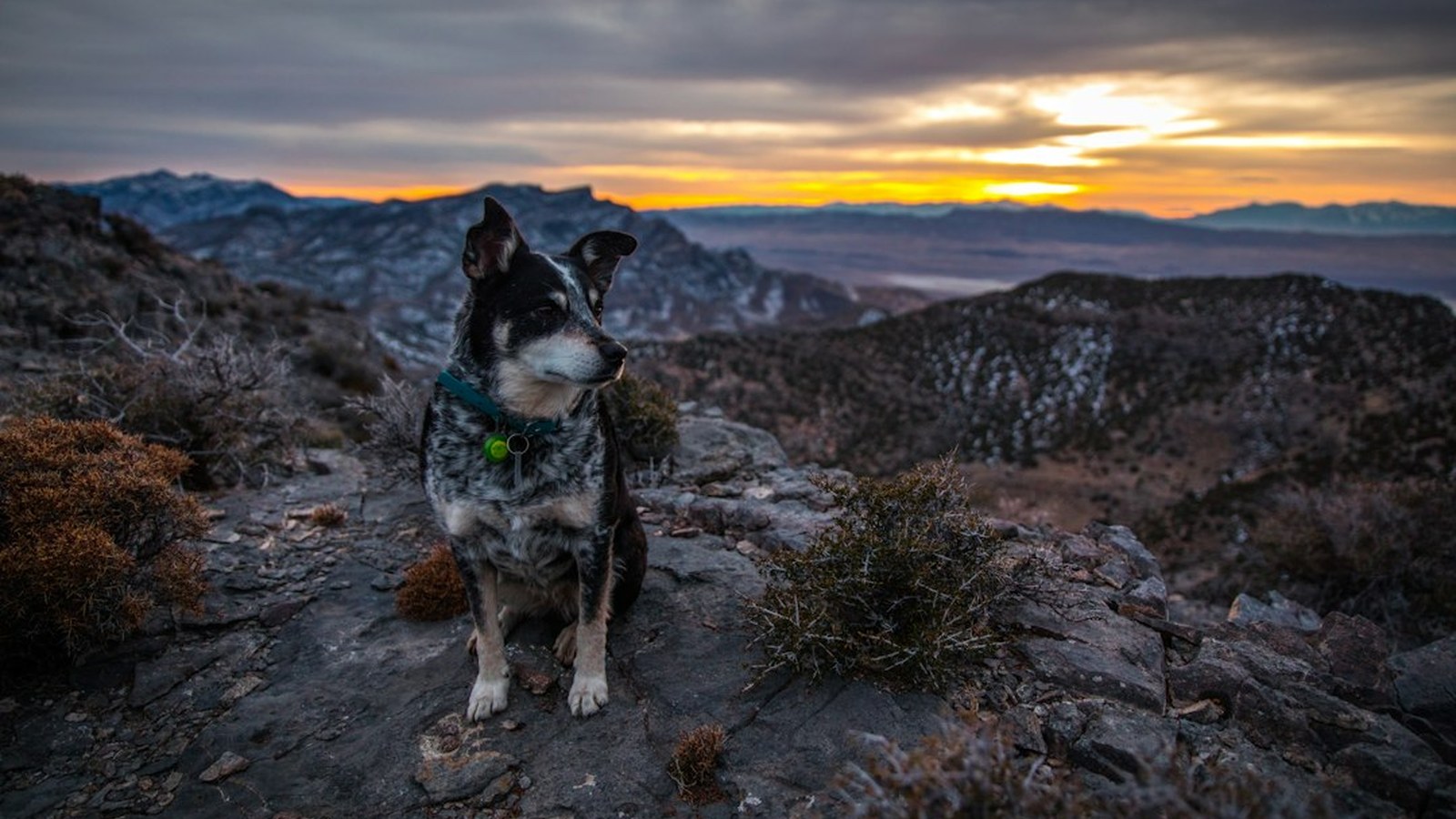 Photo: Unsplash
Two things worth a real conversation with your own vet before you leave: whether to carry an antihistamine like diphenhydramine for snake or insect reactions, and the correct dose for your dog’s weight. Do not guess dosages off the internet. Write the dose on a card and tape it inside the kit. Program the number of an emergency vet along your route into your phone before you lose signal, because you will lose signal.
Tags, Chips, and a Backup Plan
Trails are full of things that make dogs bolt: deer, cattle, gunshots, a thunderclap. A spooked dog in unfamiliar country can vanish in seconds. Cover your bases. A collar with an ID tag that has your cell number is the baseline. A microchip, registered with your current info, is the backup that survives a lost collar. And a GPS tracker like a Fi collar or a small Apple AirTag tucked into the harness gives you a real shot at finding a runner fast.
Practice a rock-solid recall before the trip, and be realistic about your dog’s reliability off leash. A great recall in the backyard is not the same as a great recall when a jackrabbit breaks cover. Know your dog.
Where You Can Actually Go: Dog-Friendly Land Rules
Here is the part people get wrong and pay for. Not all public land treats dogs the same, and the differences are big.
National Parks are the most restrictive. Dogs are generally banned from nearly all trails and backcountry in the national parks, usually limited to paved areas, campgrounds, and parking lots, and they must be leashed. If your trip is built around a national park, your dog is mostly going to be waiting in camp, so plan accordingly or pick a different destination.
National Forests are far more welcoming. Dogs are generally allowed on trails, and many national forests even permit off-leash travel where the dog is under reliable voice control. The catch is that individual Forest Orders and any designated Wilderness areas inside a forest can override this, so check the specific district’s rules before you go.
BLM land is the most permissive of all. Bureau of Land Management land, which covers a staggering 245 million acres, generally welcomes dogs on trails and dirt roads, often off leash, and you are simply less likely to run into anyone who minds. For an overlander who wants dispersed camping and dog freedom in the same trip, BLM country is the sweet spot.
A few universal courtesies no matter where you are. Keep your dog close and under control around other people, horses, and dogs. On a narrow trail, yield to horses and hold your dog on a short leash while they pass. Pack out waste. And respect wildlife and livestock, because a chased cow or a harassed deer is how off-leash privileges get taken away for everybody.
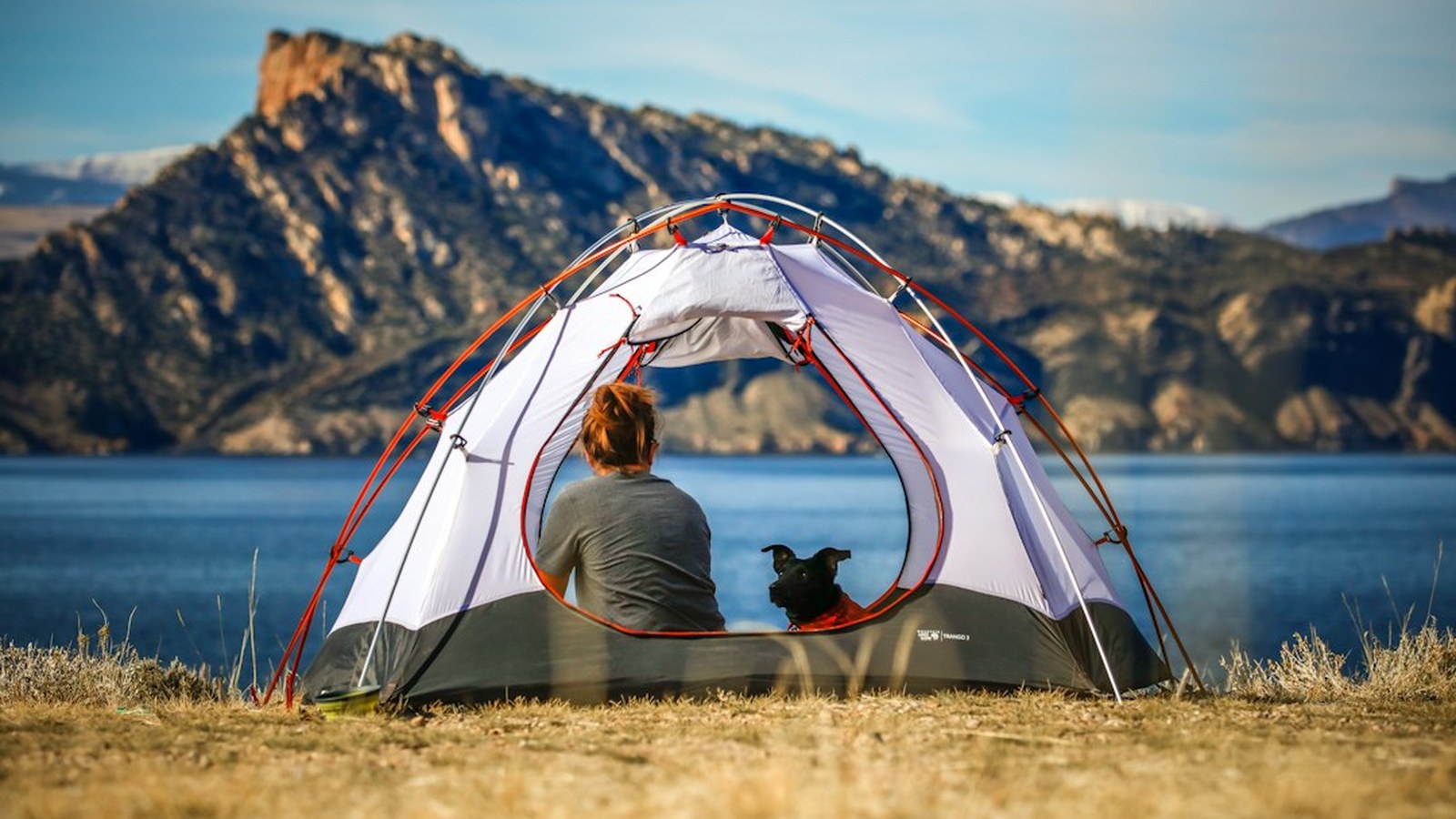 Photo: Unsplash
Camp Life With a Dog
Camp is where the trip pays off, and a little setup makes it smooth. A long tie-out line or a portable pen lets your dog have some freedom without disappearing into the dark. A familiar bed or blanket helps them settle in a strange place. Bring a light for their collar so you can find them at dusk and so they do not vanish into the tree line.
Nights get cold in the backcountry even when days are hot, and short-coated dogs feel it. A dog jacket or just letting them share the tent solves it. Watch what they get into around camp too. Chicken bones in a fire ring, foxtails in the grass, and other people’s food scraps are all trouble waiting to happen.
If you run a rooftop tent, think through how a dog gets up and down. Some dogs handle the ladder, many do not, and a ground tent or an annex might be the better call. Figure that out at home, not at 2 a.m. when your dog wants down and you are three rungs up in the dark.
The Payoff
Yes, it is more work. You carry more water, you watch the thermometer, you scout the land rules, and you plan around a creature who cannot plan for themselves. But the trade is one of the best things about this whole lifestyle. There is nothing like cresting a ridge with your dog’s head out the window, or sitting by a fire in the middle of nowhere with a tired, happy dog leaning against your leg like the world is exactly as it should be.
Do the prep. Respect the risks. Then go find some dirt roads with your best friend. They have been waiting by the door this whole time.
Hero photo: Photo: Pexels