

Airing down is the best free upgrade in off-roading. The catch is that the second half of the job costs money, and most people underspend on it. You have to put the air back in before you touch pavement, and the tool that does that is a portable air compressor. Get the right one and airing down becomes a no stress habit. Get the wrong one and you are standing at the trailhead in the dark watching a tiny pump cook itself on tire number two.
We have run a stack of these over the years, from gas station specials to twin motor monsters, and the gap between good and bad is enormous. Here is how to think about the category so you buy once instead of three times.
Why you actually need one
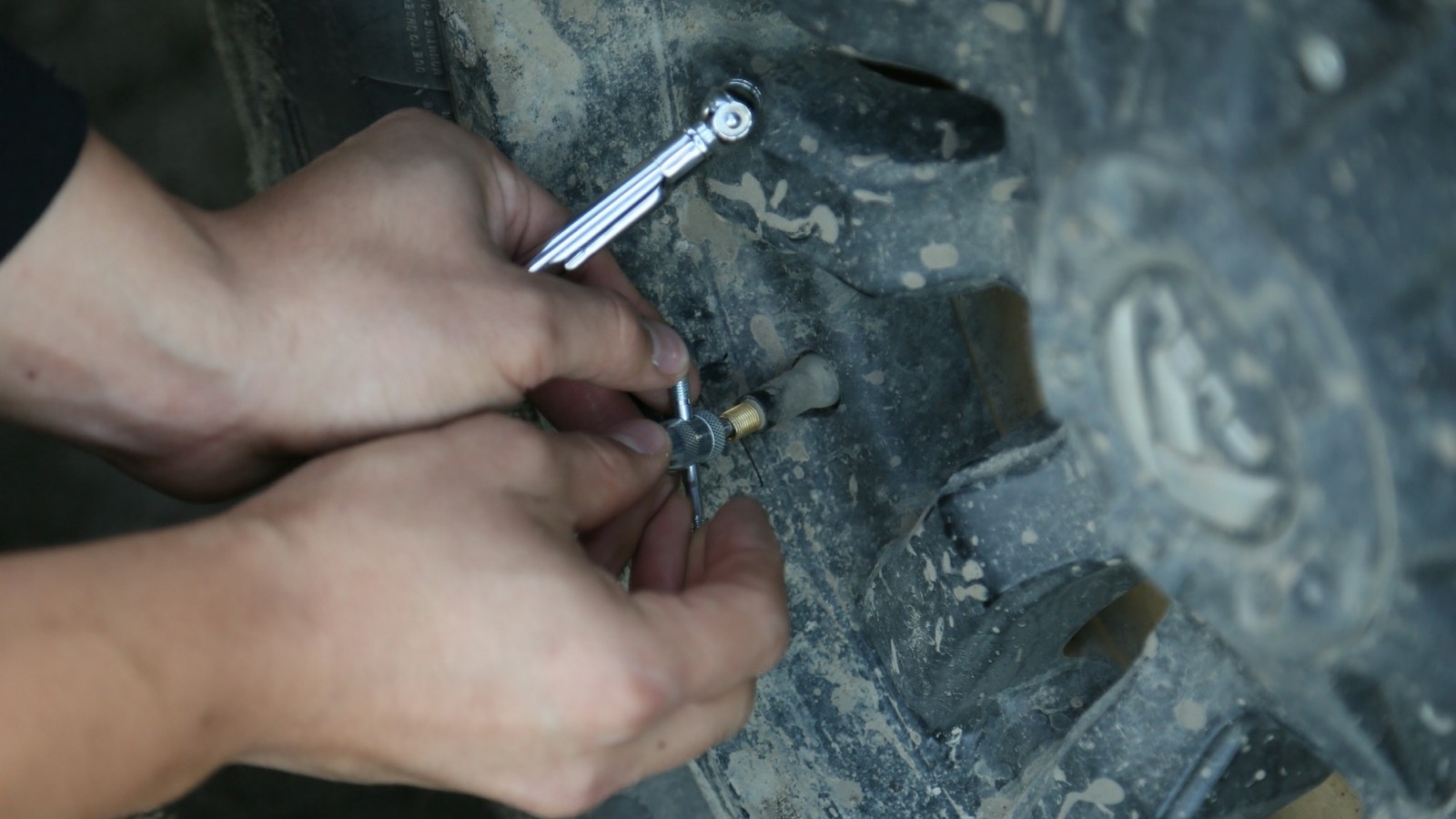 Photo: Brendan Hollis / Unsplash
Airing down at the trailhead is what gives you traction, a softer ride, and far less trail damage. That part is free. But you cannot drive home on 15 PSI. Highway speeds on a soft tire build heat fast, and heat is what destroys tires, up to and including a blowout at 70 MPH. It is also illegal to be that far below spec on public roads in plenty of states.
So a compressor is not a luxury accessory. It is the thing that makes airing down safe in the first place. For a lot of us it ends up being the single most used tool in the rig, because it comes out every single trip. That is exactly why it is worth getting right.
CFM at pressure, not the number on the box
The headline spec everyone chases is CFM, cubic feet per minute, and it does matter. The problem is that the big number printed on the box is almost always CFM at zero PSI, in free air, which is meaningless once you connect it to a tire. What you care about is CFM at 30 PSI, because that is roughly the back pressure you are fighting while filling.
A unit might brag about 10 CFM and deliver closer to 6 CFM at 30 PSI. That is normal. Reputable specs list both numbers. If a listing only gives you the peak free air figure and hides the working number, that tells you something about the company. As a rough guide, a serious portable for big tires should hold somewhere around 2.5 CFM or better at working pressure. Anything less and you are going to be waiting a long time on 35s.
Duty cycle is the spec that strands people
 Photo: Александр Бендус / Unsplash
If CFM is how fast it moves air, duty cycle is how long it can do it before it has to stop and cool down. This is the spec that quietly ruins trips. A 33 percent duty cycle means roughly 20 minutes on, 40 minutes off in any hour. A 50 percent unit gives you about 30 on, 30 off. A 100 percent rated unit can run continuously at its rated pressure, often with the help of a small tank.
Cheap inflators love to skip this number entirely, and there is a reason. They overheat after one or two tires, throw a thermal cutoff, and leave you sitting there waiting for them to cool while your buddies are aired up and ready. The industry rule of thumb is that anything over a 37 inch tire really wants a 100 percent duty cycle, because you have so much air volume to move that a low duty unit simply cannot finish the set without multiple time outs.
Fittings, clamps, and the boring stuff that breaks
The unglamorous parts are where budget units fall apart first. Look hard at three things. First, the air fittings and hose. Brass quick connects and a real braided or reinforced hose last. Plastic screw on chucks crack and leak. Second, the power connection. A quality compressor clamps directly to the battery with heavy gauge leads, because cigarette lighter plugs cannot carry the current a big motor pulls and will melt or pop a fuse. Third, the clamp lead length. Sounds trivial until you are kneeling in the dirt discovering the leads do not reach your battery, which on a lot of modern rigs is buried or even in the trunk.
None of this shows up in marketing. All of it shows up on the trail.
Sizing it to your tires
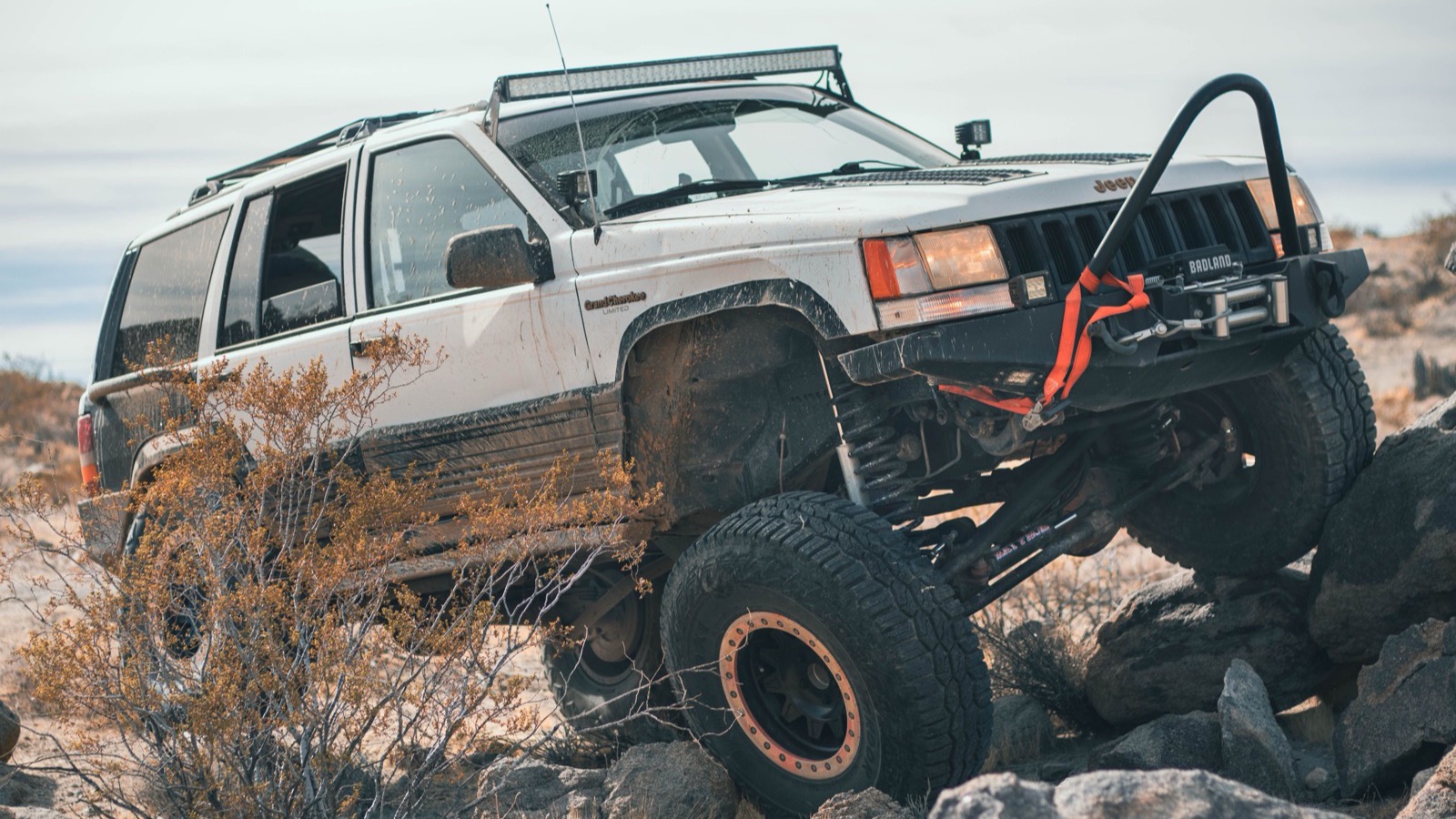 Photo: Grant Allen / Pexels
This is the single most important decision, so be honest about what you run.
On 31s and 33s, a good single motor portable in the 2.5 CFM range will air up a full set in a reasonable time and not break a sweat. This is the sweet spot for most weekend rigs, and you do not need to overspend here.
On 35s, you want that 2.5 CFM minimum treated as a floor, plus a healthier duty cycle, because you have noticeably more air to move per tire. A borderline unit will technically work but it will be slow and it will get hot.
On 37s and up, stop thinking single motor portable. This is twin motor or onboard territory. The volume of air in a 37 inch tire is enough to push a small compressor past its duty cycle before you finish all four corners. Undersize it here and you will replace it within a season, usually after it dies on you somewhere inconvenient.
Buy the compressor for the tires you have, not the tires you wish you had.
Single motor, twin motor, portable or onboard
 Photo: chris clark / Pexels
A single motor portable is the right call for most people. It lives in a bag or a box, clamps to the battery, and airs up a typical 33 or 35 inch setup without drama. It is the most flexible option because it moves between vehicles and doubles for camp duties like air mattresses.
Twin motor portables roughly double the airflow and the duty cycle. They cost more and weigh more, but if you run big tires or air up a whole group regularly, the time savings are real.
Onboard or mounted systems are permanently installed, usually with the best duty cycles and the ability to run lockers and air tools. The trade is a few hours of install, added weight, and engine bay real estate. They make the most sense on a dedicated trail rig or a heavy overlander, not a daily driver.
Tank versus tankless mostly tracks with this. Most portables are tankless and pump straight into the tire, which is totally fine for inflation. A small tank shines for instant bursts, which matters when you are trying to reseat a bead that popped off the rim, less so for everyday airing up.
Realistic fill times and what kills cheap units
 Photo: Thomas Tucker / Unsplash
Set your expectations honestly. A decent single motor portable moving 15 PSI back into a set of 33s will take you a handful of minutes per tire, call it 15 to 25 minutes for a full set with checks. Bigger tires and bigger pressure swings push that longer. A twin or onboard unit can cut it meaningfully. Anyone promising a full set of 35s in two minutes from a 12 volt portable is selling you the zero PSI number.
The classic failure modes on bargain units are all predictable. They overheat and shut off mid set. The plastic gauge reads five PSI off in either direction so you are never actually at the pressure you think. The seals leak and the pump loses its punch within a year. And the underrated motor just gives up on big tires. None of that is bad luck. It is the spec sheet you did not read.
Maintenance and how to choose
 Photo: Chris Cordes / Unsplash
These tools are simple to keep alive. Keep the intake filter clean so dust does not chew up the motor, blow the grit out of the fittings, store it dry, and run it for a minute at home a couple times a year so you know it works before you are relying on it in the field. Test a new one the day it arrives, not the day you need it.
To choose, work in this order. Start with your tire size, because that sets your CFM and duty cycle floor. Then look for honest CFM at 30 PSI, a stated duty cycle, battery clamp leads that reach, and quality brass fittings. Skip the unit that only advertises a giant peak number and hides everything else.
A solid portable compressor is foundational off-road kit, right up there with a deflator and a good gauge. Match it to your rig, prioritize a real duty cycle over flashy peak figures, and store it where you can grab it fast. Do that and the whole air down, air up ritual becomes the easy, automatic thing it should be. We will see you at the trailhead.
Hero photo: Johann Noby / Unsplash