

Drive through any trailhead or campground these days and you will count more rooftop tents than ground tents. They have gone from a quirky safari throwback to the default overland flex in about five years. And honestly, the appeal is obvious. You pop the thing open in a minute or two, climb a ladder, and you are sleeping up off the cold wet ground on a real mattress with a view. We have spent a lot of nights in these, on a lot of different rigs, and we love them. We also think a fair number of people buy one, use it eight times, and quietly sell it on Facebook Marketplace the next spring.
So this is the honest version. Not a spec dump, not a sales pitch. Where rooftop tents genuinely shine, where they will frustrate you, and the questions to answer before you drop two grand on one.
Hardshell vs softshell: the real tradeoff
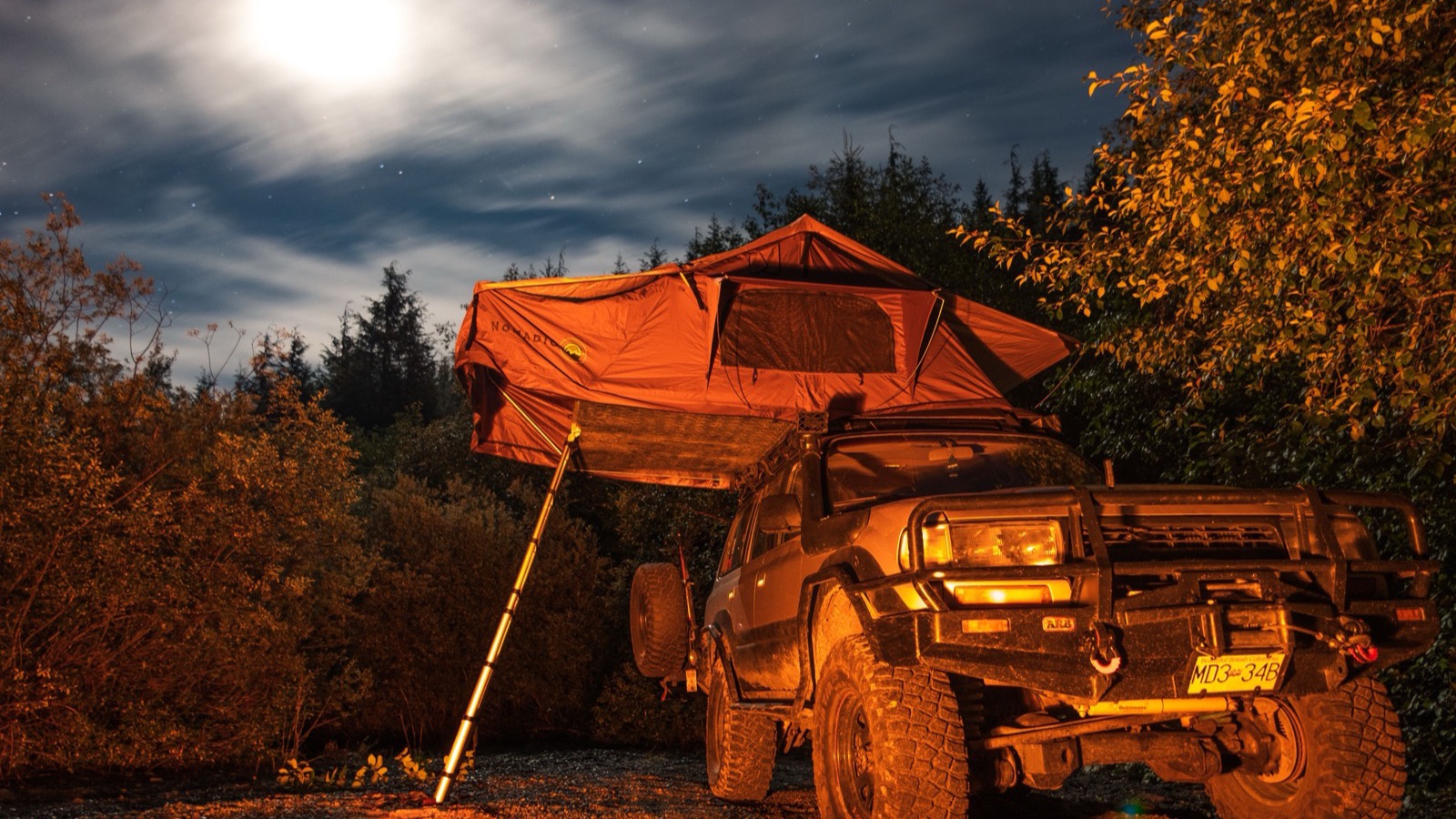 Photo: Rhys Abel / Pexels
This is the first fork in the road, and the marketing makes it sound more complicated than it is.
A hardshell tent has a rigid lid, usually aluminum or fiberglass, and it opens on gas struts or a scissor lift. The good ones go from latched to ready to sleep in under a minute. The shell protects the canvas, sheds weather better, and packs into a low aerodynamic profile that hurts your mileage less. The downside is space and money. Most hardshells comfortably sleep two, and they cost more for the same footprint.
A softshell folds out, usually doubling its floor space by flipping open over the side or rear of the vehicle on the ladder. You get more room, often enough for three or four, and a built in annex or vestibule down below. They are also typically lighter for the size and noticeably cheaper. The catch is setup. A softshell takes real minutes and a bit of a wrestling match with the cover and poles, and it packs up taller and draggier on the roof.
Here is the rule of thumb that actually holds up. If you move camp most days and value a fast, no fuss open and close, lean hardshell. If you basecamp for several nights and want maximum space and value, lean softshell. The “best” one is the one that matches how you travel, full stop.
What setup actually feels like
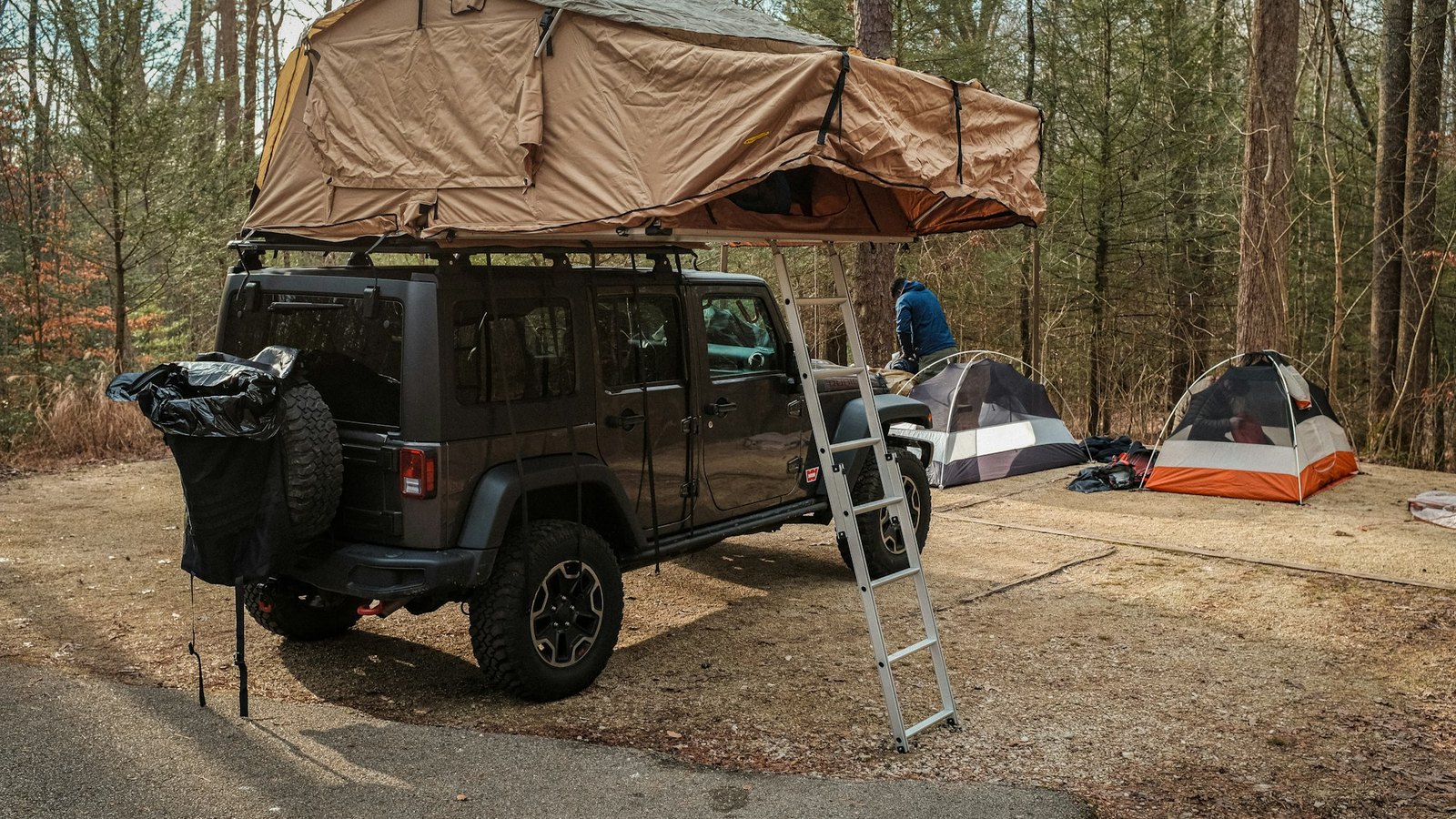 Photo: Brian Erickson / Unsplash
Setup is where the brochure photos and reality drift apart, so let me be specific.
A hardshell really is as fast as advertised. Pull two latches, the struts do the work, the tent rises on its own, and you climb in. The mattress lives inside permanently, so there is no inflating or unrolling. Closing is the only chore, because you have to tuck the canvas in around the edges so it does not pinch in the lid, and that takes a careful minute. Call it sixty to ninety seconds each way once you have the rhythm.
A softshell is more involved. You unclip the travel cover, which is its own annoying ritual in wind or rain, then unfold the tent over the ladder, set the ladder height, run the spring poles into the window awnings, and stake out the fly if you want the rain protection to work right. First few times it is a fifteen minute job. With practice it drops to five or ten. None of it is hard, but it is not the two minute miracle people imagine, and doing it in the dark, cold, and rain after a long drive is when you start questioning your life choices.
The honest takeaway: any rooftop tent is faster and comfier than pitching a ground tent in bad weather. But a softshell is not instant, and anyone who tells you otherwise has not done it tired.
The weight problem nobody mentions until it is too late
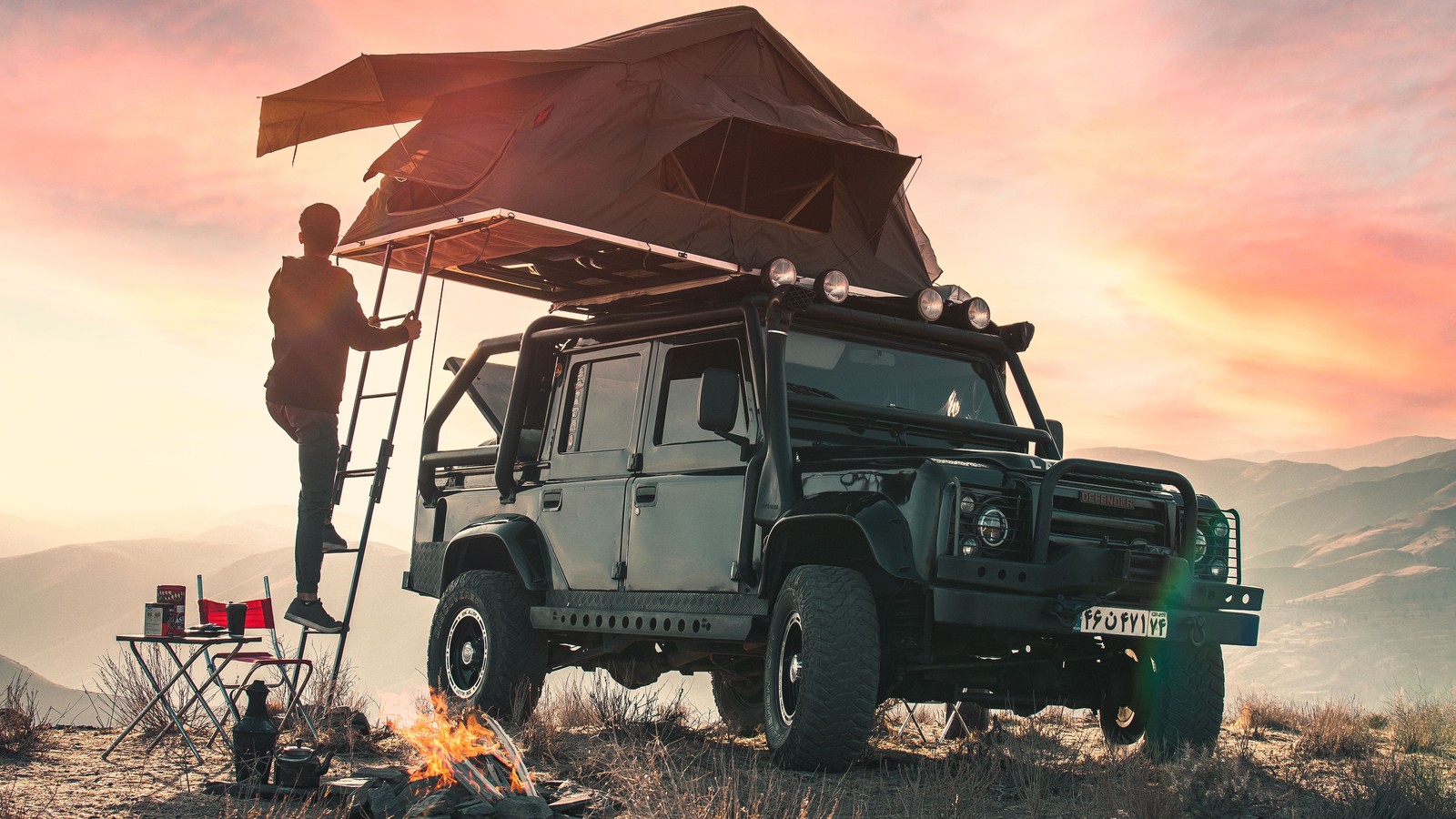 Photo: Hamid Tajik / Pexels
Now the part that trips up first time buyers. Rooftop tents are heavy, and your roof has two different weight limits that are not the same number.
Most rooftop tents land somewhere between roughly 100 and 200 pounds, with heavy hardshells climbing past that. A comparable hardshell typically runs around thirty to fifty pounds heavier than a softshell of the same size, because you are paying that weight penalty for the rigid clamshell. Add the rack and crossbars to mount it, which can be another twenty five to forty pounds, and the total on your roof adds up fast.
That weight matters for three reasons. It raises your center of gravity, which you will feel in the corners and on side hills, so you drive a little more deliberately. It costs you fuel, and real world reports commonly land around a two to three mile per gallon hit once you factor in the height and drag, more at highway speed. And it has to live up there all the time unless you want to wrestle a hundred plus pound tent on and off your roof, which nobody actually does.
Plan for the rig you will be driving with the tent on, not the one in the showroom.
Dynamic vs static load, explained without the headache
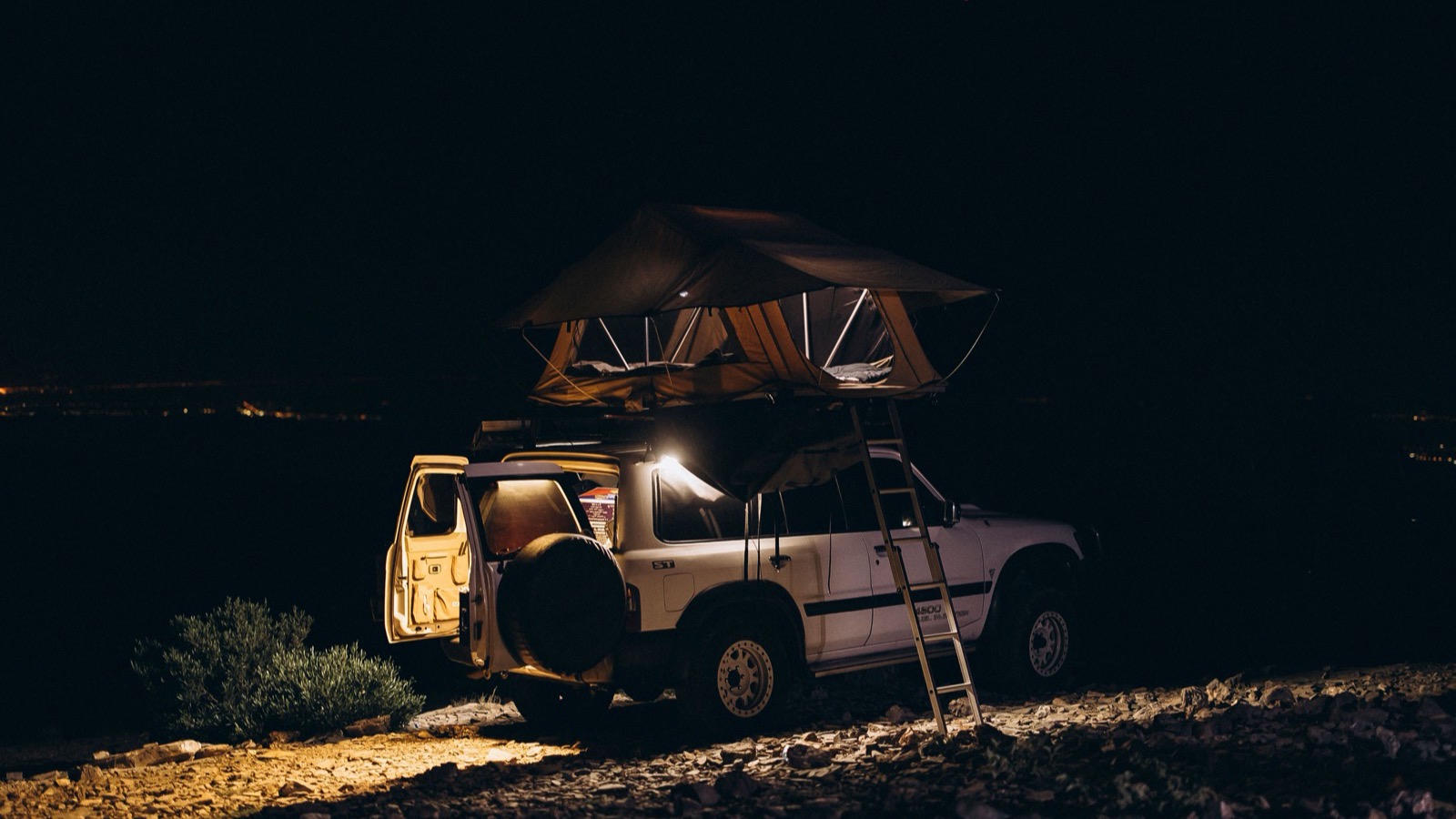 Photo: Eslam Mohammed Abdelmaksoud / Pexels
This is the single most important number to check before you buy anything, and it is where people get burned.
Your roof has a dynamic load rating, which is how much it can safely carry while the vehicle is moving, and a static load rating, which is how much it can hold while parked. Static is always much higher, because a parked roof is just holding weight straight down, while a moving roof deals with bumps, braking, and cornering forces. The number that decides whether you can even mount a tent is the dynamic rating, because the tent rides up there folded every time you drive.
Here is the gotcha. Many factory roofs and factory crossbars have a dynamic rating of only around 100 to 165 pounds, and some factory rails are rated even lower. A tent plus crossbars can blow right past that before you have packed a single thing. That is why most people end up adding an aftermarket rack or load bars rated for the job. Aftermarket overland racks often advertise dynamic ratings in the several hundred pound range and far higher static numbers, which is what gives you the headroom you actually need.
When you are sleeping in it, the tent’s weight plus your body weight is a static load, and that is rarely the problem because static limits are high. The driving number is the one that bites. Check your vehicle’s dynamic roof load in the manual, check the rack’s dynamic rating, and make sure the closed tent weight fits under the lower of the two. Do that math before you swipe the card.
Comfort, condensation, and four season reality
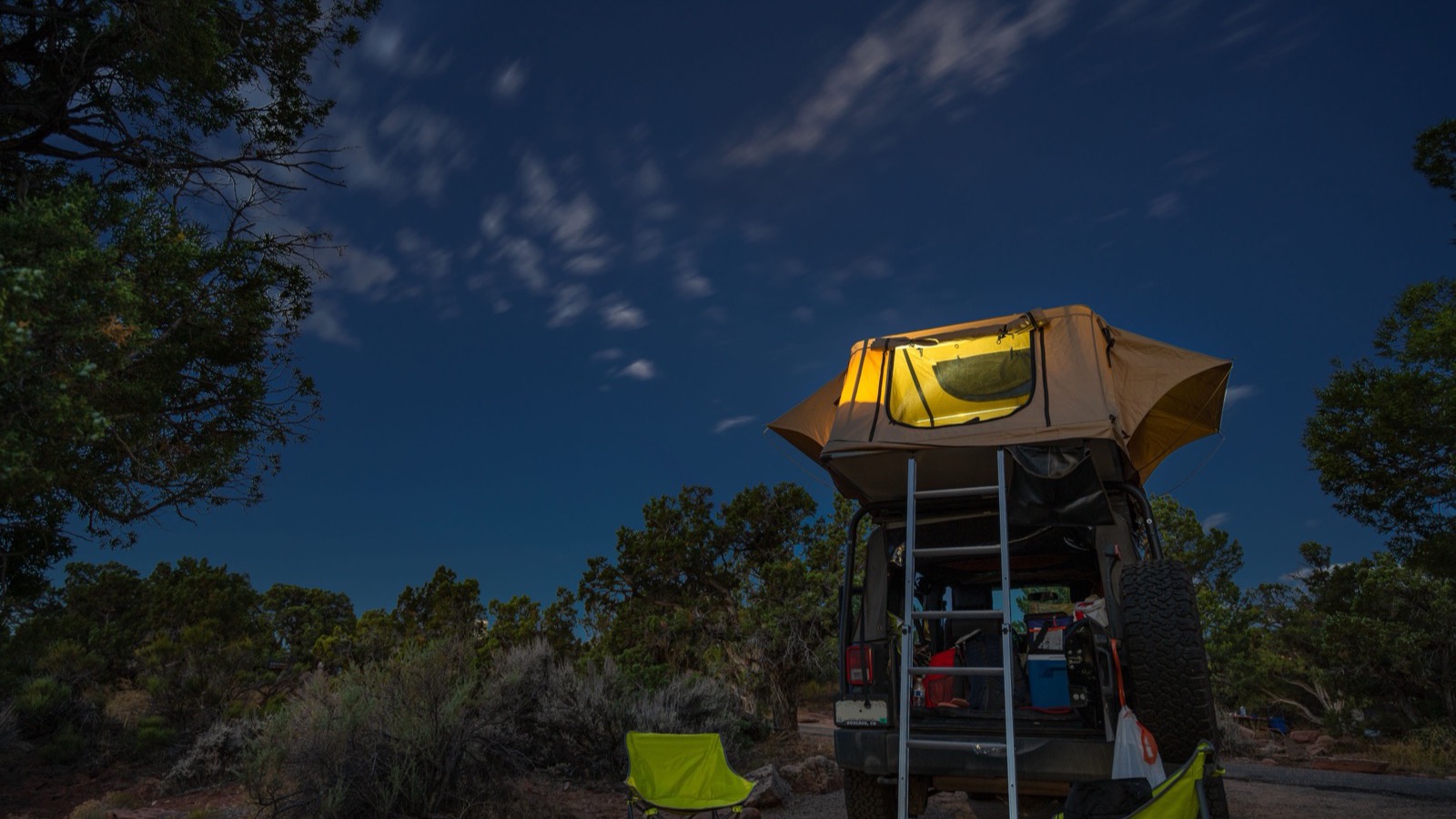 Photo: Frank Schrader / Pexels
Inside is where rooftop tents earn their fans. The built in foam mattress is genuinely comfortable, miles better than a thin sleeping pad on rocky ground, and being up high means a breeze, a view, and distance from whatever is crawling around camp. On a clear night with the windows open it is one of the best ways to sleep outdoors, period.
Condensation is the recurring complaint, and it is real. Two people breathing in an enclosed canvas box overnight puts a lot of moisture in the air, and on a cold morning that shows up as droplets on the underside of the fly or the inside of a hardshell lid. The fixes are simple. Crack opposing windows for cross ventilation, do not seal yourself in, and if you have to pack up wet, open and dry the tent at home before mold sets in. An anti condensation mat under the mattress helps airflow underneath too.
Four season use is doable but has limits. The canvas and fly handle rain and light snow well, and an insulated liner or a diesel heater makes winter trips genuinely cozy. But you are still in a fabric box up in the wind, and a hard winter storm is a hard winter storm. These are excellent three season shelters and capable shoulder season ones. They are not a substitute for a real winter mountaineering setup if you are headed somewhere truly brutal.
Annexes, awnings, and the rest of the system
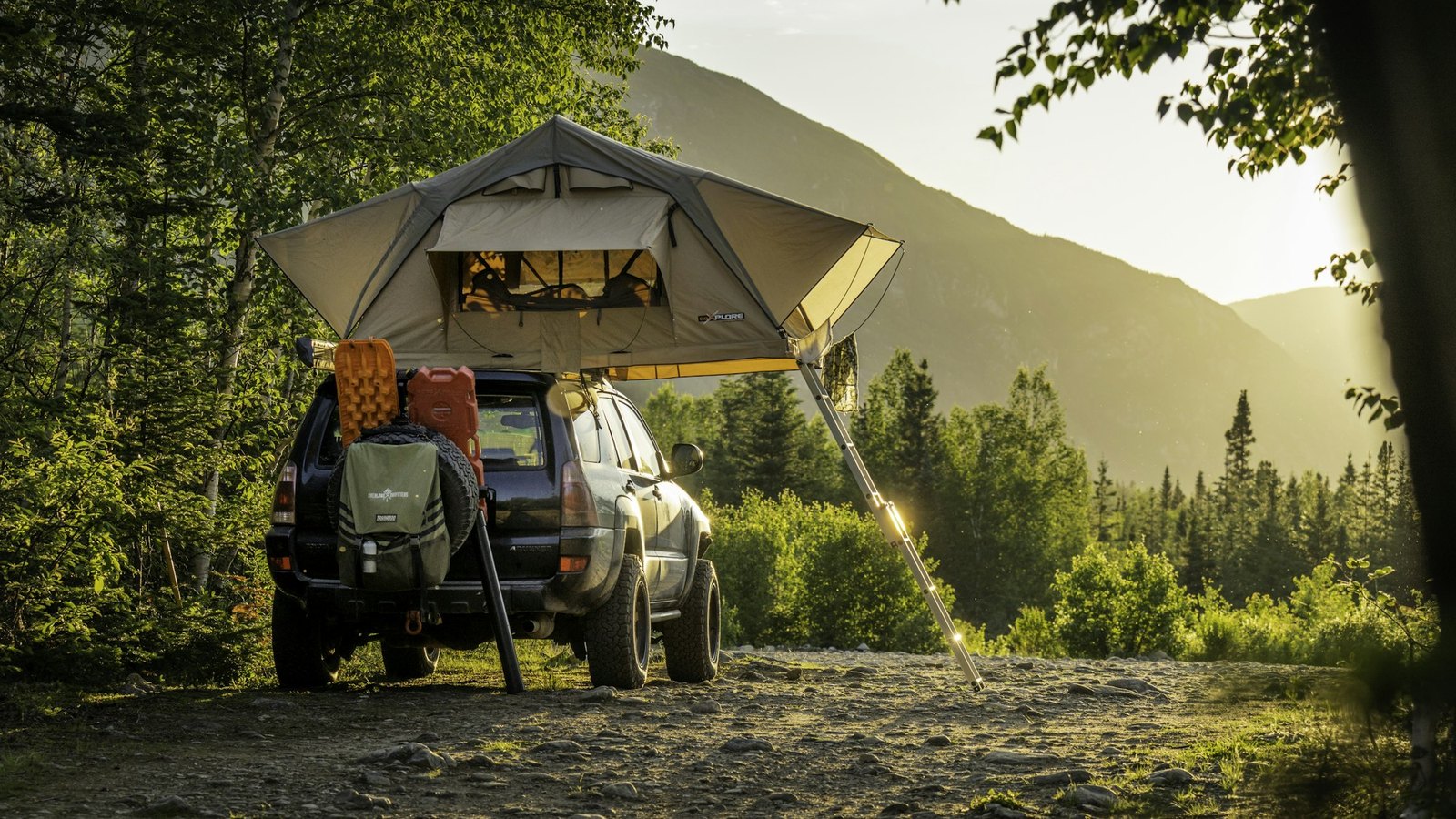 Photo: Alfred Boivin / Unsplash
A rooftop tent is rarely the whole story. Most setups grow an awning off the side for shade and rain cover over your kitchen and chairs, and many softshells offer an annex room that hangs off the ladder to give you a changing room, a bathroom space, or a dry place to stash boots and gear. The annex is where a softshell’s extra footprint pays off, and it is one of the better reasons to go that route if you camp in one spot.
The thing to understand is that the tent is the anchor of a system, and that system adds up in both weight and cost. Awning, annex, mattress topper, ladder extension, anti condensation mat, a cover for travel. None of it is mandatory, but the rooftop tent crowd tends to accessorize, and the build creeps. Budget for the pieces you will actually use and skip the rest.
Price tiers and what you actually get
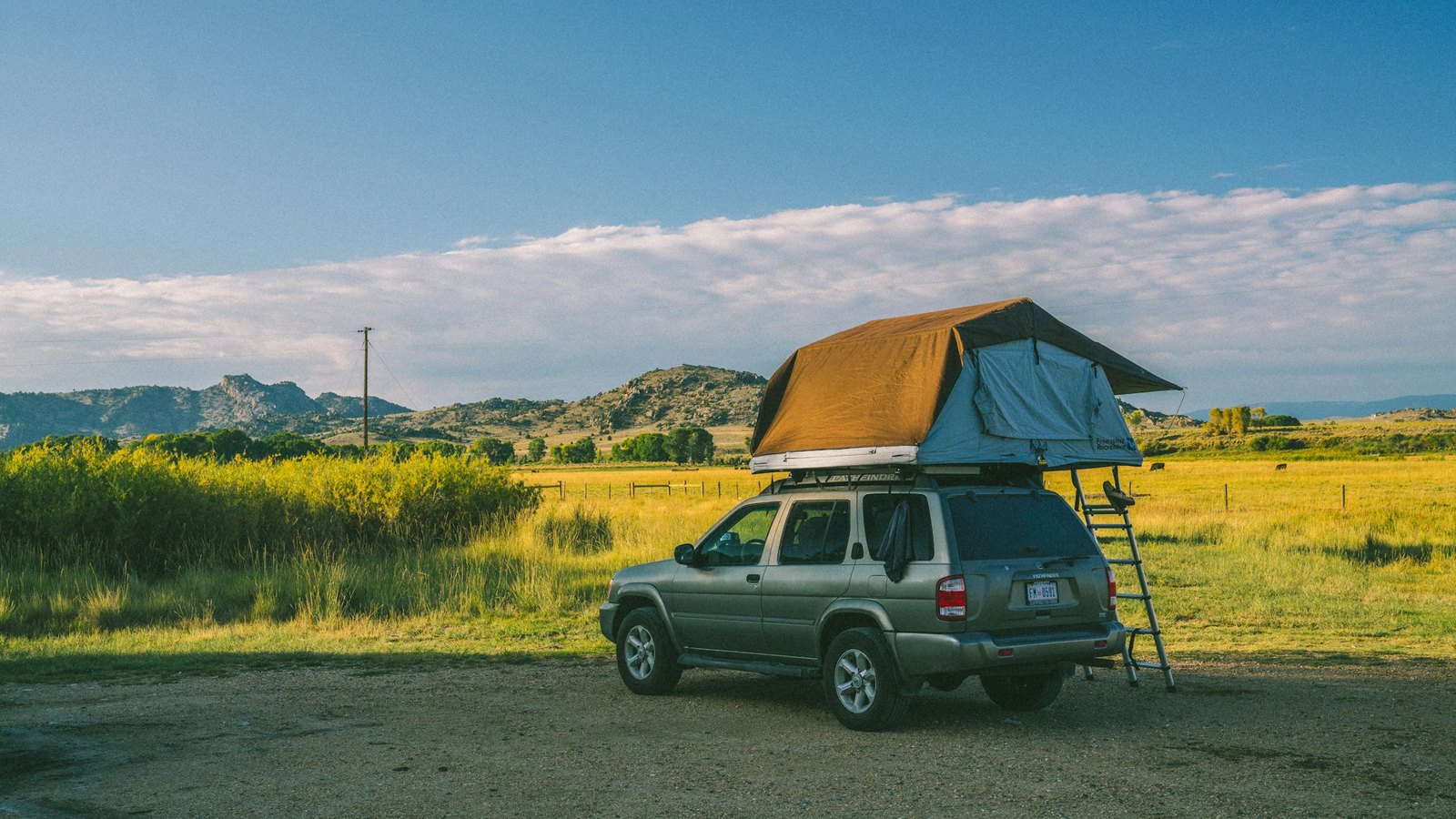 Photo: Michael Aleo / Unsplash
Rooftop tents are not cheap, and the spread is wide. Budget models start around a thousand dollars, the value sweet spot for a quality tent runs roughly sixteen hundred to twenty five hundred, and premium hardshells climb to three to five thousand and beyond. So where does the money go?
At the bottom, you get a functional softshell with decent canvas and a basic mattress. It works, it might be heavier and the zippers and poles feel cheaper, and the warranty support can be thin. In the middle, you get better materials, a thicker mattress, smarter ventilation, and brands that will actually answer the phone. At the top, you are paying for fast hardshell mechanisms, premium aluminum shells, the lowest packed profile, integrated features, and the kind of build quality that survives years of weather and washboard.
The honest read is that the middle tier is where most people should shop. The jump from budget to mid range buys real durability and comfort. The jump from mid range to premium buys convenience, weight savings, and polish, which is worth it to some and overkill to others. Buy for how often you will really use it.
Durability and maintenance
Rooftop tents hold up well if you treat them right, and they punish neglect. The two enemies are moisture and UV. Packing up wet over and over breeds mold and rots stitching, so dry the tent whenever you can. Long term sun exposure fades and weakens canvas, so a travel cover earns its keep. Beyond that, keep the zippers clean and lubricated since grit is what kills them, check the mounting hardware periodically because washboard roads love to loosen bolts, and re treat the canvas for water resistance every couple of seasons. Do that and a good tent lasts many years. Ignore it and even a premium one looks tired fast.
The verdict
Rooftop tents are excellent for the right traveler and a pricey mistake for the wrong one. If you basecamp for multiple nights and run day loops from a fixed spot, the comfort, the speed, and the off the ground luxury are hard to beat, and you will love it. If you move every single day, the daily pack down gets old, and if you watch every mile per gallon or every dollar, a quality ground tent or a truck bed setup gives you most of the comfort for a fraction of the cost and weight.
So be honest about how you actually travel before you buy. Check your dynamic roof load first, match hardshell versus softshell to your style second, and shop the middle tier unless you have a real reason not to. Get that right and a rooftop tent is one of the best upgrades in overlanding. Get it wrong and it is a very expensive way to learn you are a move every day kind of traveler.
Rating: 3.8 out of 5. A genuinely great piece of kit that loses points for the cost, the weight, the fuel hit, and the simple fact that it is a want, not a need. Right tool for the basecamp crowd, wrong tool for plenty of others. We will see you out there.
Hero photo: Leo_Visions / Unsplash