
Cheap boards snap under load and leave you stranded. That is the whole problem in one sentence. You buy a bright orange set off a marketplace listing for forty bucks, toss them in the bed, and feel prepared. Then the day comes when you are buried past the axles in wet sand, you wedge them under the tires, feather the throttle, and instead of climbing out you hear a crack and watch a chunk of plastic shoot out behind you. Now you have less board than you started with and the same stuck truck.
Traction boards are one of the best self-recovery tools you can carry. They are also one of the most misunderstood, and the market is flooded with junk that looks identical to the good stuff in a photo. This guide breaks down what actually separates a real recovery board from a paperweight: the materials, the sizing, the brands worth your money, and the technique that keeps you from destroying them the first time you need them.

What A Traction Board Actually Does
A traction board does two jobs at once. It gives your spinning tire a firm, grippy surface to bite into instead of digging deeper, and it forms a ramp that lifts the tire up and out of the hole it dug. You slide the board under the leading edge of the drive tire, in the direction you want to go, then ease onto the throttle so the tire crawls up the board and back onto solid ground.
That is the entire concept. No winch, no second vehicle, no anchor point. On sand, snow, and mud, a good set of boards is often faster and safer than any other recovery method because nothing is under massive tension waiting to snap and become a projectile. That alone makes them worth the space they take up.
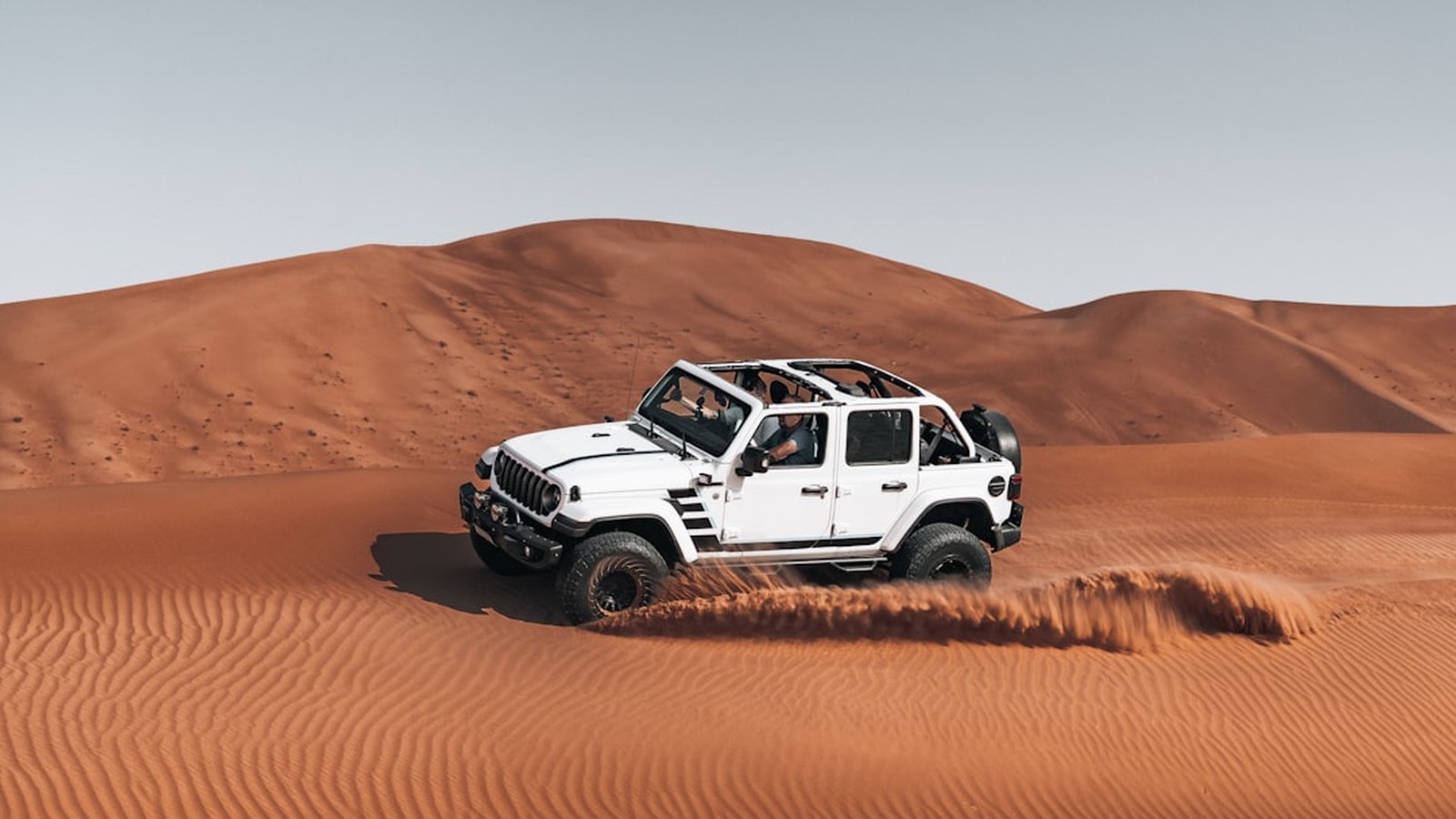 Deep sand is where boards earn their keep. Spinning only digs you deeper. Photo: Nejc Soklič / Unsplash
Material Is Everything: Nylon vs HDPE
This is the single most important thing to understand before you buy, and it is exactly where the cheap boards fall apart.
The good boards are built from engineering-grade reinforced nylon. Nylon flexes under load and springs back to shape. When a two-ton truck loads up on a board wedged over uneven ground, that flex is what saves it. The board bends, absorbs the stress, and returns to flat. Brands like MAXTRAX, ARB TRED Pro, ActionTrax, and Rhino USA build with reinforced nylon for exactly this reason.
The cheap boards are usually HDPE (high-density polyethylene) or polypropylene. These plastics are stiffer and far more brittle. Under a hard load, especially cold weather, they do not flex. They crack. Repeated recoveries fatigue the plastic until a tooth row breaks off or the whole board splits down the middle. HDPE has its place in light-duty gear, but under the real load of a stuck rig it is living on borrowed time.
There is a second material failure people miss: heat. When you keep the throttle pinned and the tire spins on the board surface, friction generates serious heat fast. Cheap plastic melts. The teeth round over, the surface glazes smooth, and now your board is a slick ramp with no bite. Premium boards use heat-resistant compounds, and some, like the MAXTRAX Xtreme, use replaceable hard-anodized alloy teeth molded into the nylon so the bite survives abuse. The takeaway is simple: if the listing does not clearly say reinforced or engineering-grade nylon, assume it is the brittle stuff.
The Teeth And The Underside
Look at any real board and you will see two grip zones. The top surface is covered in aggressive cleats or teeth that sink into your tire tread so the tire grabs instead of spinning. MAXTRAX boards, for reference, run 88 cleats designed to interlock with the tread. The underside has a different texture entirely, one designed to grip loose ground so the board does not shoot backward out from under the tire the instant you apply power.
Both matter. A board with great top teeth but a slick bottom will launch out behind you under throttle, which is both useless and dangerous. This is why the good brands include bright telltale leashes: after a recovery your boards are often buried or flung several feet away, and a leash saves you from digging them out or leaving a sixty-dollar board in the desert.
Sizing And Weight
Most standard recovery boards run around 45 inches long, which handles the vast majority of stuck situations for trucks, Jeeps, and SUVs. Longer boards exist for heavy rigs, deep soft sand, and larger tires where you need a longer ramp to climb out. If you run a full-size truck loaded for overlanding, or you spend real time in soft desert sand, the extra length is worth it.
Weight is the tradeoff nobody mentions at purchase. Boards range from roughly 7 pounds for foam-style pads up to about 12 pounds for a rigid reinforced-nylon board. Heavier usually means more rigid and more durable, which is what you want in a recovery, but it also means more to hoist onto a roof rack. Plan your mounting and storage before you buy, not after. A great set of boards that lives buried under gear in the back where you cannot reach them fast does you no good.
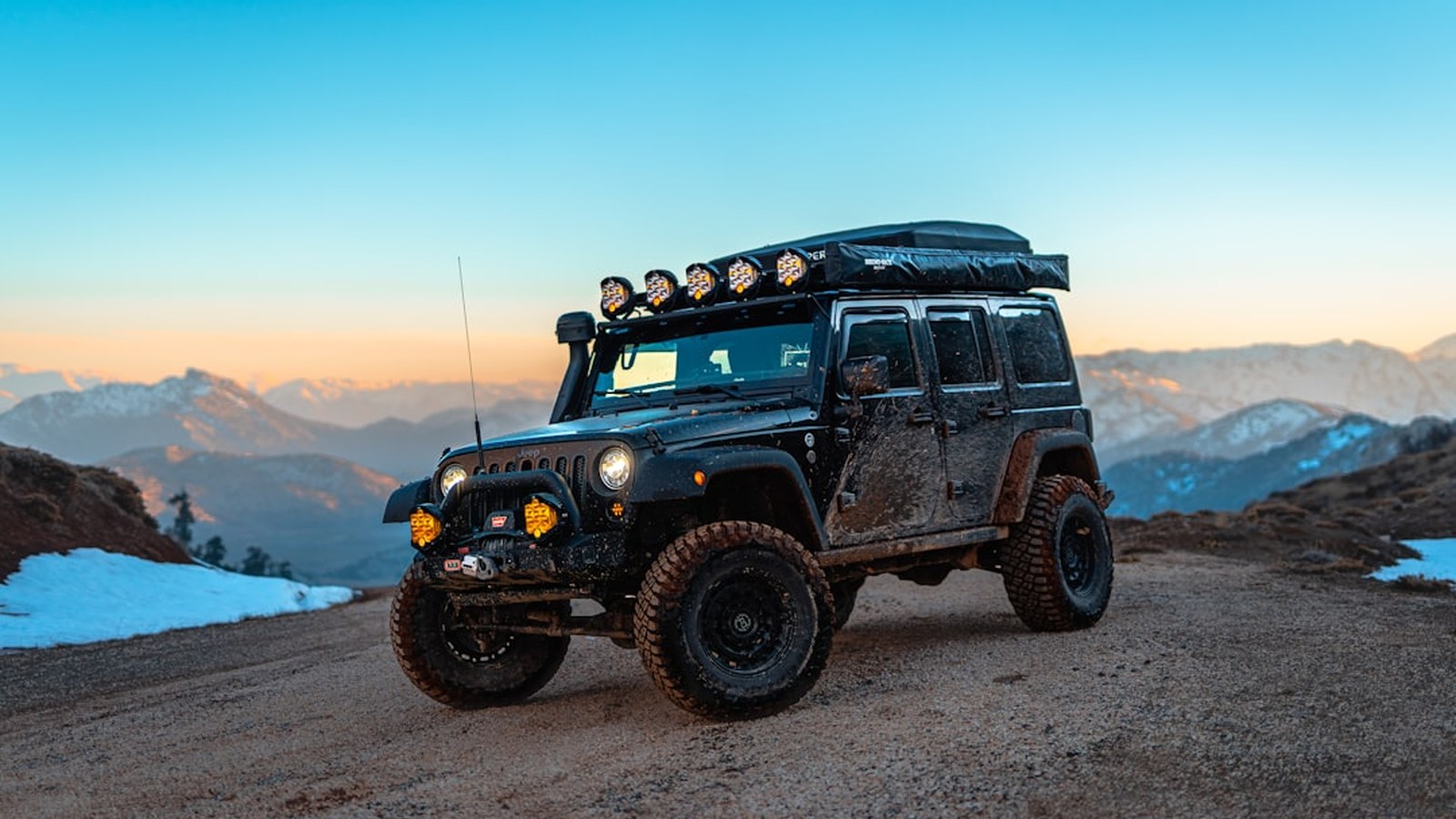 Mount your gear where you can grab it fast. A buried board is a useless board. Photo: Thomas Tucker / Unsplash
The Brands Worth Knowing
You do not need me to rank a top ten. You need to know the real names so you can spot a legitimate board versus a clone.
MAXTRAX MKII is the board most people mean when they say “traction board.” Made in Australia from fiber-reinforced nylon, 88 cleats, backed by a lifetime warranty, and the default choice for expedition and overland teams. It is the benchmark everything else gets measured against.
ARB TRED Pro is the other heavyweight. A nylon composite built to flex rather than crack, rated to work across a wide temperature band from roughly 5 to 158 degrees Fahrenheit, with a directional grip pattern that holds once your tires engage. If you want an alternative to MAXTRAX at a similar quality tier, this is it.
Rhino USA and ActionTrax round out the reputable field, both building in flexible nylon rather than brittle plastic and generally coming in a bit cheaper than the two Australian benchmarks. They are legitimate boards, not clones.
Everything else in the marketplace bargain bin deserves suspicion. If a set is a fraction of the price of these and the description dodges the word nylon, that is your answer.
How To Actually Use Them Without Wrecking Them
Owning good boards is half the job. Plenty of people buy a set, never read the instructions, then wonder why they failed the one time it mattered. Technique matters as much as the gear.
Stop spinning the tires first. The moment you feel yourself bogging down, get off the throttle. A spinning tire digs a deeper hole and, worse, generates the heat that glazes or melts board teeth. Dig out in front of each drive tire, clear the sand or snow so you have room to seat the board.
Wedge the board firmly under the leading edge of the drive tire, angled slightly up like a ramp, pointing the direction you want to travel. Push it in as far as it will seat. On a two-wheel-drive rig, put boards under the drive wheels; on four-wheel-drive, boards under the wheels with the least traction, usually the front.
Apply throttle gently and steadily. This is the discipline part. You want the tire to crawl up the board, not spin on it. Momentum is your friend, wheelspin is your enemy. Ease on, keep it rolling, and drive well clear of the stuck spot before you stop, or you will just bury yourself again in the soft ground right next to where you started.
Retrieve and rinse. Grab the leashes, pull your boards, knock the mud off. Sand and grit ground into the teeth wears them down over time. A quick rinse when you get home keeps them biting for years.
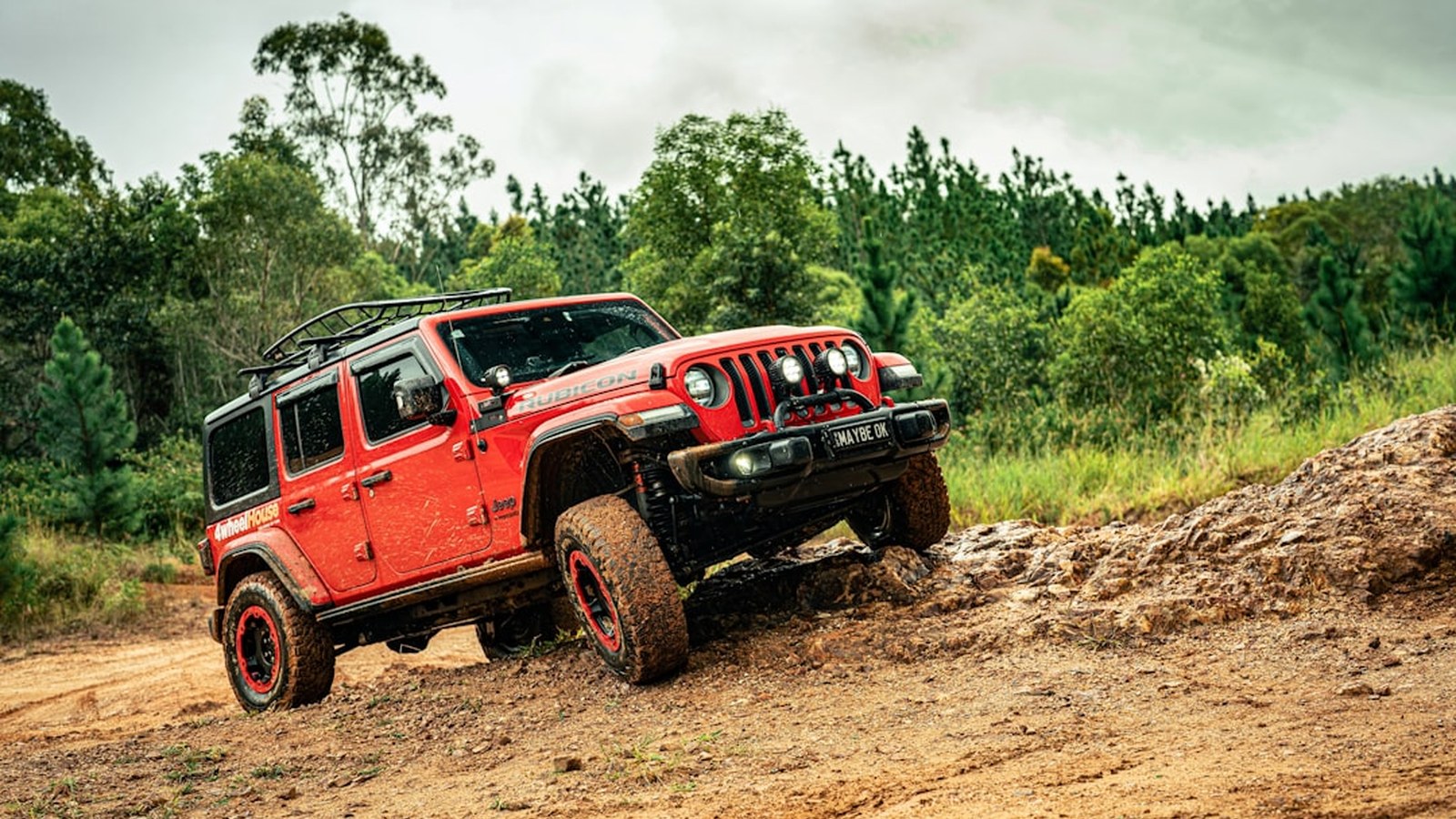 Gentle, steady throttle. Let the tire crawl up the ramp, do not spin on it. Photo: 4Wheelhouse / Unsplash
The Mistakes That Cost People Boards
A few failure patterns show up over and over, and every one is avoidable.
Flooring it is the big one. Hammering the throttle spins the tire on the board surface, melts the teeth smooth, and can fire the board out behind the truck hard enough to hurt someone standing there. Never stand directly behind a board during a recovery.
Skipping the dig-out is another. If you just jam a board against a buried tire without clearing the sand in front of it, the tire climbs onto the board and immediately plows back into the wall of sand you never moved. Two minutes with a shovel doubles your odds.
Buying one board instead of a pair, or the wrong size for your rig, rounds out the list. You almost always want at least two, one under each drive tire on the stuck axle, and you want them long enough to actually ramp your tire size out of the hole.
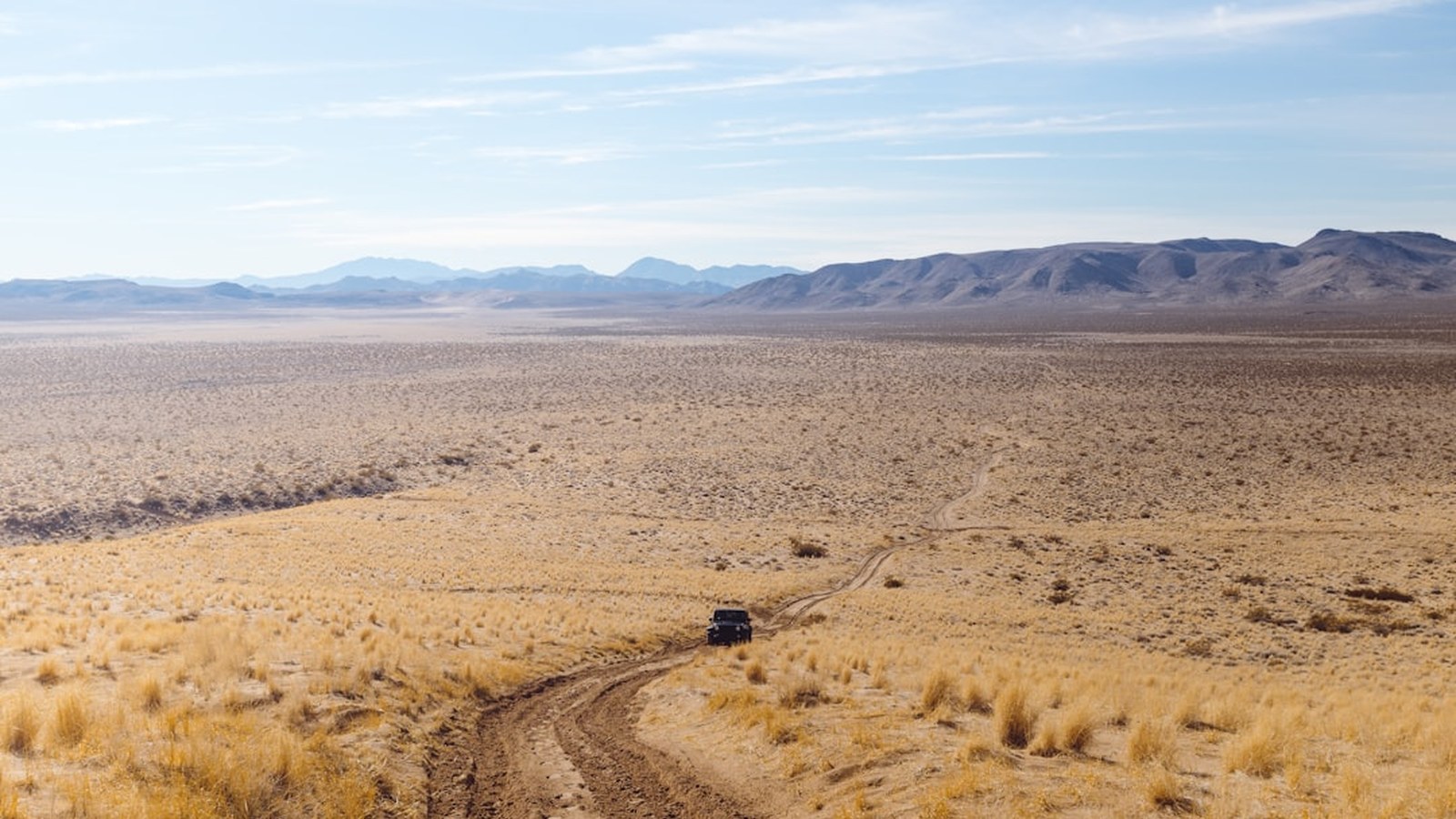 The payoff: back on solid ground, no winch, no second truck, no drama. Photo: Wesley Tingey / Unsplash
The Bottom Line
Traction boards are one of the highest-value pieces of recovery gear you can own, but only if you buy real ones and use them right. Spend for reinforced nylon over brittle HDPE, get a pair sized to your rig, mount them somewhere you can reach in ten seconds, and practice the gentle-throttle technique before you actually need it. Do that and a good set will outlast the truck you bought them for.
If you want the full picture on getting unstuck, boards are just one tool in the kit. Pair this with our self-recovery playbook and our recovery gear essentials guide to build a setup that actually gets you home.
Hero photo: Nejc Soklič / Unsplash