
The trail always wins eventually. Everybody gets stuck. The guys who make it look easy are not the ones who never bog down, they are the ones who know exactly what to do when they do. Getting unstuck is a skill, and like any skill it is mostly calm decisions plus the right gear used the right way.
This is the playbook. It covers what to do before you ever spin a tire, the gear that actually earns its space in your rig, how technique changes with the terrain, how to handle it when you are wheeling solo, and the safety rules that keep a stuck truck from turning into a trip to the ER.
Before You Are Stuck: The Recovery Starts at Home
Recovery does not begin when your tires stop turning. It begins in the driveway.
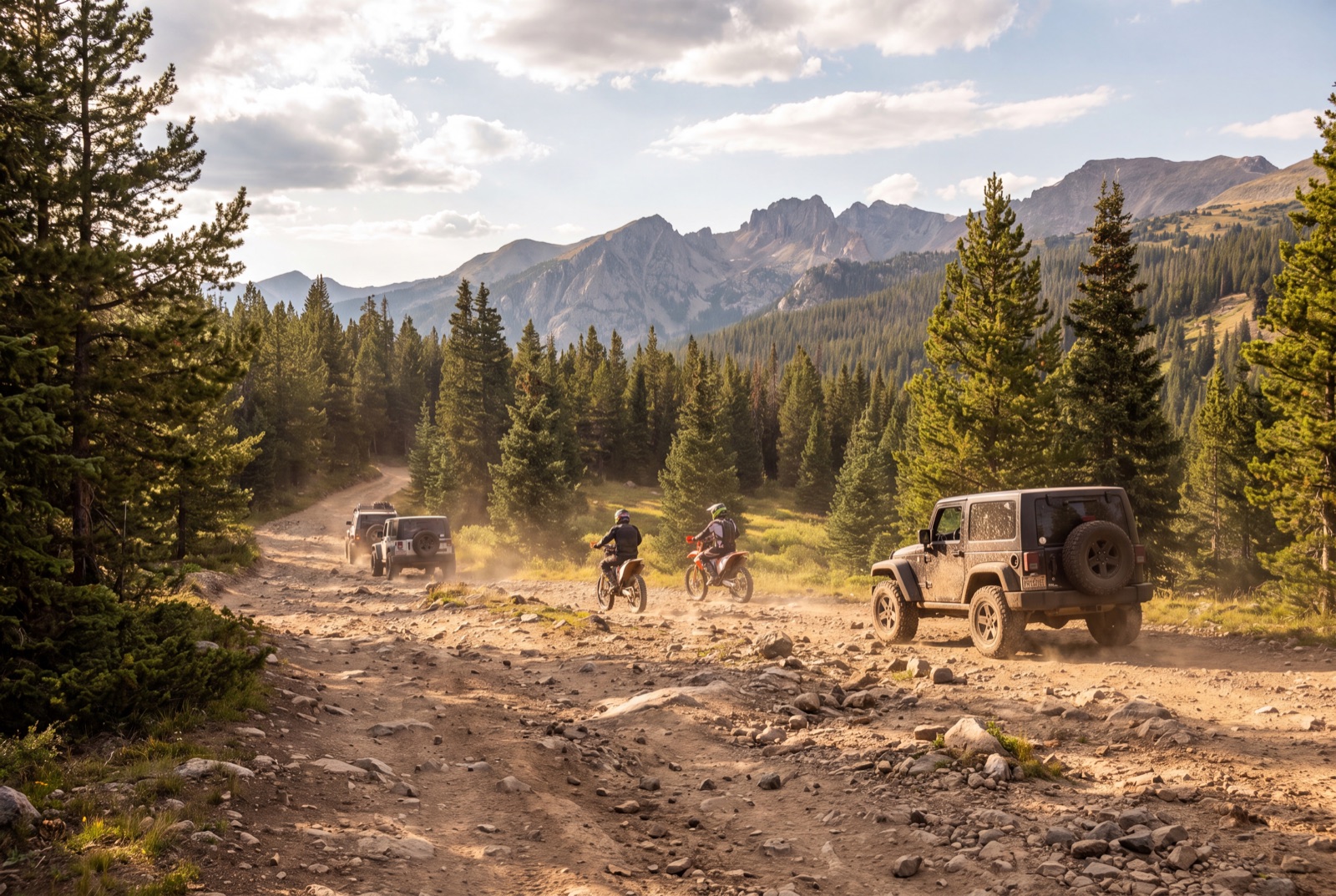 A group runs a rocky alpine trail together — a second vehicle is the best recovery tool ever made
Air down before you hit the soft stuff. Dropping tire pressure floats you over sand and lets the tread conform to rocks, and it is the single cheapest traction upgrade you own. Our full breakdown lives in the airing-down guide, but the short version: lower pressure means a longer, wider contact patch, and a bigger footprint means you are far less likely to dig in in the first place.
Read the ground before you commit. Walk the sketchy section if you can. Look for the surface under the surface: mud sitting on hardpack behaves nothing like bottomless goo, and a sandy wash with a buried rock ledge will stop you cold. Knowing what is under you changes the whole plan.
Never wheel alone without telling someone your route and your expected return time. A second vehicle is the best recovery tool ever made, but even a text with your trailhead and a check-in time is a real safety net when there is no cell signal on the trail.
The Gear That Actually Gets You Out
You do not need a trailer full of hardware. You need a handful of proven tools you know how to use.
Traction Boards
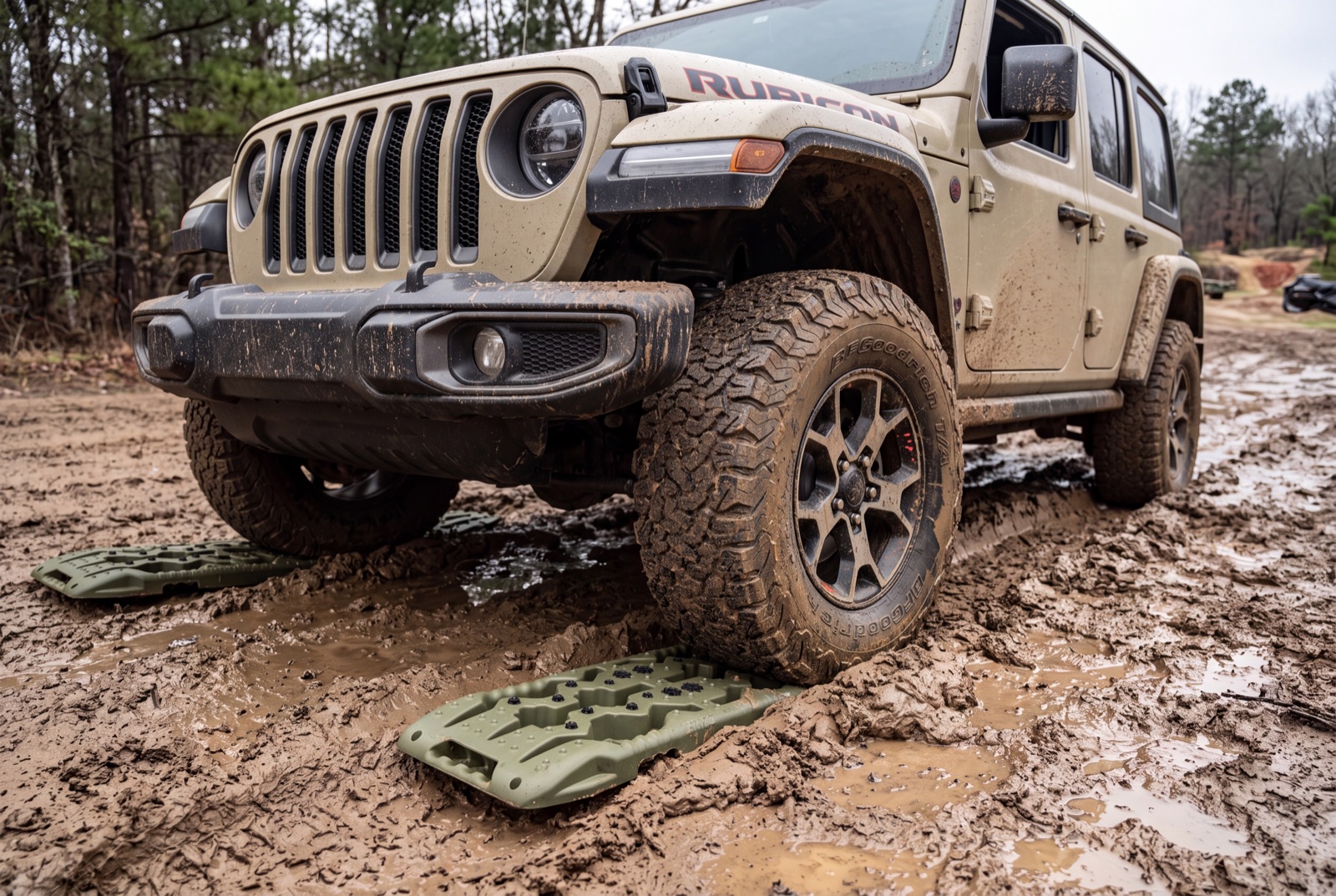 A Rubicon eases onto traction boards to climb out of deep mud
The first thing to reach for, and the safest. Traction boards are stiff ramps with aggressive lugs that you wedge under the tires to bridge the gap between rubber and grip. Clear the packed material from in front of each drive tire, jam the board tight against the tread, then ease onto the throttle so the tire climbs the board instead of spinning through it. No stored energy, no snapping cable, nothing to hit anyone. If you carry one recovery item, make it these. We put them through their paces in our traction board review.
The Shovel
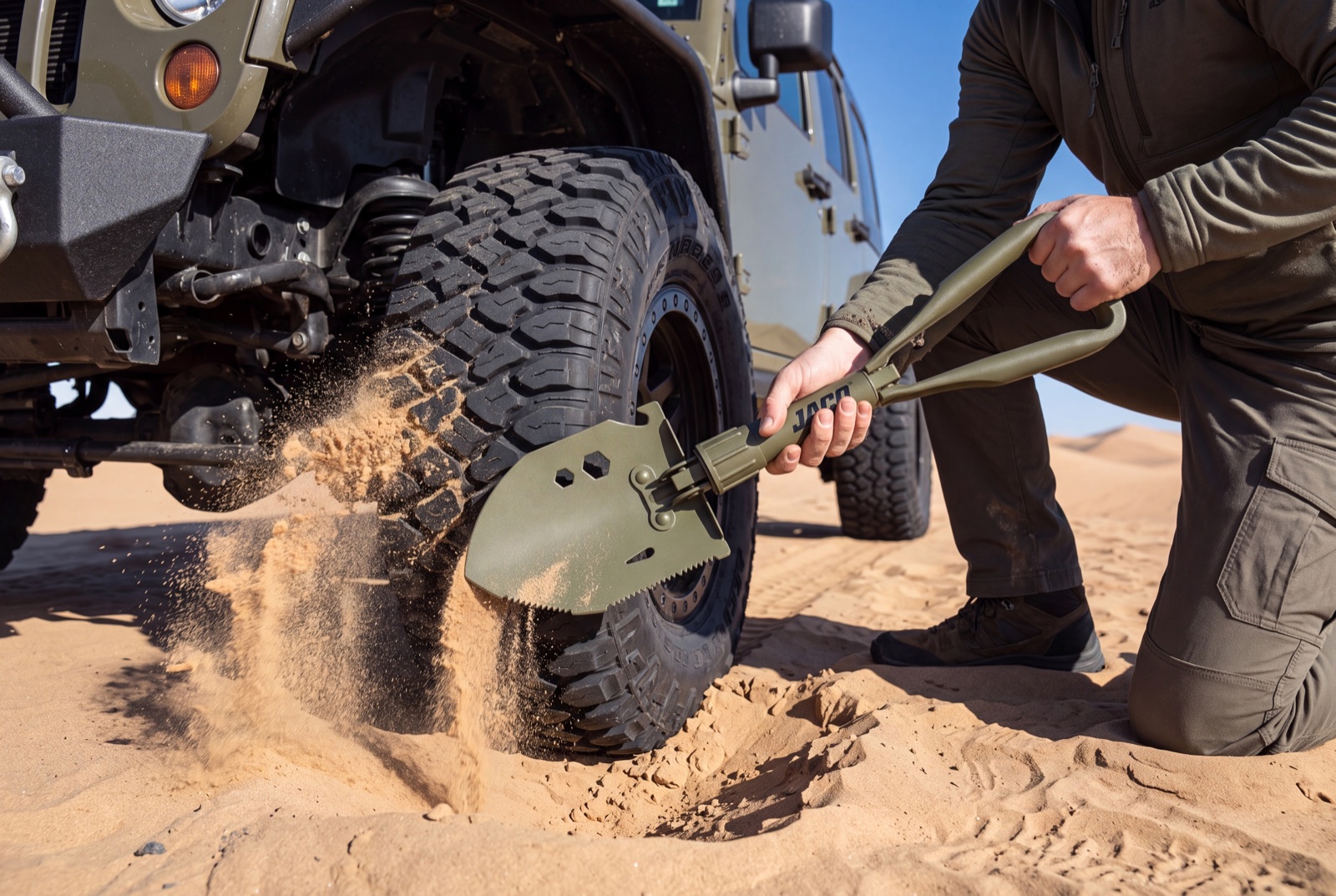 Digging a stuck front tire out of soft sand with a foldable survival shovel
Boring, and it might be the most valuable thing in the truck. Digging the packed material away from your tires, and digging out anything jamming the undercarriage, does more than any single mechanical device. Often five minutes with a shovel turns an impossible pull into an easy drive-out.
Kinetic Recovery Rope
A kinetic rope is not a tow strap (more on that distinction below). Often called a snatch strap, it is built to stretch roughly 15 percent under load, storing energy as the recovery vehicle accelerates and then releasing it to pluck the stuck rig free with a smoother, gentler pull than a rigid strap. That elasticity is why it outperforms a static strap for a bogged vehicle, and it is far kinder to both trucks’ frames. For most trail rigs a 7/8 inch rope in the 20 to 30 foot range covers the job. It requires a second vehicle, so it lives in the group-recovery toolkit.
Tow Strap
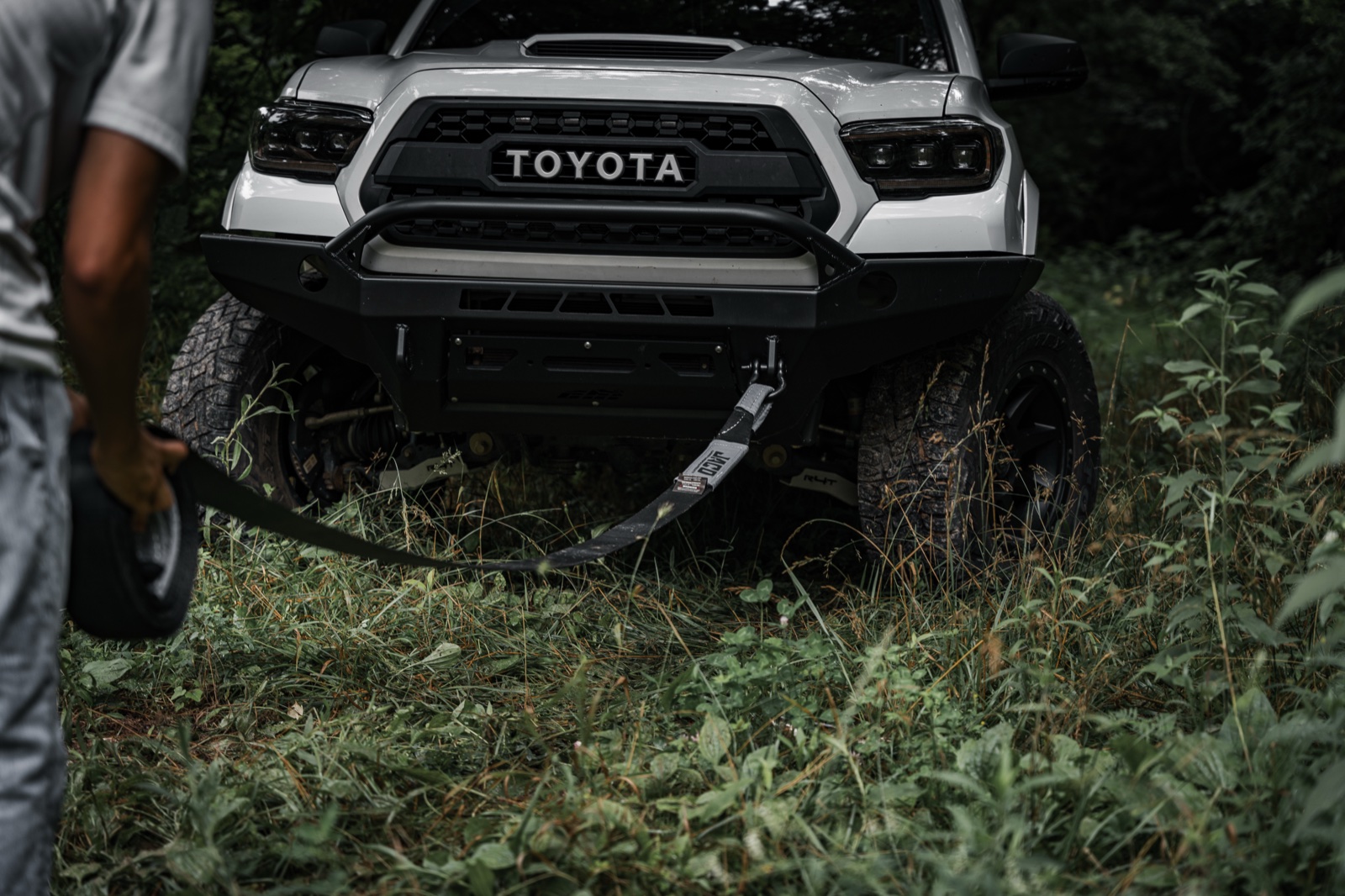 A tow strap rigged to a rated recovery point — loop ends and a proper shackle, never a trailer ball
The static cousin of the kinetic rope, and it belongs in the truck too. A tow strap has little to no stretch, which makes it the wrong tool for yanking a bogged rig out of a hole, but exactly the right tool for everything after: dragging a freed vehicle the rest of the way out of the soft stuff, pulling a dead rig up a grade to a safe spot, or flat-towing a broken truck down a trail to the trailhead. Because it does not stretch, the pull is direct and predictable, and you always know where the vehicle behind you is.
The rules are simple. Never shock-load a tow strap, since without stretch all that energy goes straight into frames and recovery points. Start with the strap nearly taut and pull away smoothly. Use straps with sewn loop ends connected to rated shackles and recovery points, and skip anything with metal hooks sewn into the ends, which become shrapnel if they let go. Buy more capacity than you think you need: something like a 30,000-plus pound rated strap weighs almost nothing and covers a full-size rig with a huge safety margin.
Kinetic rope gets the truck unstuck. The tow strap gets it home. Carry both.
Winch and Snatch Block
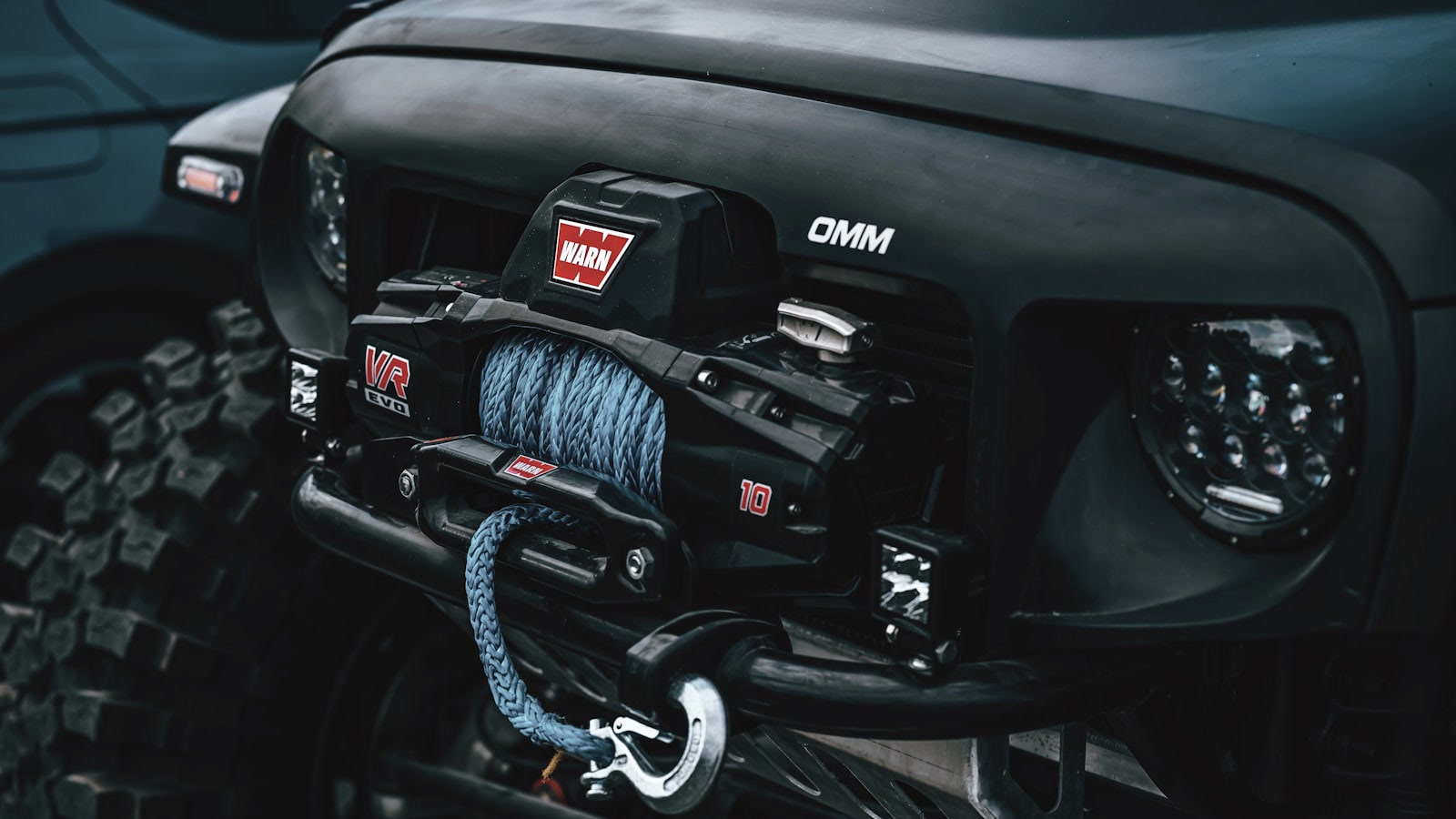 Photo: Egor Komarov / Unsplash
A winch is your solo lifeline. Mount one rated well above your loaded vehicle weight (9,000 to 12,000 pounds of capacity is the common sweet spot for full-size trail rigs), and learn it before you need it. Synthetic line has largely replaced steel cable for good reason: it is lighter, easier to handle, and does not store the same dangerous energy if it fails.
The snatch block is the trick most people skip. Instead of running your winch line straight to the anchor, run it through a snatch block (a pulley) attached to the anchor point, then back to a tow point on your own vehicle. That single move roughly doubles your effective pulling force and reduces strain on the winch motor. It also lets you redirect the pull around an angle so you are not fighting the truck sideways. Always protect a tree with a tree-saver strap, never wrap the line around the trunk itself.
Hi-Lift Jack
The hi-lift is powerful, versatile, and the most dangerous tool in this list. Its main recovery job is lifting a wheel or the frame so you can pack material underneath and restore tire contact, or free a belly that is hung up on an obstacle. Treat it with respect: it is tall, tippy, and driven by a handle that can whip back with serious force. More on using it safely below.
Technique Changes With the Terrain
Being stuck in mud is a different problem than being stuck in sand, which is different again from being high-centered on rock. Match the fix to the ground.
Mud
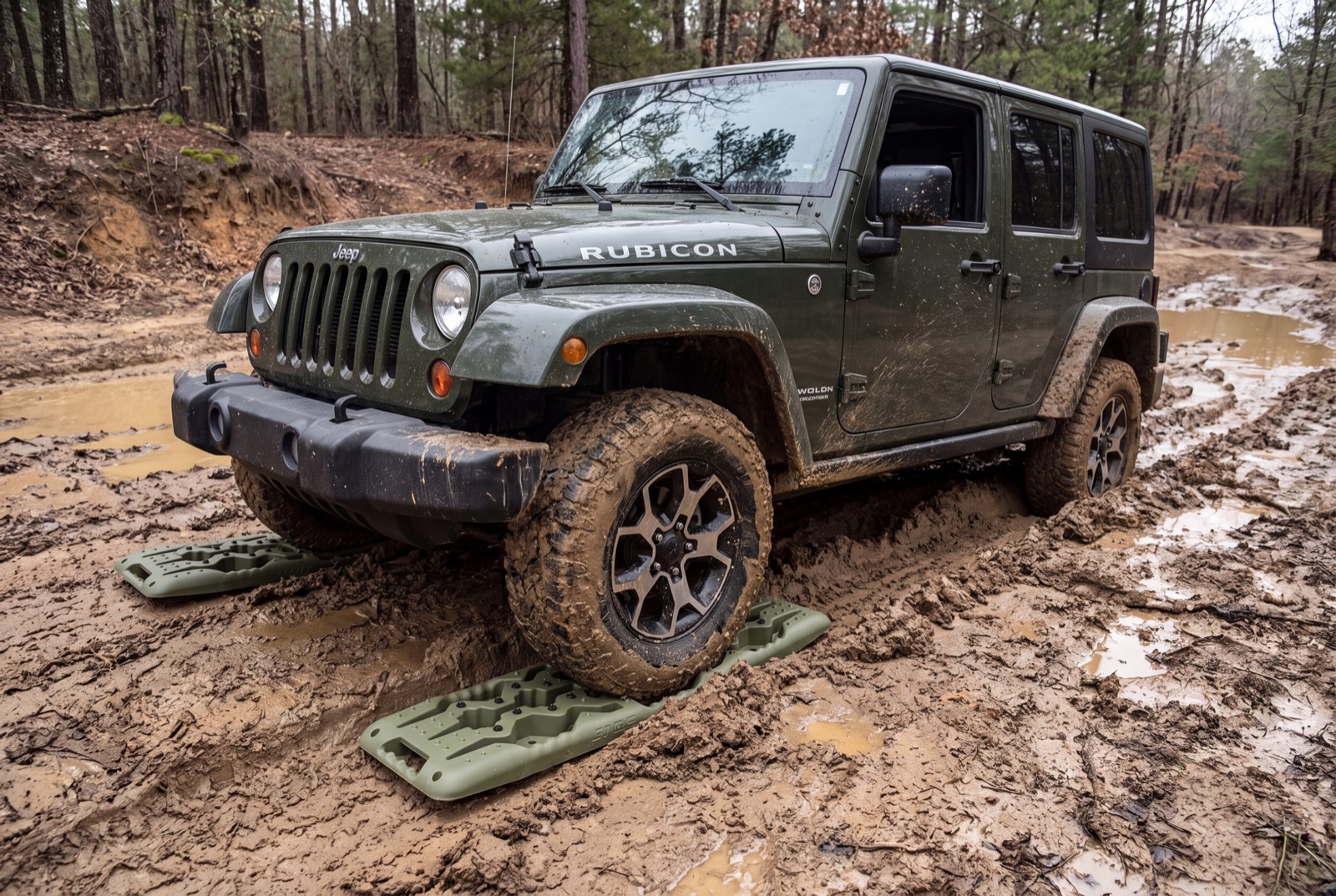 Boards wedged tight against the tread of a bogged Wrangler — dig first, then let the lugs do the work
Mud is sticky suction, and momentum plus finesse beats brute force. First, figure out what is actually holding you: mud alone responds to traction techniques, but mud combined with deep ruts, hidden rocks, or a high-centered frame is a different animal entirely. Dig the mud away from your tires and from under the chassis, wedge traction boards hard against the tread, and feed in steady throttle. Do not just mash the pedal and roast your tires, because a spinning tire only digs itself a deeper grave and glazes the tread with slick mud.
Sand
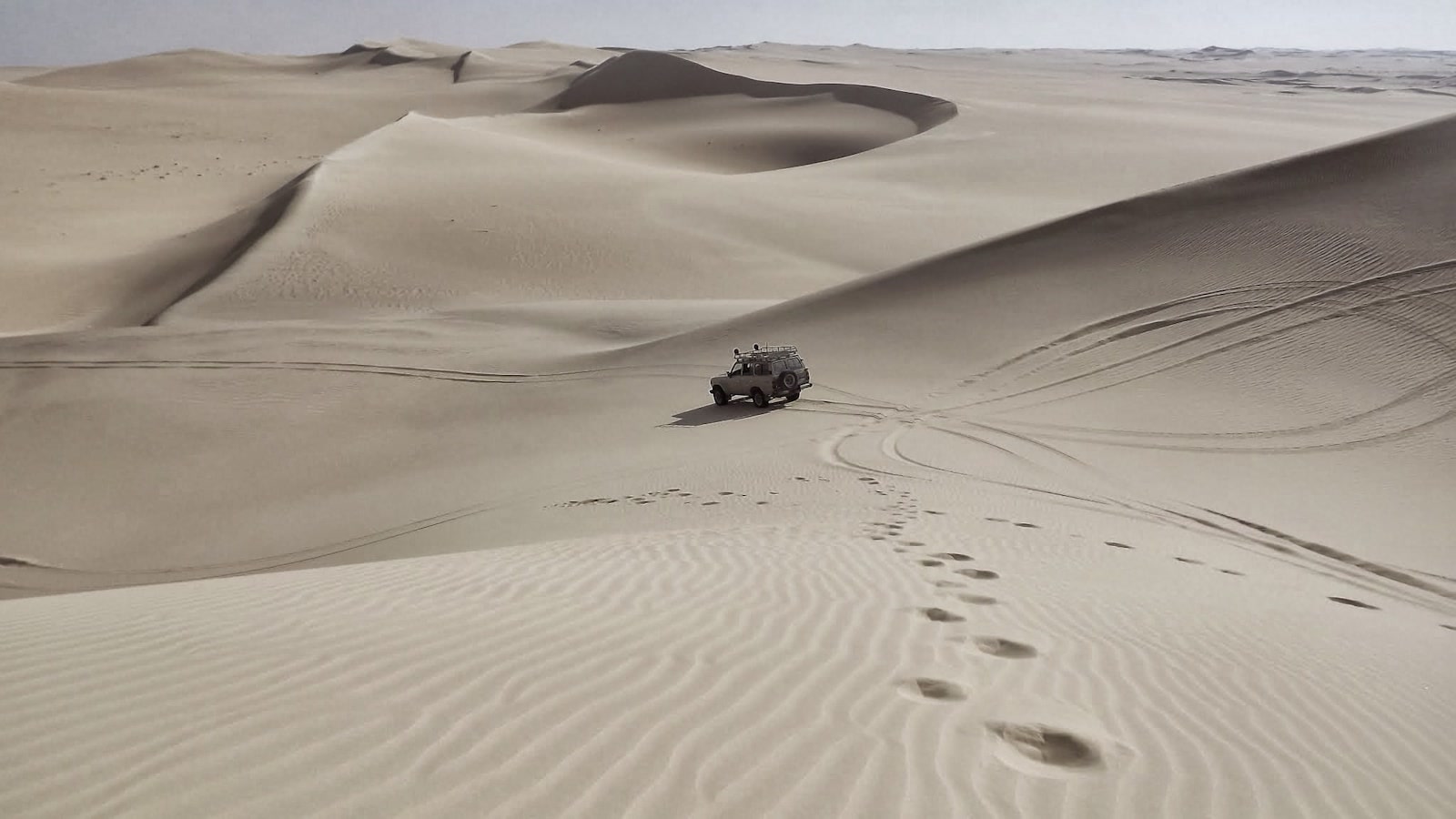 Photo: Dyaa Saleh / Unsplash
Sand is all about flotation, not force. Lower tire pressure than you would run anywhere else is the key, since a bigger footprint keeps you on top of the sand instead of plowing into it. If you bog down, do not spin: back off the throttle immediately, because wheelspin just excavates a pit. Clear the sand from in front of the tires, drop pressure further if you have not already, lay your boards, and ease out gently. Kinetic-style straps work well in sand because the surface gives, letting the stretch do the work.
Rocks and High-Centering
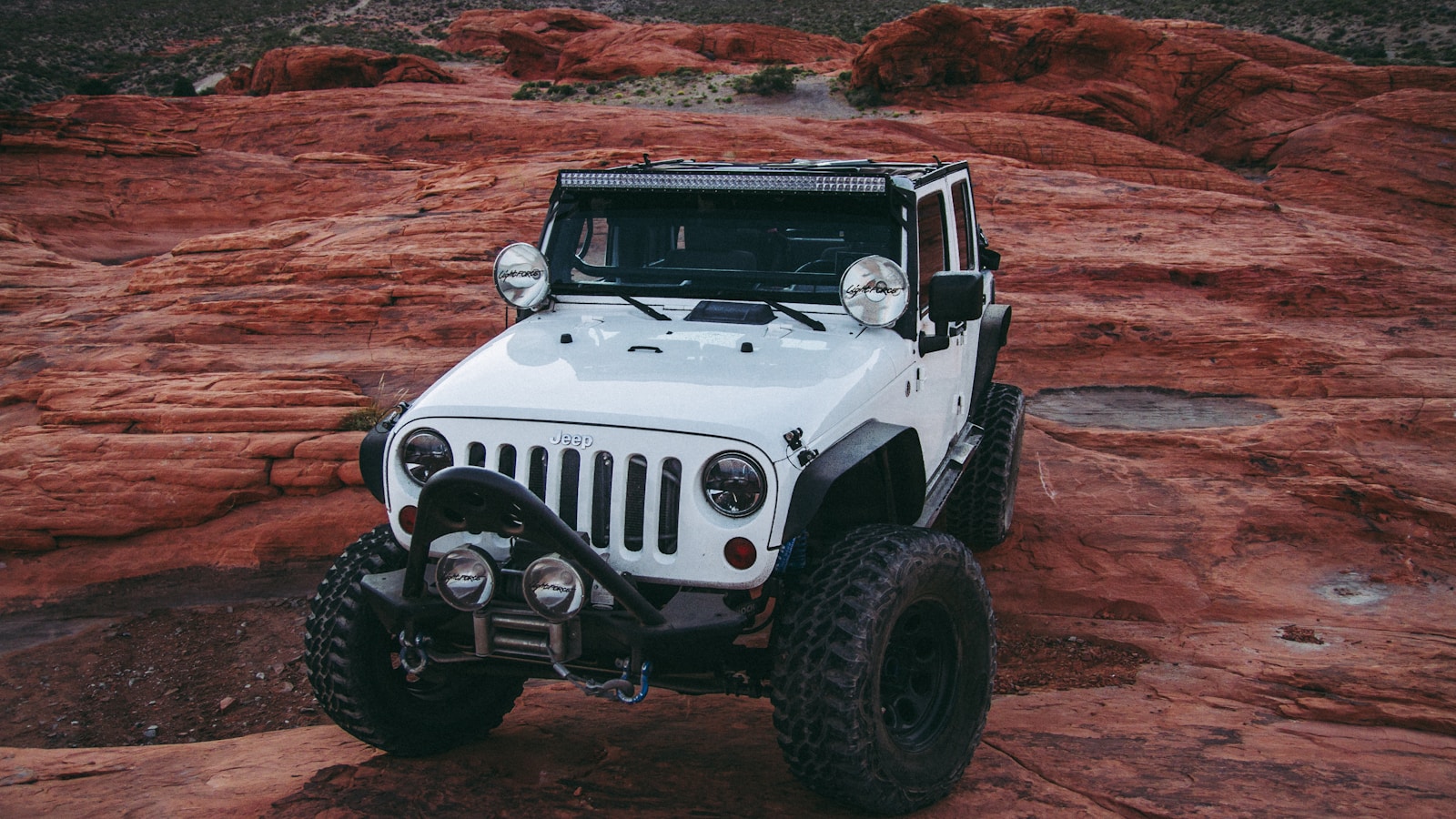 Photo: Quilia / Unsplash
High-centering is when the chassis rests on an obstacle and the tires lose enough weight that they spin freely with nothing to grip. This is the one situation where traction tricks are useless. No amount of traction boards, low gears, or momentum will move a truck whose weight is sitting on its belly. The only real fix is to jack the vehicle up one end (or one corner) at a time and pack dirt, rock, brush, or your boards under each wheel to lift the frame off the obstacle and put weight back on the tires. Then you can drive off what you built.
Wheeling Solo: You and the Winch
Solo recovery removes your best tool (a buddy’s truck), so your winch, boards, shovel, and jack become everything.
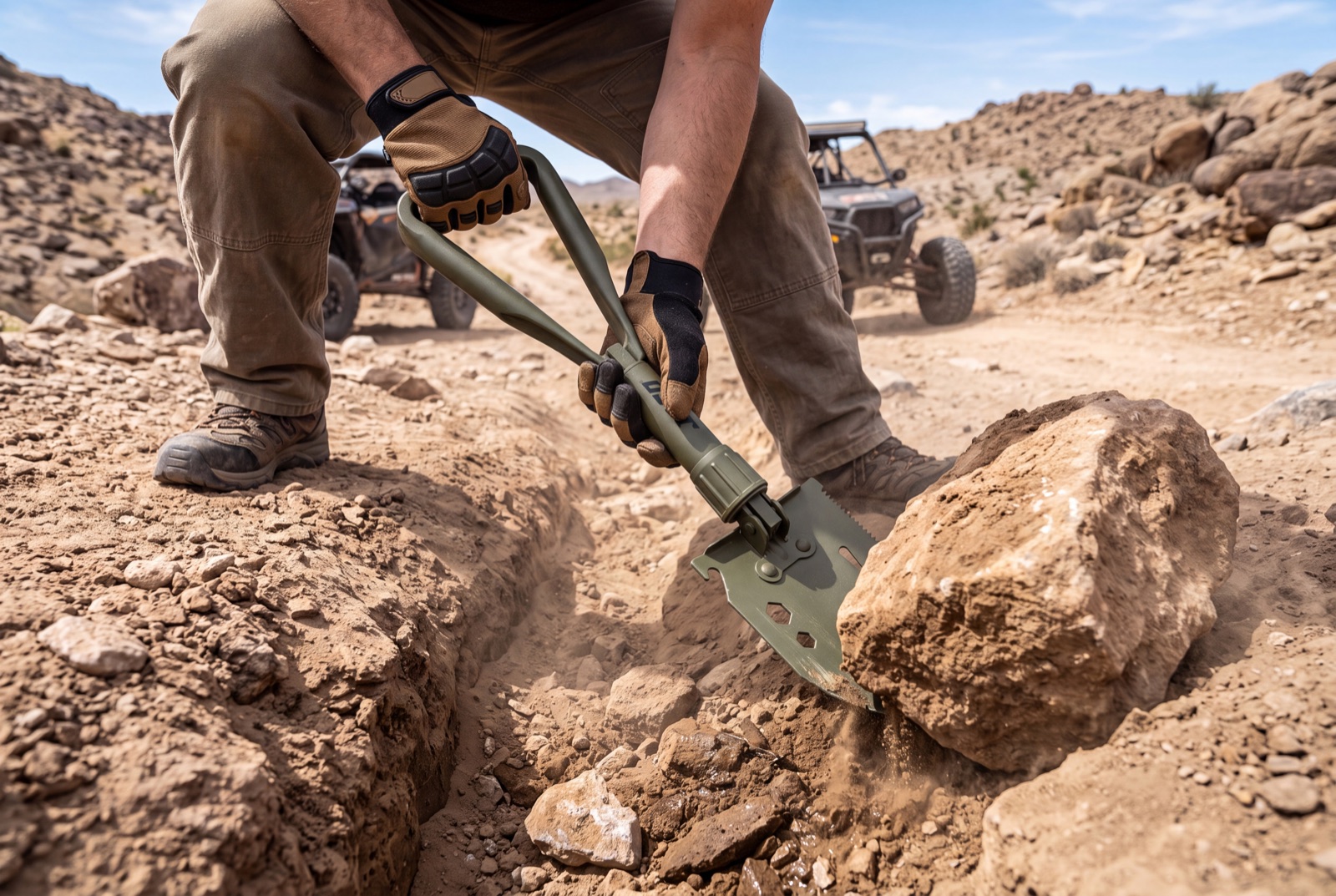 Person pries out a large rock with a foldable survival shovel — no second truck, no problem
Think it through before you touch a control. Pick your anchor: a solid tree with a tree-saver, another vehicle, or a buried spare (a “deadman”) if the ground is truly empty. Set your snatch block if you need the extra pulling force or a change of direction. Lay a recovery damper (or even a heavy jacket) over the midpoint of any line under tension, so if a component fails the line drops instead of flying. Then winch slowly and deliberately, watching the whole system, and stop the moment anything looks wrong.
If your winch line will not reach, that shovel and those traction boards climb the priority list fast. A patient dig-and-board on flat-ish ground gets more people out solo than any single mechanical pull.
The Safety Rules That Keep This Fun
Recovery gear stores and releases enormous force. That is exactly why it works, and exactly why it hurts people who get careless. These are non-negotiable.
- Nobody stands in the line of pull. A kinetic rope, winch line, or strap under load that lets go becomes a projectile. Keep every bystander well off to the side, out of the path the line would travel if it snapped.
- Use a line damper. Drape a recovery damper, blanket, or heavy bag over any line under tension. It kills the whip if something breaks.
- Never use a hi-lift jack as a jack stand. Do not crawl under a vehicle held up only by a hi-lift, ever. It is for lifting during recovery, not for supporting weight while you work underneath. Use proper jack stands for that.
- Keep both hands on the hi-lift handle and control it through the full stroke. The handle can snap back hard enough to break bones. Never let it swing free, and pay close attention as conditions shift.
- Inspect your gear. Frayed rope, bent shackles, cracked boards, and worn straps fail under load. Check them before the trail, not during the recovery.
- Rated recovery points only. Hook to a proper rated recovery point, never a trailer ball, a suspension arm, or a flimsy tie-down loop. A ball hitch can shear off and launch like a cannonball.
- Slow and deliberate wins. Most recoveries go sideways when someone rushes. Pause, look at the whole setup, communicate the plan, then execute calmly.
The Real Skill Is Staying Calm
Here is the thing nobody tells you: the technical part of recovery is not that hard. Traction boards, a shovel, a rope or a winch, and a jack cover almost every situation you will meet on the trail. The hard part is doing it in the right order without panicking, without flooring it, and without putting anyone in the path of a loaded line.
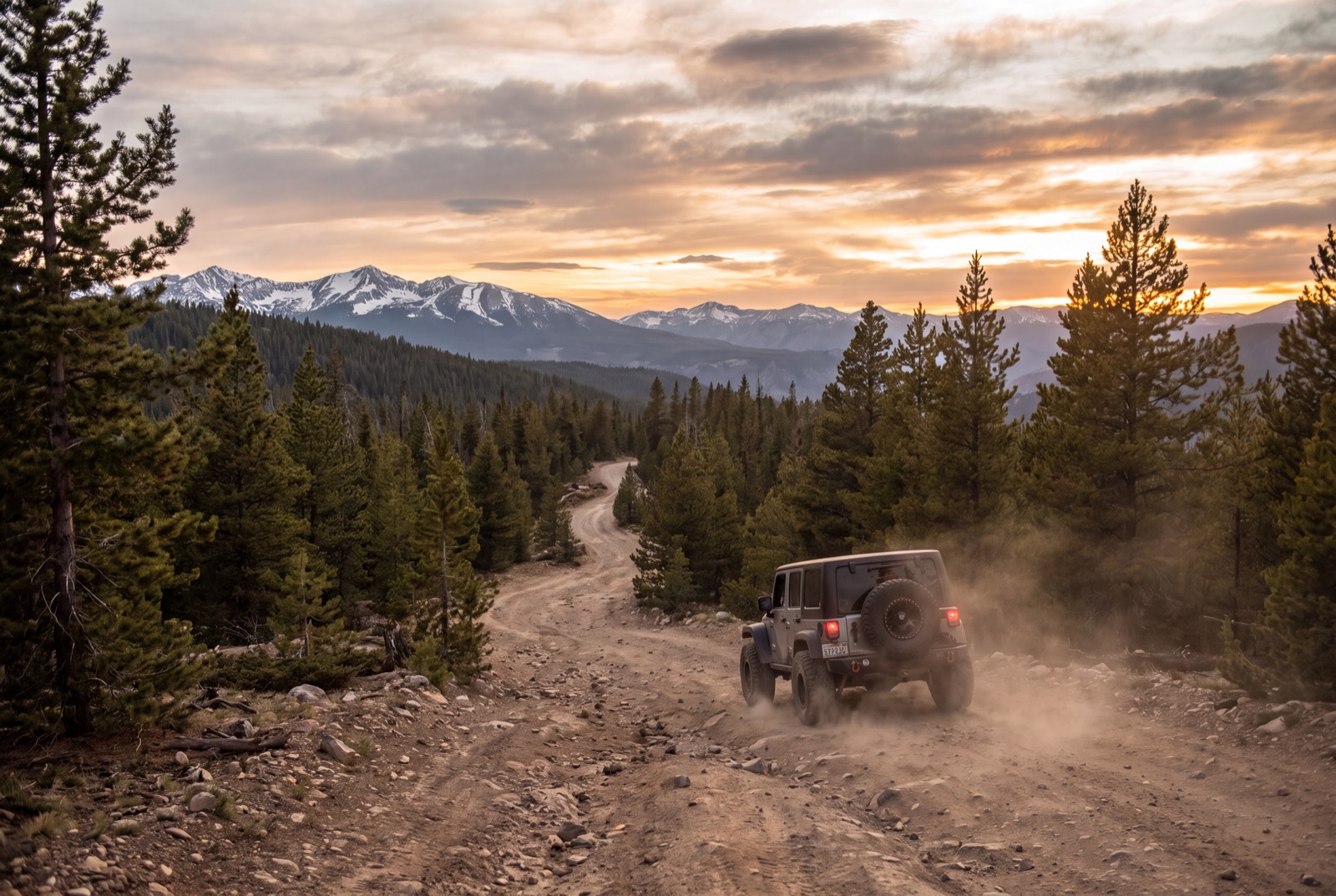 Unstuck and rolling home — the whole point of the playbook
Get stuck on purpose in a safe spot near home. Practice laying boards, rigging your winch through a snatch block, and setting a jack before your life (or your buddy’s) depends on it. The trail always wins eventually. Knowing this playbook cold is how you win it back.
Have a recovery story or a technique we missed? That is exactly the kind of hard-won trail knowledge this community runs on. Get out there, be smart, and bring everybody home.
Hero photo: cody lannom / Unsplash