
Broken Arrow is the trail that talks people into buying a Jeep. You roll out of downtown Sedona, air down a few minutes later at the end of Morgan Road, and within the first quarter mile you are crawling up bare red sandstone with the whole Red Rock Country opening up in your windshield. It is short. It is grippy. And it puts you on top of formations that most visitors only ever see from the highway. That combination is exactly why pink tour Jeeps have been running it for decades and why it sits at the top of nearly every “best trail in Sedona” list.
It is also a trail that gets underestimated. Moderate does not mean easy, and the slickrock that grabs your tires so well will also tip your rig at angles that get your passengers grabbing the handles. The famous Devil’s Staircase at the end is a genuine high-clearance descent, not a photo op you drive around. Here is the honest version of Broken Arrow: what it is, how to get on it, the obstacles in the order you hit them, the rig you actually need, and the rules that keep this trail open.
What Broken Arrow actually is
Broken Arrow runs through the Red Rock Ranger District of the Coconino National Forest, just south of downtown Sedona and east of Highway 179. It is a short out-and-back to Chicken Point with a couple of optional spurs and a one-way return loop bolted on, and depending on which detours you take it runs right around 3.7 miles of actual driving. onX rates it Moderate with a technical rating of 5, and that is a fair call. This is not a beginner dirt road and it is not the Rubicon. It is a tight, technical, theatrical slickrock route that rewards smooth driving and punishes ego.
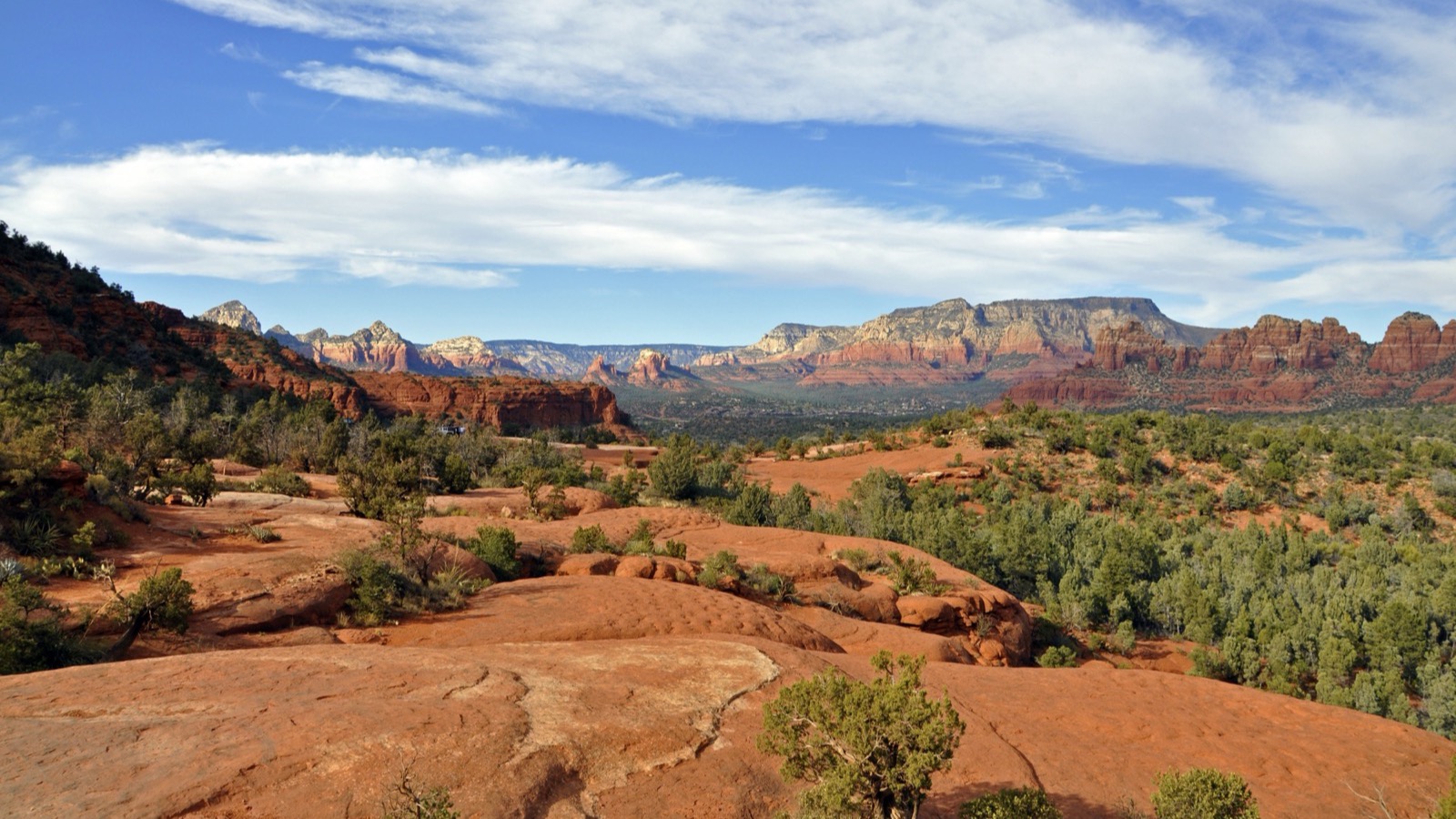 Photo: Coconino National Forest / Wikimedia Commons (CC BY-SA 2.0)
The rock is the whole reason to come. Dry Sedona sandstone grips a rubber tire like coarse sandpaper, which is what lets a stock-ish 4x4 climb pitches and tip down ledges that look impossible from below. The same grip that makes the heart-pounding descents feel sane is the thing keeping you on the rock instead of sliding off it. Pair that traction with views down into the valley and up at Twin Buttes, Battlement Mesa, and the spires around Chicken Point, and you understand why this little trail punches so far above its mileage.
One thing to set expectations on: you will not have it to yourself. Broken Arrow is heavily used by Jeep tours, hikers, and mountain bikers all sharing the same corridor, and a chunk of the route runs as a one-way system specifically to keep traffic from gridlocking. Go early, go slow, and be ready to yield.
How to get there and where to stage
Getting to the trailhead is dead simple. From the junction of Highway 89A and Highway 179 in uptown Sedona, head south on 179 for about 1.4 miles. Watch for Morgan Road on your left (east) and turn there. Follow Morgan Road through a quiet residential neighborhood for roughly six tenths of a mile until the pavement ends at a cattle guard. The Forest Service trailhead parking is just past that on the left, on bare dirt and rock, with room to air down.
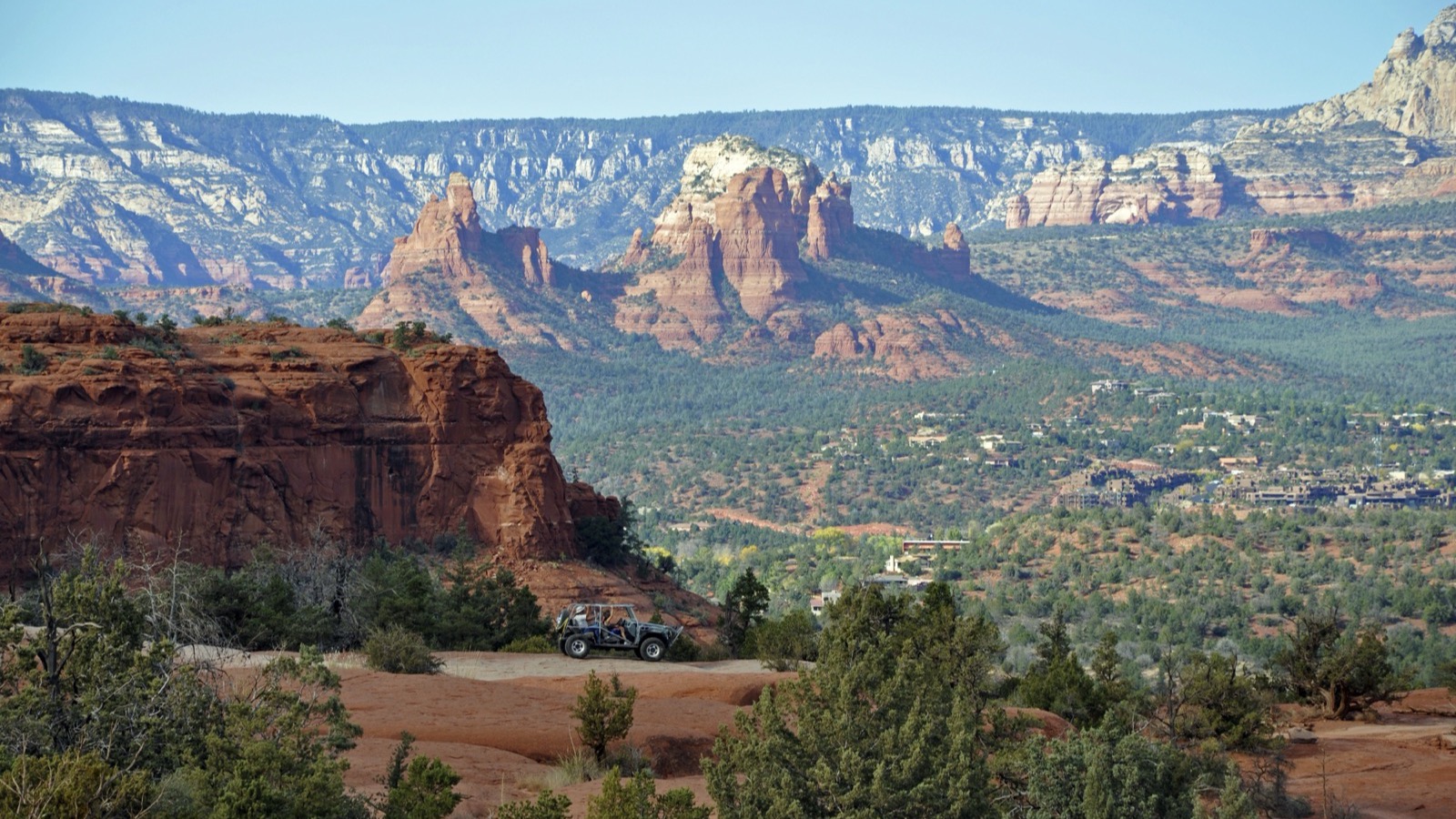 Photo: Coconino National Forest / Wikimedia Commons (CC BY-SA 2.0)
Two practical notes before you leave the lot. First, this is a residential gateway and the neighborhood has real friction with off-road traffic, so keep your speed and your noise down on Morgan Road and do not stage in front of someone’s house. Second, you need a Red Rock Pass to park at the trailhead lot. It is a Forest Service parking and amenity pass for the Sedona red-rock day-use sites, available as a daily, weekly, or annual pass, and a federal Interagency (America the Beautiful) pass covers it too. Buy the daily pass at the kiosk or in town and display it on your dash. The pass is for parking, not a trail permit, but rangers do check, and it is the cheap, easy thing that keeps you out of a citation.
Air down at the lot. Lower pressure is what makes the slickrock grip and what protects your sidewalls on the ledges. Somewhere in the high teens to low twenties psi works well for most rigs here.
The obstacles, in the order you hit them
Right after the pavement ends, just past the parking area, the trail throws its first test at you: a moderate rock ledge that the Forest Service essentially uses as a gatekeeper. If your rig cannot get over this cleanly, it is a sign to turn around now rather than 30 minutes in. Most high-clearance SUVs and trucks with four-wheel drive clear it without drama.
From there the route runs south through juniper and pinyon and quickly hits its first slickrock section, where you simply follow the worn tire tracks across the rock. Around half a mile in you reach a junction with the one-way trail system. Stay right to follow the flow and reduce the chance of meeting an oncoming tour Jeep on a section too narrow to pass. Much of the corridor in here is one vehicle wide, so if you do meet someone head-on, the courteous move is to back up to the nearest pullout.
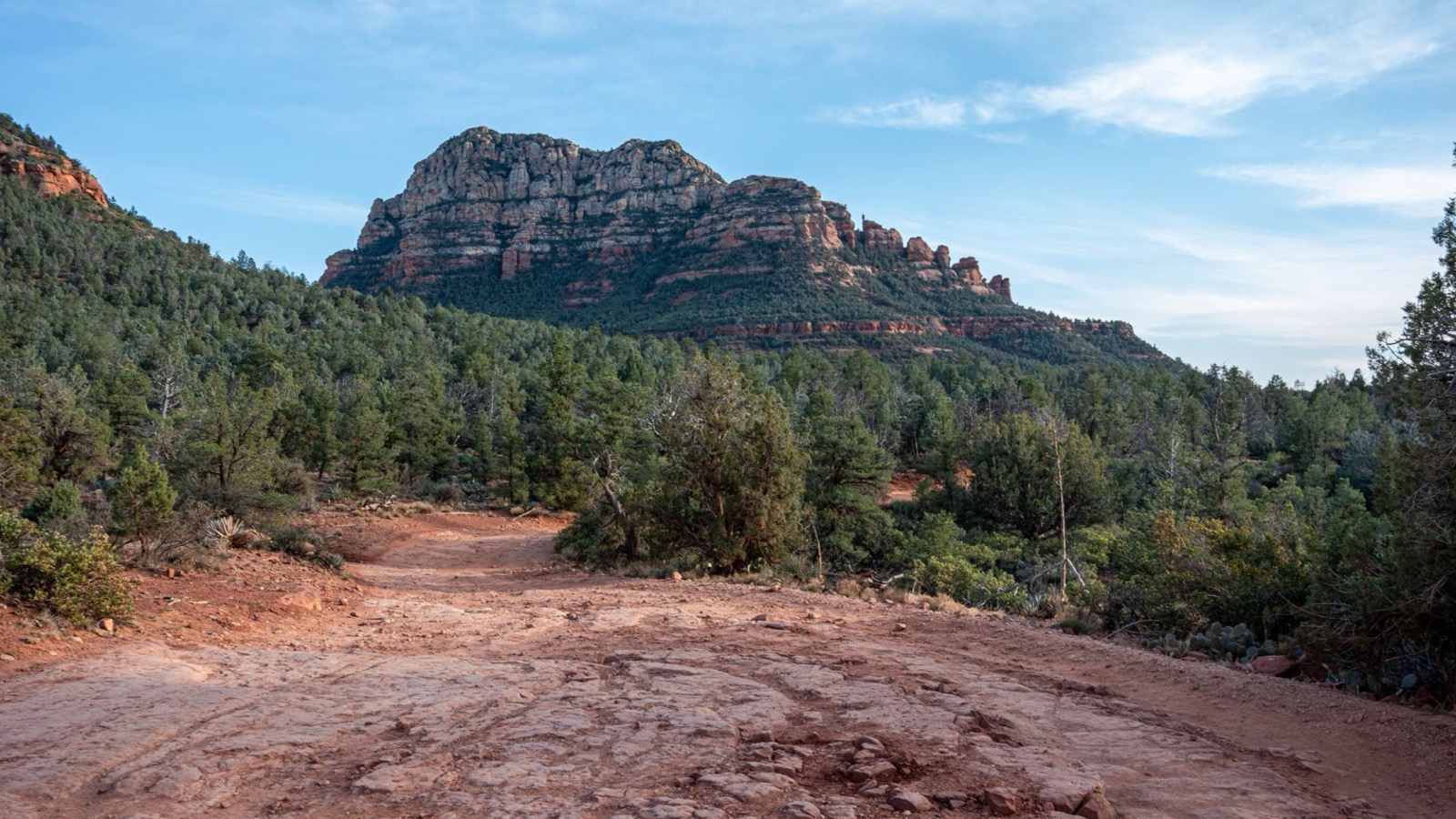 Photo: Jackie A / Pexels
The driving builds gradually. South of the Submarine Rock junction the trail gets more technical, with eroded spots that ask for careful tire placement and a little articulation to clear without scraping. None of it is extreme on its own, but it is constant, deliberate, low-range crawling rather than anything you carry momentum through. Take your time and pick clean lines and the whole thing stays well inside Moderate.
Then comes the headliner. The Devil’s Staircase, the feature most people just call “the Steps,” is a steep series of slickrock ledges that drops you back down toward the main trail near the end of the loop. There is a small pullout above it so you can get out and walk it first, which you should. The line itself is a slow, brake-controlled descent, dropping over the steps one at a time. This is where clearance and skid plates earn their keep. Creep down, let the truck do the work, and do not rush it. At the bottom you rejoin the main trail and run back over the same obstacles to Morgan Road.
Submarine Rock, Chicken Point, and the Devil’s Dining Room
The named landmarks are half the reason to run Broken Arrow, and a couple of them are short detours you would be silly to skip.
The Devil’s Dining Room is a fenced sinkhole a short walk off the trail early in the route, roughly half a mile in. It is a deep, narrow collapse in the sandstone, gated off for safety, and it is worth the two-minute stop to look down into it. Stay behind the fence. It is exactly as deep as it looks.
Submarine Rock is a long, low, whale-backed slab of sandstone reached by a short spur off the main trail. It really does look like a surfacing submarine, and it is the classic Broken Arrow photo. You can park at the base after a small ledge and walk out onto the formation. It is a great spot to stretch your legs and take in the scale of the place.
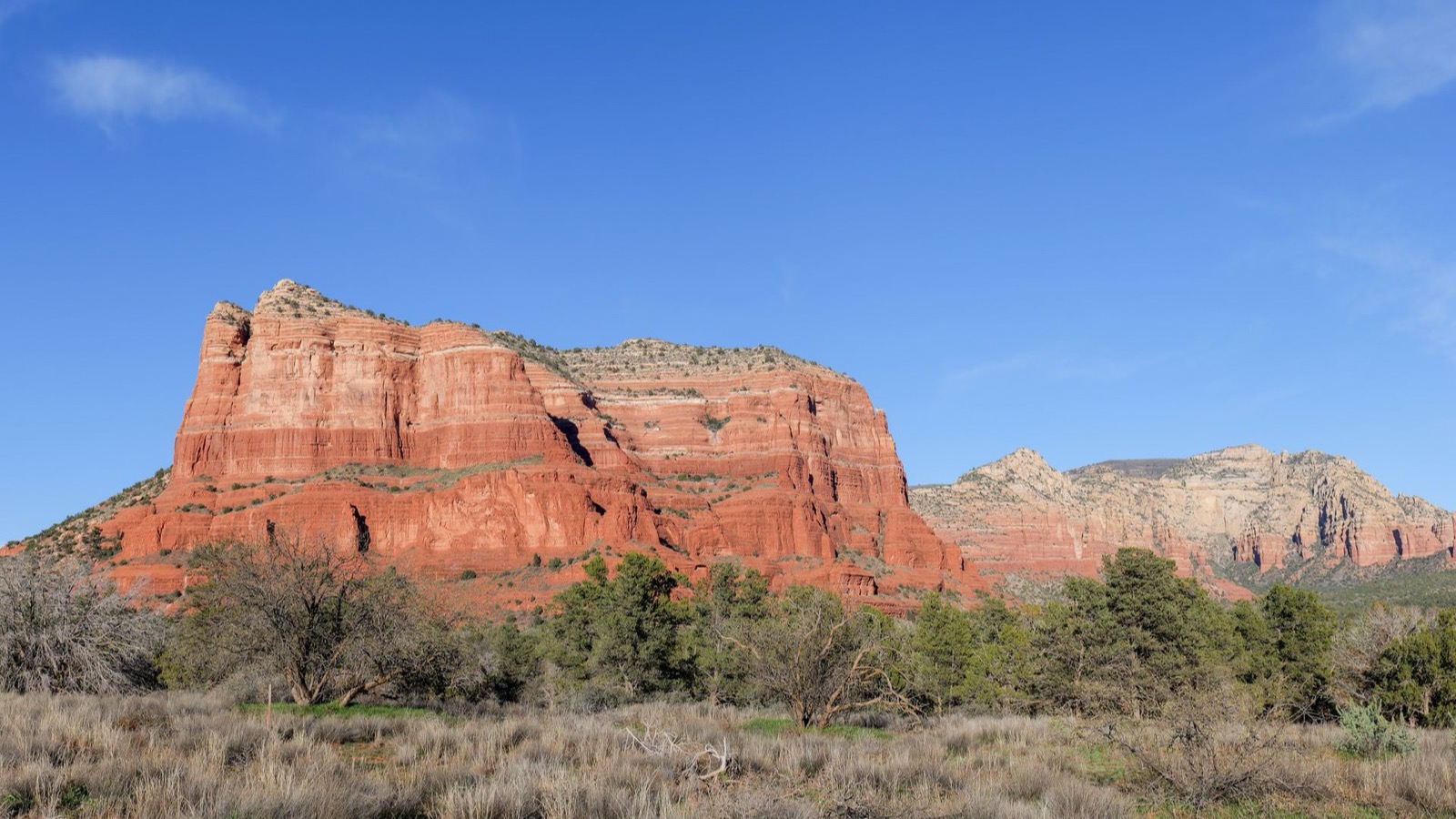 Photo: Mark Direen / Pexels
Chicken Point is the turnaround and the payoff. It is a broad shelf of red rock ringed by spires, with big open views across the valley, and it is where the tour Jeeps stage for photos. Pull out, soak it in, and get the shot of your rig on the rock. From Chicken Point you backtrack along the spur and then can either retrace your route or drop the one-way loop over the Devil’s Staircase to close things out. The loop with the Staircase is the more fun finish, so most people take it.
The rig you actually need
Broken Arrow is one of the most accessible “real” off-road trails in Arizona, but accessible is not the same as stock. Here are the honest minimums.
Four-wheel drive and genuine high clearance are not optional. This is a rock trail, not a graded forest road, and a crossover or a two-wheel-drive truck will get stuck or damaged on the entry ledge. Skid plates are strongly recommended, especially for the Devil’s Staircase, where the wrong line scrapes underbody. A factory-capable 4x4 like a Wrangler, a Bronco, a 4Runner, or a Tacoma with decent tires will run the whole trail without lockers. Lockers and a little lift make the optional play areas and the Staircase noticeably easier and let you relax on tire placement, but they are not required to complete the route.
Tires matter more than badges here. Air down before you start, run a real all-terrain or mud-terrain rather than worn highway tires, and the slickrock grip does the rest. Bring the basics you should always carry: recovery points, a strap, a way to air back up, water, and a spotter who will get out and guide you through the tight ledges and the Steps. One more rule specific to this trail: it is open to street-legal vehicles only. Side-by-sides and unplated OHVs are not permitted on Broken Arrow, so leave the unregistered toys at home.
Permits, rules, and the neighborhood
The trail itself does not require a special off-road permit, but parking at the trailhead does require a Red Rock Pass (or a valid federal Interagency pass), as covered above. Beyond that, a few rules keep this trail open and keep you out of trouble.
Stay on the route. The slickrock tempts people to carve their own lines across the open rock, and that braiding and the scars it leaves are exactly what gets trails closed. Follow the existing tracks, respect the one-way sections, and do not create new paths across the desert. Yield to hikers and mountain bikers, who share this corridor in numbers, and slow down or stop for the tour Jeeps rather than crowding them.
The access road runs through a residential neighborhood that has been at the center of a real local fight over off-road noise and traffic in Sedona. Permit limits and tighter rules have been discussed for the Broken Arrow area, mirroring restrictions already placed on nearby Soldier Pass. The single best thing you can do to keep Broken Arrow open and unrestricted is to be a quiet, courteous, slow guest on Morgan Road and on the trail. How we behave here decides what access looks like next season.
Best season and weather
Spring and fall are the sweet spot, and it is not close. Sedona sits at around 4,500 feet, so the shoulder seasons bring comfortable temperatures and the red rock looks its best under clear high-desert light. The trail is almost entirely unshaded, which makes summer genuinely punishing. Midsummer afternoons routinely push past 100 degrees on bare rock with no relief, so if you must go in summer, go at first light, carry far more water than you think you need, and be off the rock before the heat peaks.
Watch the monsoon. Late summer storms can roll in fast, and wet slickrock loses a chunk of the traction that makes this trail work. If rain is moving in, the smart move is to be heading back, not pressing on. Winter is doable on clear days but can be cold, and an occasional dusting of snow or ice on the rock changes the game entirely. For the best mix of grip, light, and comfort, plan a spring or fall morning, get there early, and let the trail show you why Sedona built its whole off-road reputation on it.
Tread lightly and leave it better
Broken Arrow is a privilege, not a right, and it is under more scrutiny than almost any trail in the state. Pack out everything you bring in, including the small stuff. Keep your tires on the established rock and dirt. Keep your voice and your exhaust down near homes. Give hikers, bikers, and tour vehicles the room and the courtesy you would want. This trail has survived decades of heavy use because most people who run it treat it right. Be one of them, and Broken Arrow will still be open, unrestricted, and worth the drive for a long time to come.
Hero photo: Coconino National Forest / Wikimedia Commons (CC BY-SA 2.0)