
Fins and Things is the trail that turns curious tourists into people who plan their next Moab trip on the drive home. It is a roller coaster across a sea of sandstone fins, where you climb a dome with nothing but sky in the windshield, crest the top, and drop down the far side steep enough to pin you against your belt. The grip of the slickrock is the only thing that makes those angles feel sane. This is one of the best ways to feel what makes Moab special without needing a fully built rock buggy, and it is close enough to town that you can run it on a half day and still make dinner.
Here is the honest, useful version of everything you want to know before you point your front tires at the first fin.
What the slickrock fins are actually like
“Slickrock” is a bad name. Moab’s Navajo sandstone is anything but slick when it is dry. It grips a rubber tire like sandpaper, and that traction is the whole personality of this trail. The fins are long, rounded ridges of bare stone, and Fins and Things links one to the next so you are almost constantly either climbing or descending. The rhythm of it is what people remember. You point uphill, the hood blocks your view of everything but blue sky, you trust your spotter or your line, and then the nose tips over the crest and the next fin opens up below you.
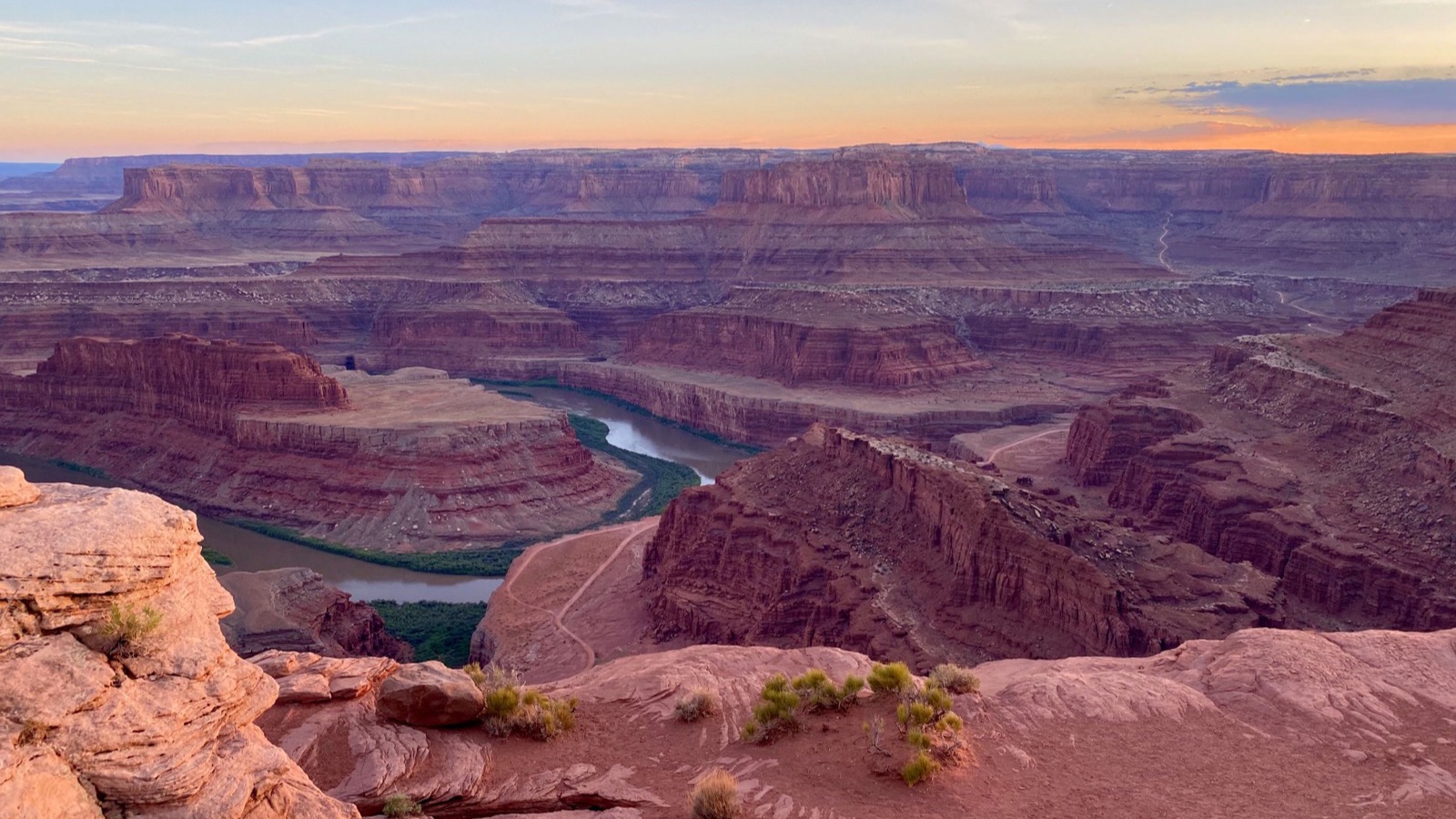 Photo: Colon Freld / Pexels
It is genuinely fun in a way that is hard to explain until you are doing it. The grip lets you climb things that look impossible from the bottom, and the steep rollovers give you that brief drop in your stomach without any real exposure on most of the main line. It is theatrical off-roading. You will be grinning, and so will everyone in your group watching from the next fin over.
Difficulty and what you need to drive it
Let me be straight, because people get themselves in trouble here by underestimating it. Fins and Things is rated Difficult by Grand County and the BLM, and the Red Rock 4-Wheelers club scores it a 5 on their 1 to 10 scale. That mid-pack number is misleading if you read it as “intermediate easy.” The terrain is steep, the climbs are committing, and it is recommended only for experienced drivers. There are rock steps up to around 18 inches, washes, and plenty of off-camber slickrock.
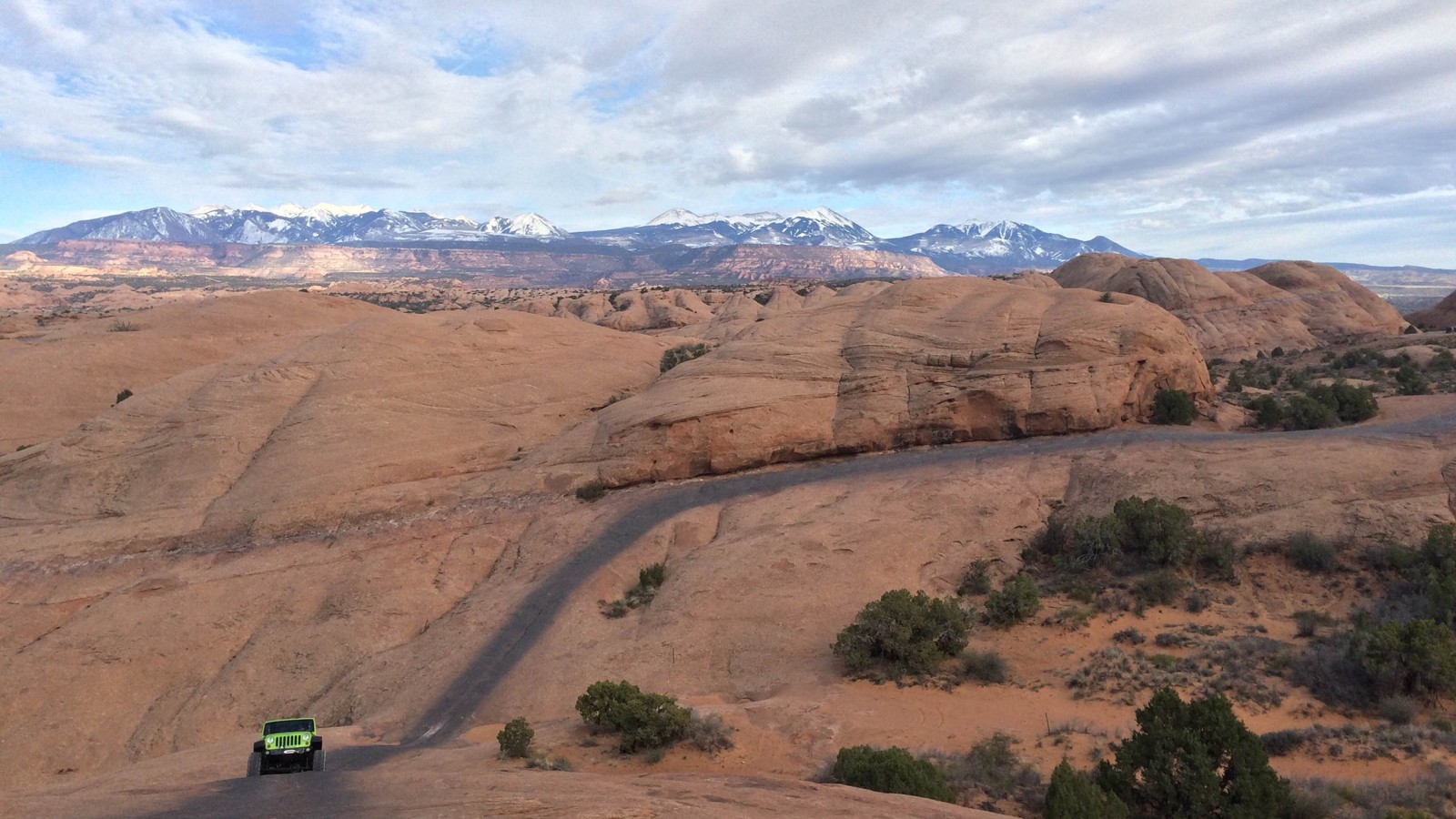 Photo: Bureau of Land Management / Wikimedia Commons (public domain)
For vehicle requirements, here is the real bar. You want a high clearance four wheel drive with low range gearing. A stock 4Runner, Tacoma, Wrangler, Bronco, or a capable side by side will handle it if the driver knows what they are doing. Good tires matter more than horsepower out here. Air them down and you will be amazed what your truck will climb. What does not belong on this trail is an all wheel drive crossover with street tires and no low range. You do not need a built rig with lockers and 37s to run the main line, but a rear locker and a little extra clearance make the steep stuff a lot less stressful. Approach and departure angles get tested on the rollovers, so know your rig’s limits before you commit to a fin.
The route, the obstacles, and the bypasses
Fins and Things is a one way trail, 9.4 miles long, and most people take about three hours. The trailhead sits 1.8 miles past the Sand Flats entrance station, behind campsite E-6, and the route is marked with metal signs and white symbols painted right on the rock. Follow the symbols and the cairns. It is easy to wander off line on bare slickrock, and staying on the marked route is both the law and the way you avoid the genuinely sketchy stuff.
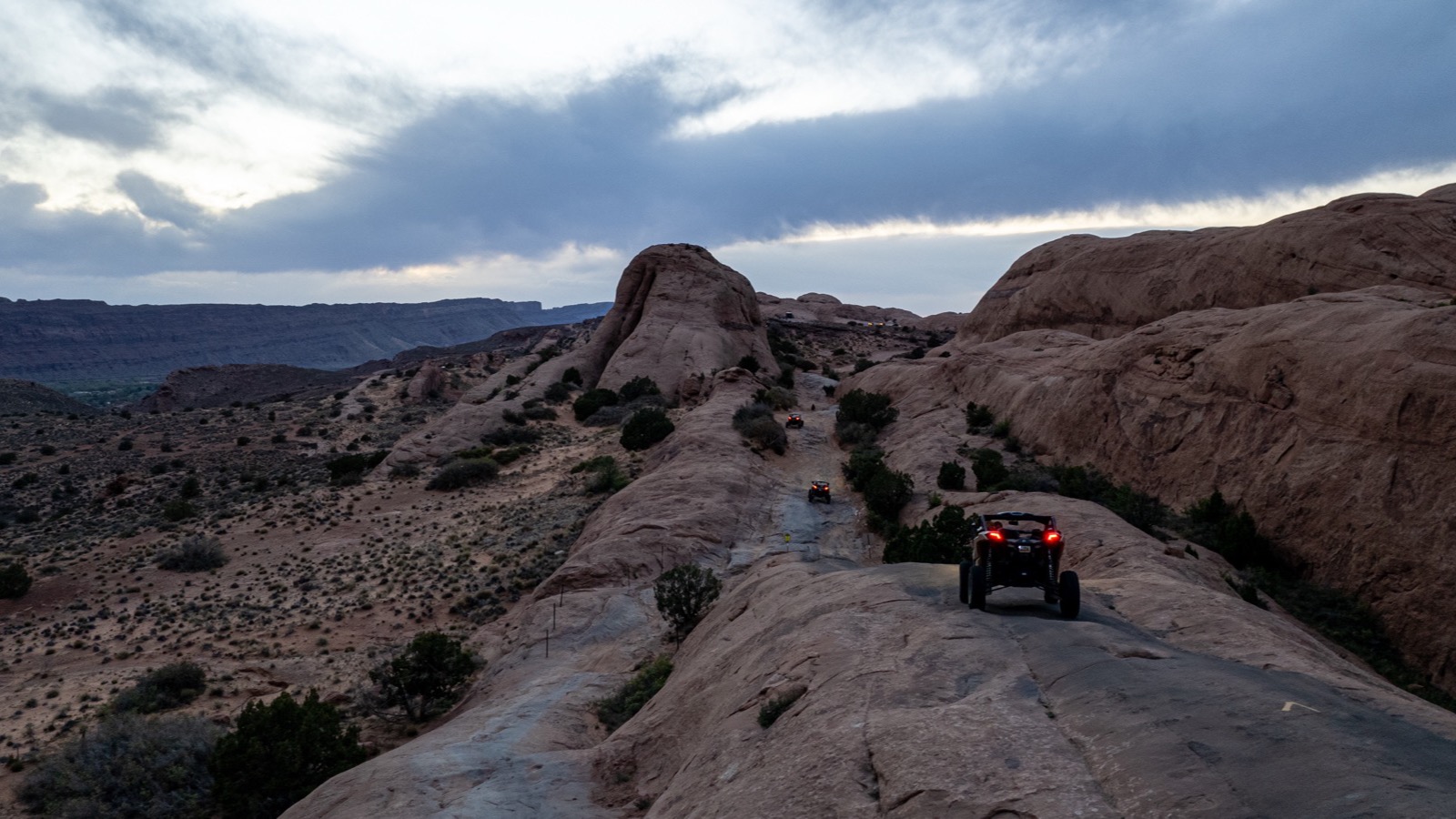 Photo: Carter Pape / Wikimedia Commons (CC BY-SA 4.0)
The good news for newer drivers is that the hardest obstacles have marked bypasses. Right at the start, around the base of a steep sand hill, you can go straight up the hard line or take the easier alternate marked with white dots. There are a few more of these choices along the way. That is what makes Fins and Things approachable. You can run the bypasses your first time, watch how the bigger rigs take the main lines, and step up your line choice on the next lap. There is zero shame in taking a bypass. Picking a line that is past your skill or your rig and getting stuck halfway up a fin is how trails get torn up and how days get ruined.
A few specifics worth knowing: the trail crosses Sand Flats Road partway through, so you will have a short stretch of two way travel and then a one way only section after the Porcupine Rim junction. Around mile 6.7 there is a big canyon on the right that makes a perfect lunch stop, with views toward Arches National Park. The whole thing flows north and east across the domes and dumps you back out on Sand Flats Road for the easy drive back to the entrance.
Sand Flats fees, camping, and permits
Fins and Things lives inside the Sand Flats Recreation Area, a 9,000 acre area co-managed by Grand County and the BLM that sees a quarter million visitors a year. It is self funded entirely by fees, so paying at the booth is what keeps the place open and maintained. Day use is 5 dollars per vehicle. If you are going to be in town for a while, the annual day use pass is 20 dollars and pays for itself fast. Worth knowing: because Grand County runs the day to day, standard federal and state passes are not accepted here, though the federal Access Pass was grandfathered in.
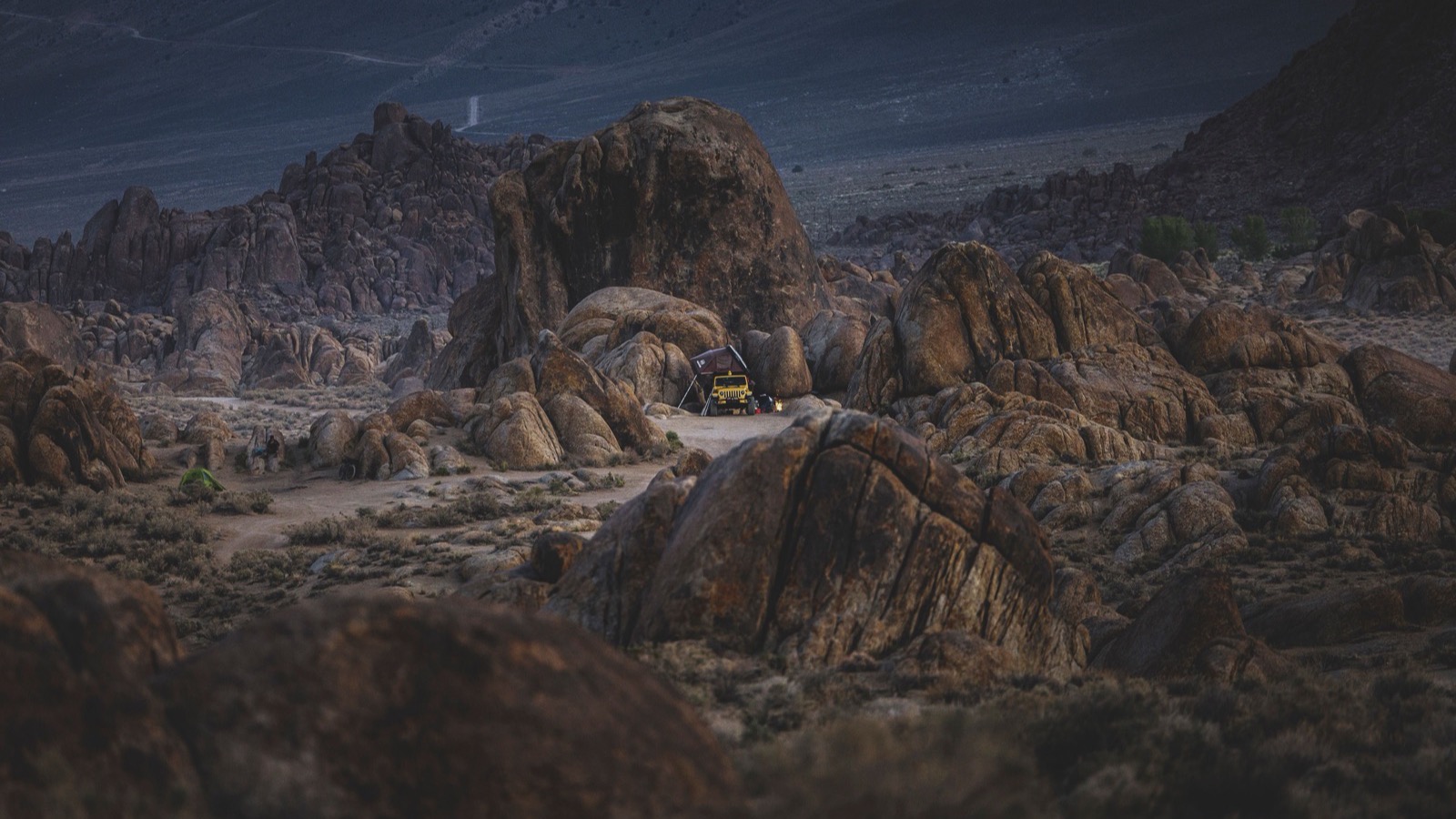 Photo: Stephen Leonardi / Pexels
If you want to camp, Sand Flats has 120 individual sites spread across nine loops, first come first served, at 15 dollars per vehicle per night. That camping fee includes your day use, so you are not paying twice. There are also reservable group sites through Recreation.gov. The catch is there is no water and no hookups, just vault toilets, picnic tables, and fire rings, so come fully self sufficient and bring far more water than you think you need. In spring and fall the loops fill up Thursday through Saturday, often by early afternoon, so roll in early if you want a good spot. Camping right at Sand Flats is the move if you want to be first on the trail in the morning before the heat and the crowds.
Airing down for slickrock grip
If you do one thing to make this trail better and safer, air down. Dropping your tire pressure puts more rubber on the rock, and on slickrock that traction is everything. It also smooths out the ride over the rough sections and is easier on the trail surface. Most folks running street biased tires on slickrock settle somewhere in the high teens to low 20s psi, and dedicated rigs on beadlocks go lower. Start conservative if you are new to it, feel how the truck climbs, and adjust.
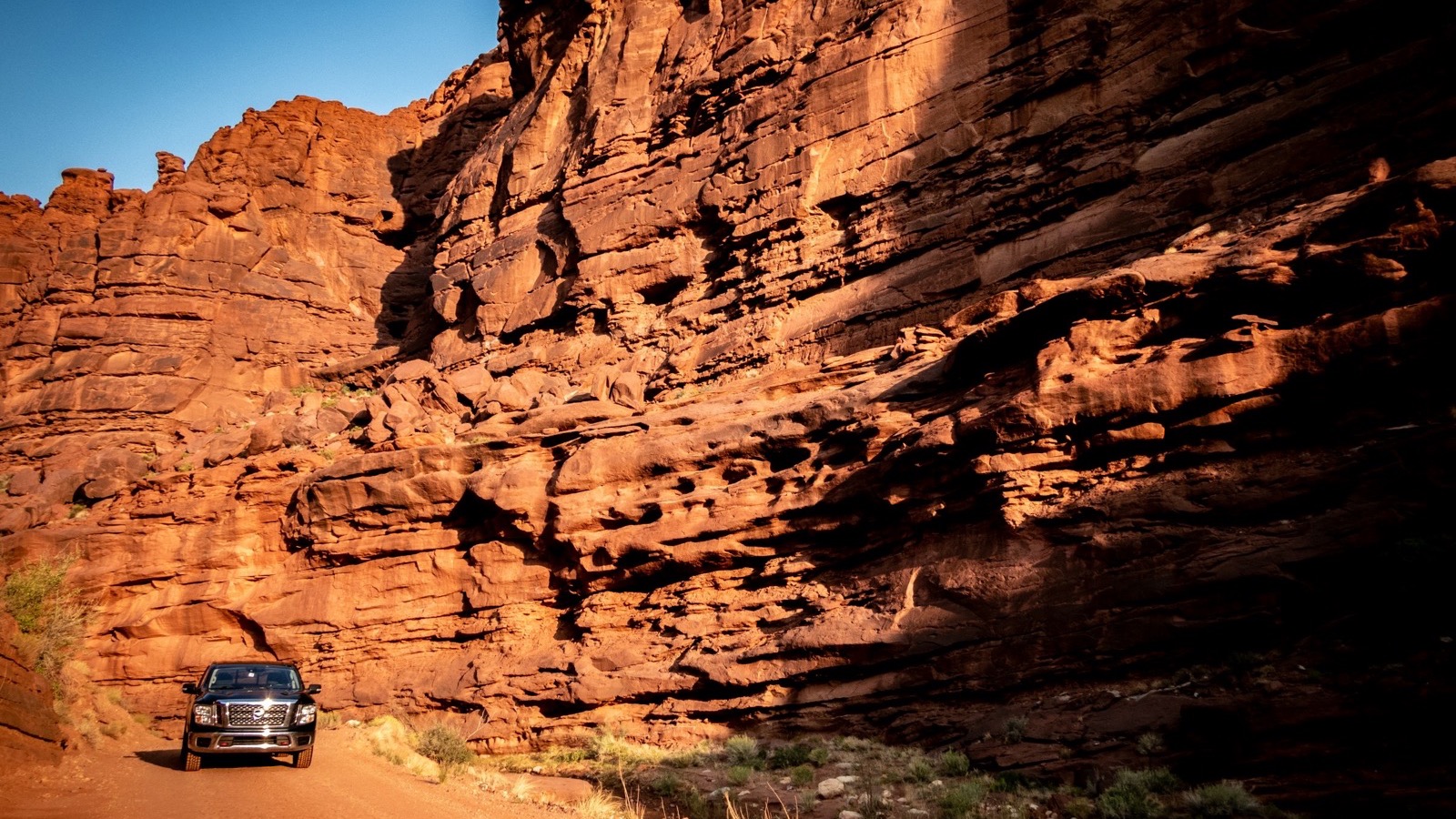 Photo: Mike Newbry / Unsplash
The thing nobody tells first timers: airing down is only half the job. You have to air back up before you hit the pavement, because driving any distance on the highway at trail pressure builds dangerous heat and ruins tires. Carry a real air compressor or plan to use one of the fill stations in town. A portable compressor is one of those tools that turns from “nice to have” into “the best money I spent” the first time you watch someone else pump tires by hand at the end of a long day.
Where it is and the Hell’s Revenge connection
Fins and Things starts about 5 miles from downtown Moab, which is part of what makes it so easy to fit into a trip. You can be airing down at the trailhead twenty minutes after leaving a coffee shop on Main Street. Its famous neighbor is Hell’s Revenge, which shares the Sand Flats Recreation Area and is the more intimidating cousin, with knife edge fins and steeper, more exposed obstacles. A lot of people do Fins and Things first to get a feel for slickrock driving, then graduate to Hell’s Revenge once they trust their rig and their nerve.
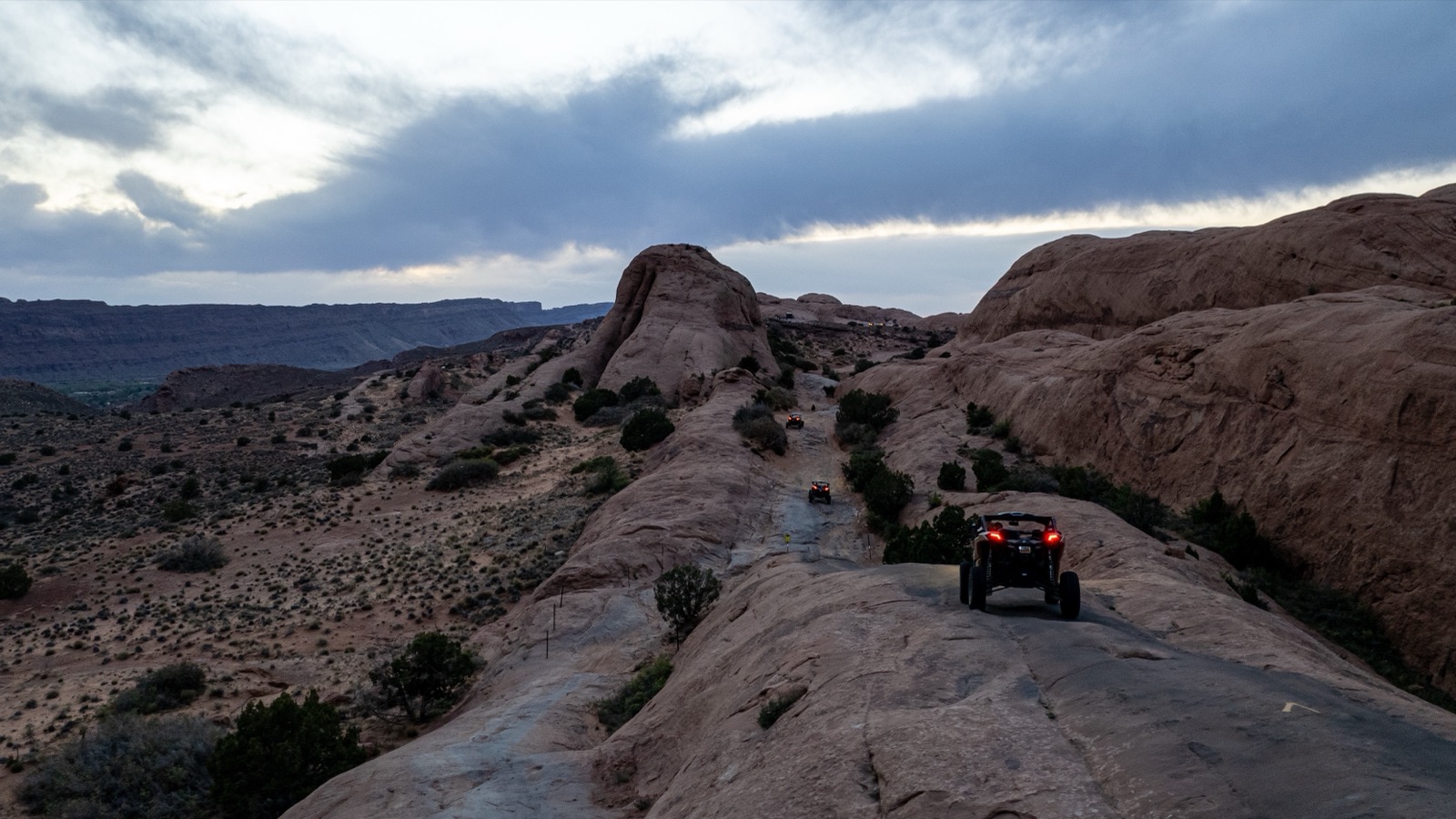 Photo: Carter Pape / Wikimedia Commons (CC BY-SA 4.0)
The whole area is a 4x4 playground. The legendary Slickrock Bike Trail is here too, along with Porcupine Rim and a network of other routes, so you can easily build a multi day trip without driving far. If it is your first time in Moab, Fins and Things is the trail I would point you to before any other. It delivers the full slickrock experience, it is honest about its difficulty, and it leaves you wanting more.
Best seasons and the summer heat warning
Spring and fall are the seasons, full stop. March through May and September through October give you firm grippy rock and temperatures you actually want to be outside in. Those are also the busiest windows, so the early start matters double.
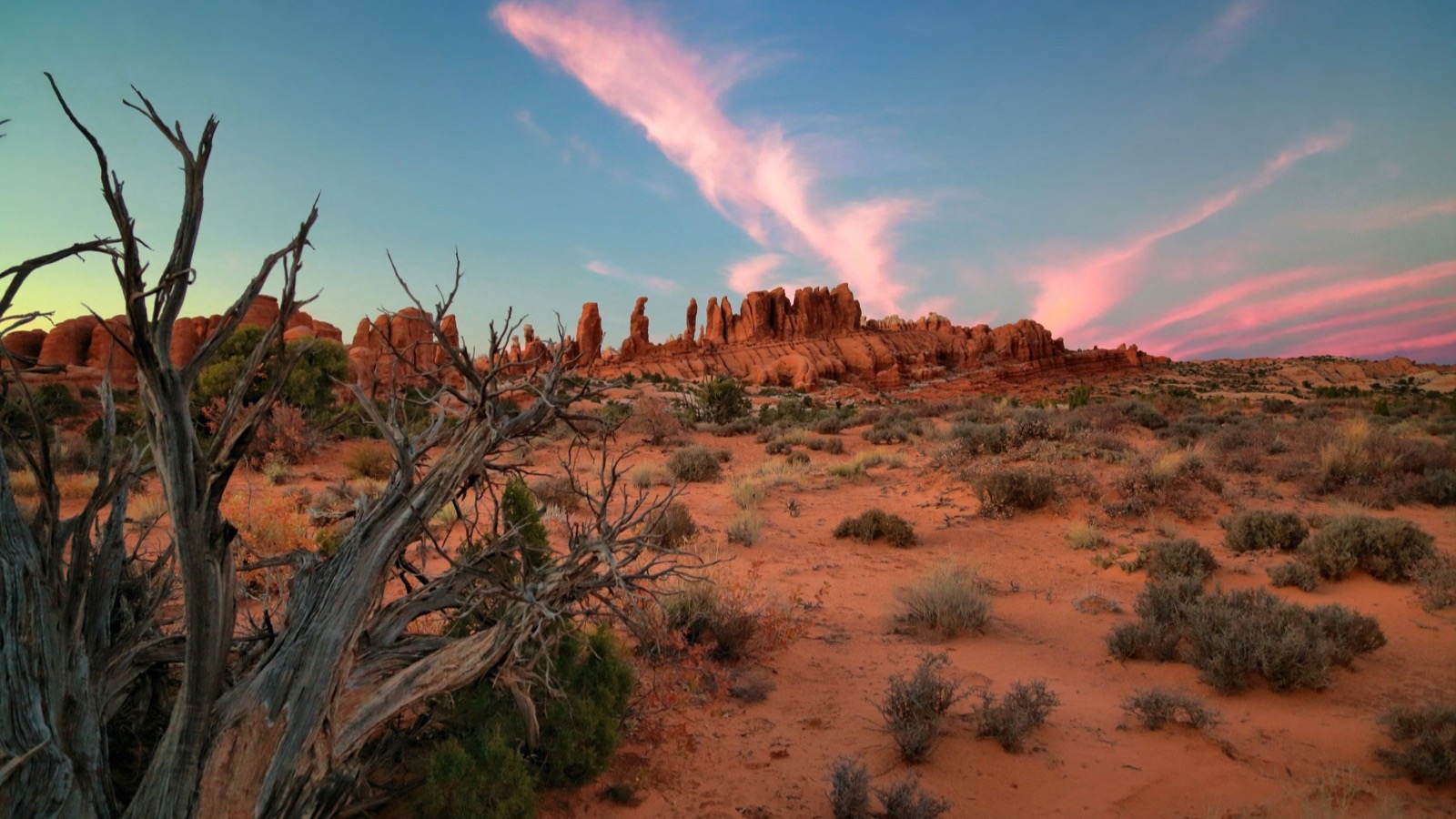 Photo: Gary Yost / Unsplash
Summer is a different animal, and not in a good way. Midday temperatures regularly blow past 100 degrees, the slickrock radiates heat like a skillet, and there is essentially no shade anywhere on the trail. This is not just uncomfortable, it is genuinely dangerous, and people get into heat trouble out here every season. If you must run it in summer, go at first light, carry way more water than feels reasonable, and be off the rock before the worst of the afternoon. Winter can actually be a fine time to run it on a clear dry day, just avoid the slickrock when it is wet or icy, because then it really does live up to the name.
A few last things that keep the day good. Keep your group tight so nobody gets separated on the maze of fins. Take your time at the top of each climb to pick a clean line. Yield to uphill traffic, pack out everything, and never cut a new track across the rock. Moab rewards patience and punishes ego, and this trail is the perfect place to learn the difference.
Hero photo: cody lannom / Unsplash