
Ask a room full of Moab regulars for the best hard trail in town and Golden Spike comes up every single time. It is the middle link in the chain locals call the Trifecta, the run that strings Poison Spider Mesa into Golden Spike into Gold Bar Rim, and it is home to the Golden Crack, one of the most photographed obstacles in all of off-roading. This is not a trail you point a stock rig at on a whim. It is a long, committing day on the rock that filters people, but if you have the rig and the nerve for it, it is about as good as slickrock wheeling gets.
Here is the straight version of what Golden Spike actually is, how you get on it, every named obstacle in the order you will meet them, the rig you honestly need, and the rules that keep this BLM route open.
What Golden Spike actually is
Golden Spike is the connector that ties Poison Spider Mesa to Gold Bar Rim on the high sandstone bench northwest of Moab. The Red Rock 4-Wheelers, the club that runs the Easter Jeep Safari, first punched it through as a Safari trail back in 1989, and it has been a bucket-list run ever since. Golden Spike itself is only about 7 miles of trail, but you cannot drive to it directly. To do the whole thing you climb the first half of Poison Spider, run all of Golden Spike, then drop off the far end down Gold Bar Rim and out Gemini Bridges Road. Put together, that is roughly a 12-mile off-highway day, and most people spend 8 to 12 hours doing it.
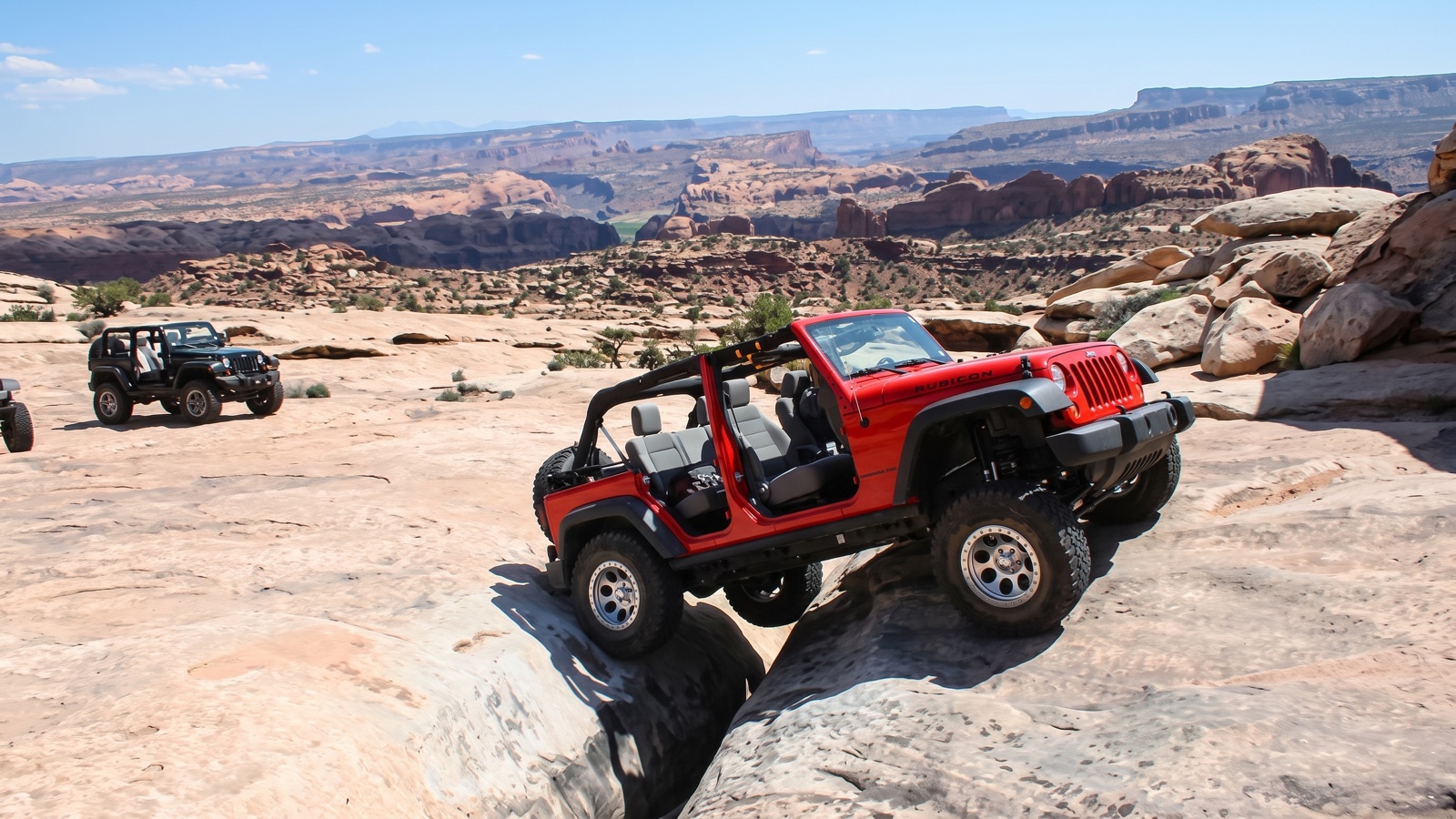
The trail lives on the Wingate sandstone that caps the mesa, so almost the entire route is slickrock, fins, and short vertical rock ledges with the occasional patch of sand or standing water. The high point sits around 5,400 feet, and the whole run hugs the rim above Moab Valley. That means the views are absurd. You get the Colorado River canyon, the fins of Behind the Rocks, Jeep Arch, and clean sightlines toward Arches National Park. It is technical, it is scenic, and it is long. That combination is exactly why locals rate it the best trail in Moab.
How to get on it
There is no paved trailhead for Golden Spike. You reach it by driving into it from one of the two trails it connects.
Most people start from the south at the Poison Spider Mesa trailhead. From Moab, head north on Highway 191, cross the Colorado River, and about 1.4 miles later turn left onto Highway 279, the Potash Road. Follow it roughly 6 miles up the river canyon to the marked Poison Spider trailhead and BLM parking area on the right. Air down here. From the lot you climb Poison Spider’s switchbacks and ledges to the top of the mesa, and where Poison Spider splits toward the Little Arch overlook, Golden Spike continues north as the jeep road across the rim.
You can also run it the other direction, dropping in from Gold Bar Rim in the north, but the great majority of traffic goes south to north, and that is the direction the obstacles are described in below. Either way, this is not a solo trail. Breakdowns and stuck rigs are common enough that the tow truck genuinely cannot reach you up here, so run it with at least one other capable vehicle.
The obstacles, in order
Once you are past the Poison Spider Mesa obstacles and cruising the fins, Golden Spike stops being a scenic drive and starts throwing hard rock at you. They come one after another with very few easy stretches to catch your breath.
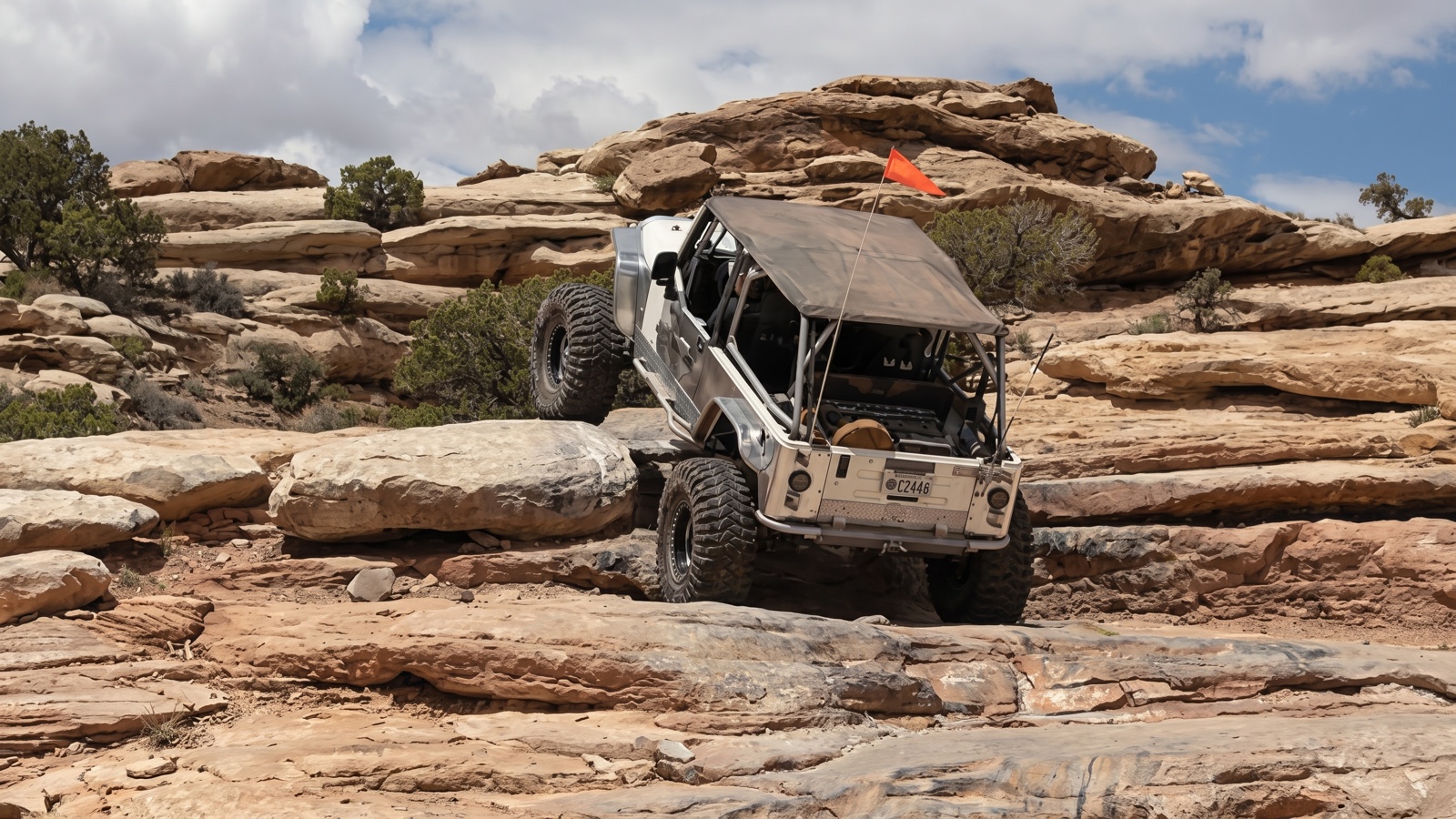
Launch Pad is the opener and it sets the tone. It is a steep drop into a gully followed by an even steeper slickrock climb straight up the other side. First-timers usually sit and stare at it for a minute. Momentum and good tire placement get most locked rigs up clean.
Skyline Drive is next, a giant slickrock mountain you climb up and over. It looks intimidating from below but it is more about commitment than technical finesse. Tall tires and a steady throttle do the work.
Zuki Hill comes after that, named for the Suzuki Samurais that used to test themselves on it. Most people run it downhill, which is easier than the climb, and in truth it looks meaner than it drives. It is mostly slickrock with a few small ledges.
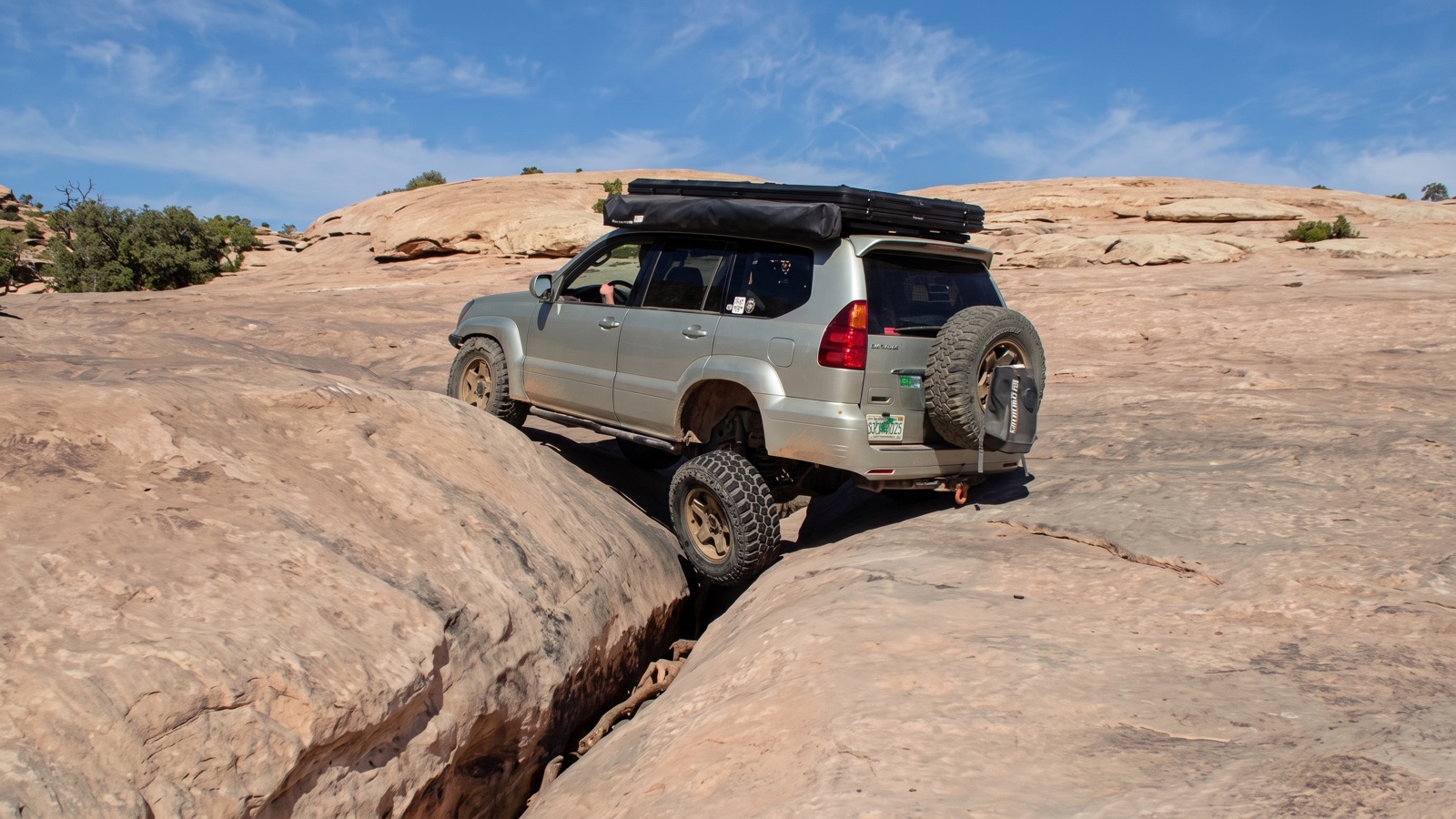
Then you reach the reason most people come: the Golden Crack. It is a narrow slot in the slickrock, wide enough and deep enough that a wheel or a whole tire drops straight into it. Here is the key fact that makes it famous. It is the only obstacle on the trail with no bypass. If you want to keep going, you cross it. The standard line in a longer-wheelbase rig is to approach as if you are crossing diagonally, then the moment your left front tire starts to drop into the crack, steer hard left into the far wall so the tire climbs out instead of dropping in. Get a good spotter. This is where the day can go sideways in a hurry, and it is the shot everyone stops to photograph.
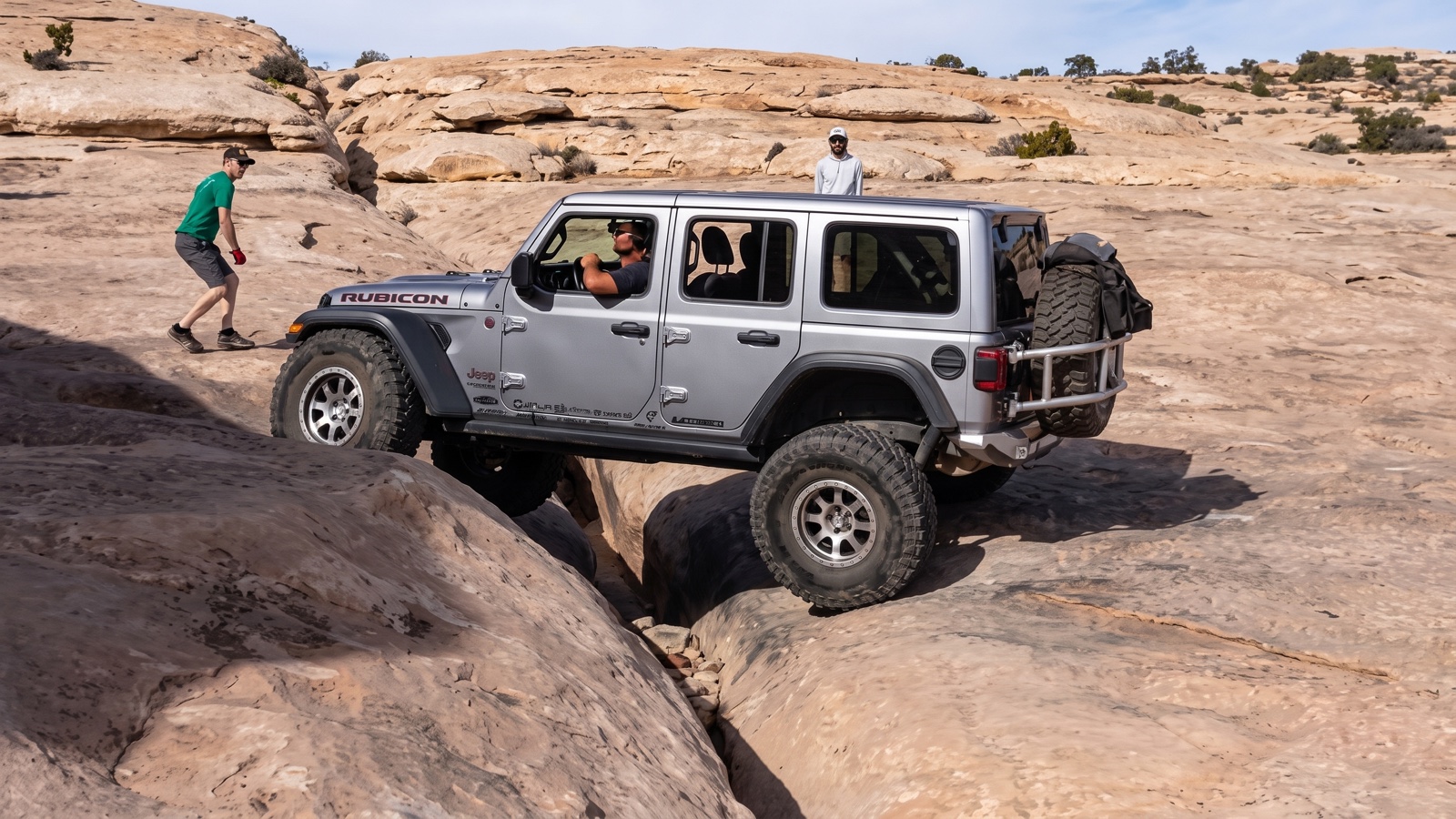
Right after comes the Golden Stairs, a steep, ledgy staircase of rock that punishes bad lines and long overhangs. Take it slow and let the spotter pick your tires up the steps.
The Wall is exactly what it sounds like, a smooth but very steep slickrock face. It is less about rocks and more about traction and nerve, a straight-up climb where you keep your foot in it and trust the rubber.
The trail is not done with you yet. Double Whammy and the Body Snatcher round out the named obstacles near the top, both short vertical rock sections that reward tall tires and lockers and swallow the underbelly of anything short on clearance. By the time you clear them you have earned the rim.
The views and landmarks along the way
Golden Spike is famous for its obstacles, but the scenery is a huge part of why locals love it. Most of the route runs right along the rim above Moab Valley, so you are constantly getting hit with views in every direction. Watch for the Colorado River canyon down near Amasa Back, the tangled fin country at the north end of Behind the Rocks, and Jeep Arch off to the side. The higher north end opens up completely, with breath-stopping looks over the cliff edge toward Arches National Park.
One serious word of caution up here. The cliff rim overhangs in places, and rockfall has happened. Do not walk your rig or yourself out to the very edge to get the photo. It is a long way down and the rock is not always as solid underneath as it looks.
The rig you actually need
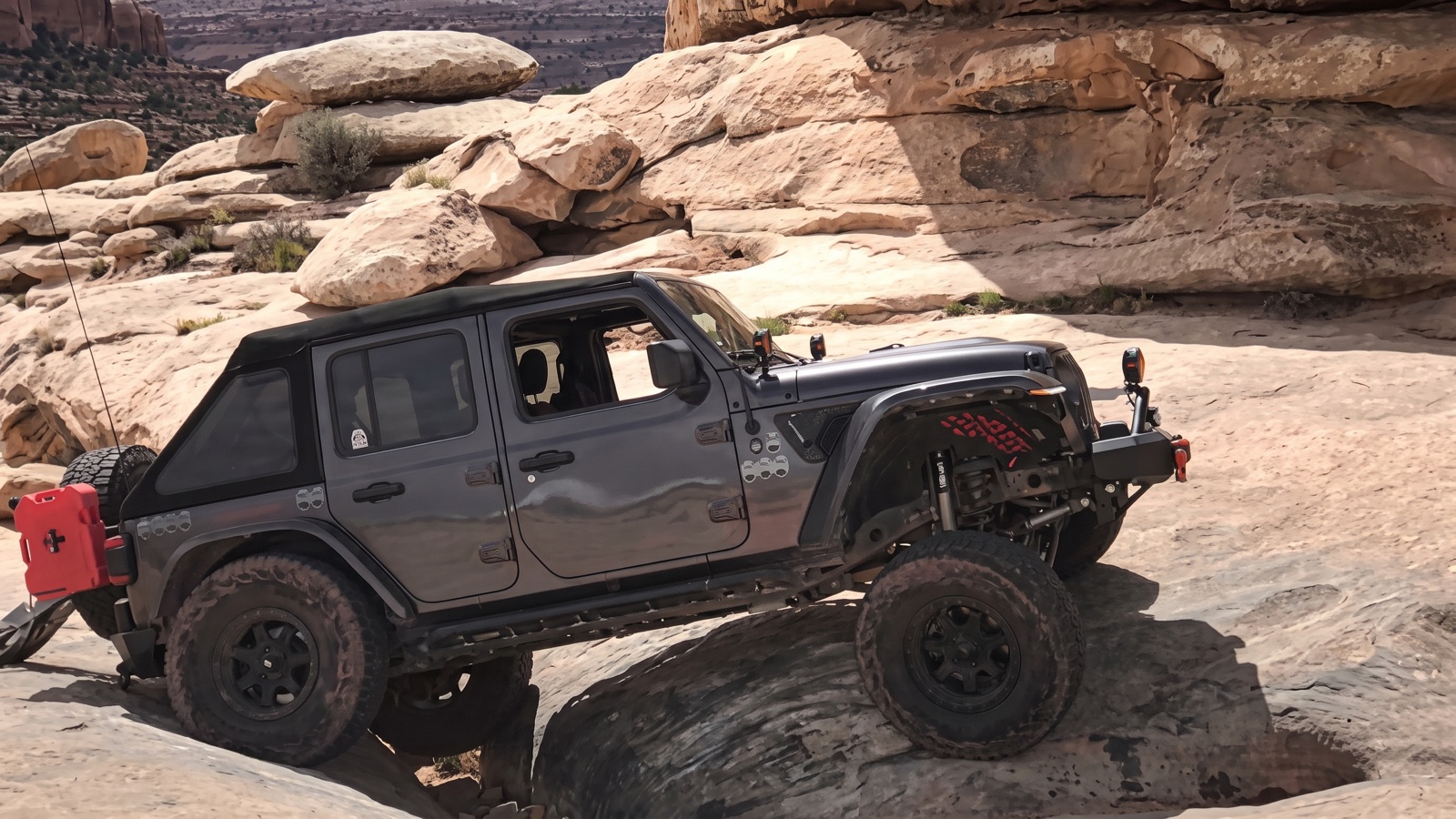
Golden Spike is an Expert-rated, Extreme-difficulty trail, and the ratings are honest. Do not talk yourself into this one with a mildly built rig.
The Red Rock 4-Wheelers set the floor at 35-inch tires minimum, and that is a real minimum, not a suggestion. Front and rear lockers are both required, not optional. You want solid skid plates and rock rails, because the vertical ledges will find your rockers and your gas tank, and you want good clearance and a numerically low crawl ratio so you can idle up the steps instead of hitting them with speed. A winch is not strictly mandatory since bypasses exist on most obstacles except the Golden Crack, but plenty of people are glad they brought one, and at minimum your group needs solid recovery gear, straps, and the knowledge to use them.
Beyond the rig, bring the day with you. This is 8 to 12 hours on the rock with no services and no easy way out. Pack more food and water than you think you need, tools and spare parts, and a full-size spare. Cell coverage is spotty. Tell someone your plan.
Permits, fees, and the rules
Golden Spike sits on public land managed by the BLM Moab Field Office, and it falls inside the Labyrinth Rims / Gemini Bridges Travel Management Area. There is no permit or fee just to drive the trail as a private group, but the rules that matter are about staying on the route and packing out.
Stay on the designated trail. This is a travel-management area with a formal plan, and cutting new lines across slickrock or into the surrounding desert is both illegal and the fastest way to get trails like this closed. Pack out everything, including human waste on a long day like this, so carry a WAG bag. Do not drive through the potholes and standing water you will see on the slickrock. Those little pools are living ecosystems and they are protected. Go around them.
Organized events and commercial guided trips have their own permitting through the BLM, so if you are running with a club event or an outfitter, that is handled at the organizer level. For everyone else, the deal is simple. Leave it exactly like you found it.
Best season
Spring and fall are the sweet spot in Moab, and Golden Spike is a year-round trail that is really only comfortable in those windows. Spring, roughly March into May, gives you cool temperatures and long daylight, which matters a lot on a 10-hour day. Fall, September into early November, is the other prime window. Summer is brutal. Midday heat on exposed slickrock with no shade turns a hard trail into a dangerous one, and afternoon thunderstorms can flash the slickrock and the potholes fast. Winter runs happen, but ice on the vertical ledges and short daylight make it a gamble. Aim for spring or fall, start early, and give yourself the whole day.
Take care of it
Golden Spike has been a Moab classic since 1989 because generations of wheelers treated it right. That is not automatic. Trails like this stay open because people stay on the route, pack out their trash and waste, drive around the potholes, and do not carve shortcuts into the sandstone when an obstacle spooks them. Tread Lightly is not a slogan here, it is the reason the gate is still open.
If you have the rig and the skill, put Golden Spike at the top of your Moab list. Run it with a good crew, take your time at the Golden Crack, respect the rim, and leave it exactly the way you found it so the next crew gets the same run you did.