
Most people do not think of Florida when they think of off-roading, and that is exactly why the Ocala National Forest is such a pleasant surprise. Tucked between Orlando and the Atlantic coast, this is one of the largest pockets of public riding land in the Southeast, with a real, legal, signed OHV trail system winding through sand pine scrub, longleaf flatwoods, and open prairie. It is not the slickrock of Moab or the alpine passes of Colorado. It is its own thing entirely, a sandy, sweaty, surprisingly fun grind through some genuinely wild Florida country.
The Ocala is the oldest national forest east of the Mississippi and home to the largest sand pine scrub forest in the world. For riders, the headline is the Ocala North OHV Trail System, a network designed for slow-speed exploration on motorcycles, ATVs, UTVs, and full-size four-wheel-drive rigs. It is honest, low-drama riding for the most part, with one constant challenge that defines the whole place: sand, and lots of it.
What the Ocala OHV system actually is
The main draw is the Ocala North OHV Trail System, which the Forest Service manages with 125 miles of designated trail. That mileage breaks down into distinct pieces: a 14-mile motorcycle-only trail, 35 miles open to motorcycles, ATVs, and UTVs under 50 inches wide, and 76 miles classified as mixed use, meaning OHVs share those trails with street-licensed vehicles. So whether you are on a dirt bike, a side-by-side, or a built full-size truck, there is legal trail here for you.
The whole system sits inside the Ocala National Forest, which is federal land managed by the National Forests in Florida under the U.S. Forest Service. The trails are designed for slow speeds and exploration, not for racing, mud bogging, or tearing things up. The Forest Service is blunt about that, and they will close trails and write tickets to protect the land. Ride it for what it is, a relaxed backcountry cruise through unique Florida ecosystems, and you will have a great time.
One thing to set your expectations on: this is mixed-use, shared-trail riding in a heavily visited forest, not a private off-road park. You will share the woods with hikers, hunters, campers, and other riders. Keep your speed reasonable, stay alert, and treat it like the public land it is.
The permit you absolutely need
Here is the single most important thing to know before you load up: you need an OHV permit to ride the Ocala trails, no exceptions. The Forest Service requires a valid OHV pass for the trail system, and they are serious about enforcement. You can buy your pass online through Recreation.gov or by phone, and you should do it before you show up, not after a ranger finds you without one.
There is more to the rules than just the pass. Riders under 16 are required to pass an online safety course before they ride, and everyone needs proper safety gear. OHVs must stay on the designated, signed trails at all times. Going off-trail, cutting your own lines, or riding closed areas is how this whole system gets shut down, and it is exactly the kind of thing the Forest Service watches for. Buy the pass, gear up, stay on the trail. Simple.
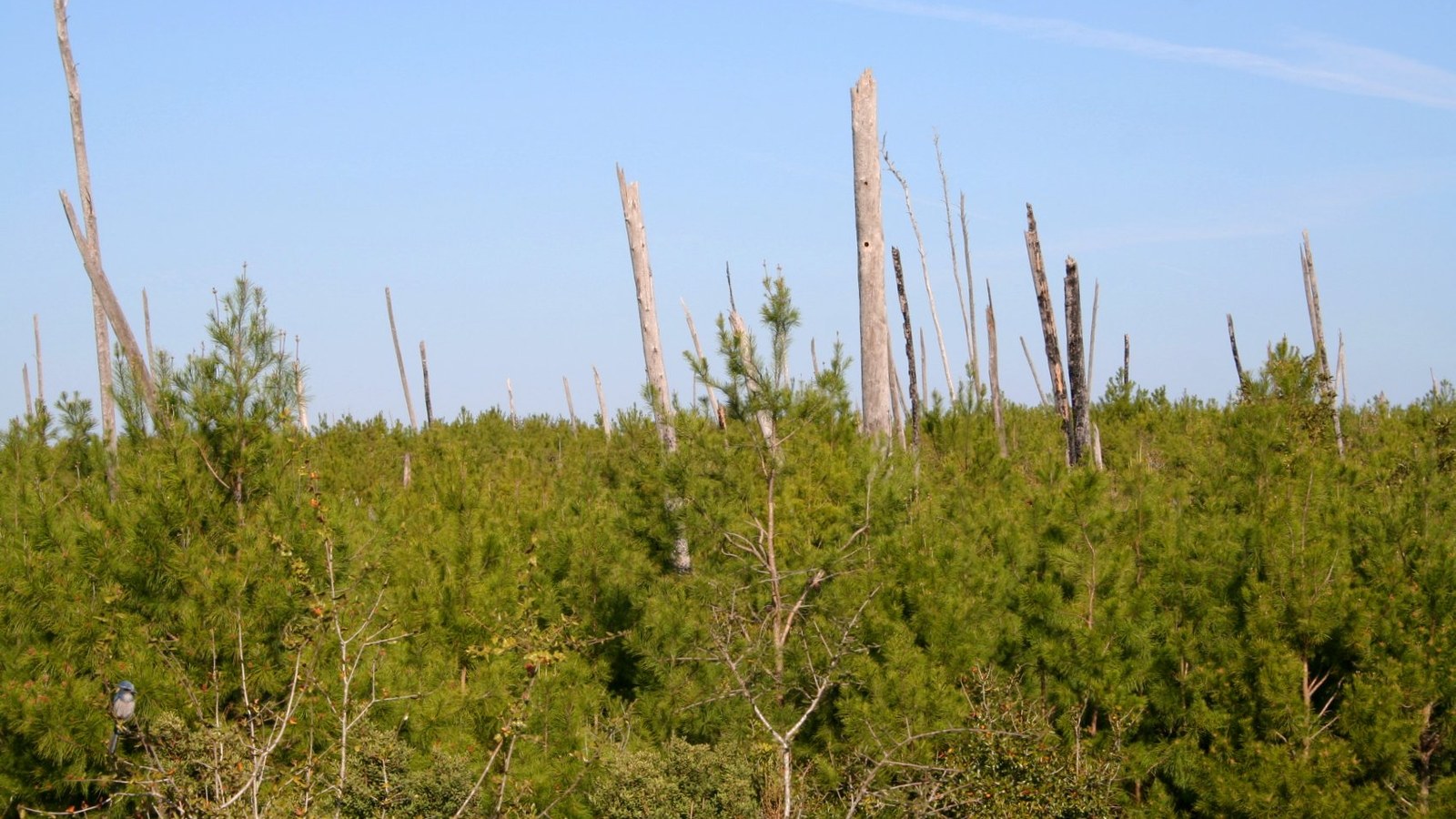 Photo: Rolf Müller / Wikimedia Commons (CC BY-SA 3.0)
The sand, and why it matters
If there is one thing that will define your day in the Ocala, it is the sand. Most of the trail system is very sandy, and we are not talking about a little loose surface here and there. We are talking deep, soft, sugar sand that will bog down anyone who shows up unprepared. This is the real difficulty of the place, and it is why we rate it moderate rather than easy. There are no rock ledges or big obstacles, but deep sand is its own kind of challenge that humbles people who underestimate it.
The key to sand is momentum and the right tire pressure. Air down before you ride, because lower pressure spreads your footprint and keeps you floating on top of the sand instead of digging into it. Keep your momentum up through the soft stretches, pick your line, and do not stop in the middle of a deep sandy section if you can help it. A vehicle that stops in soft sand often has a hard time getting going again.
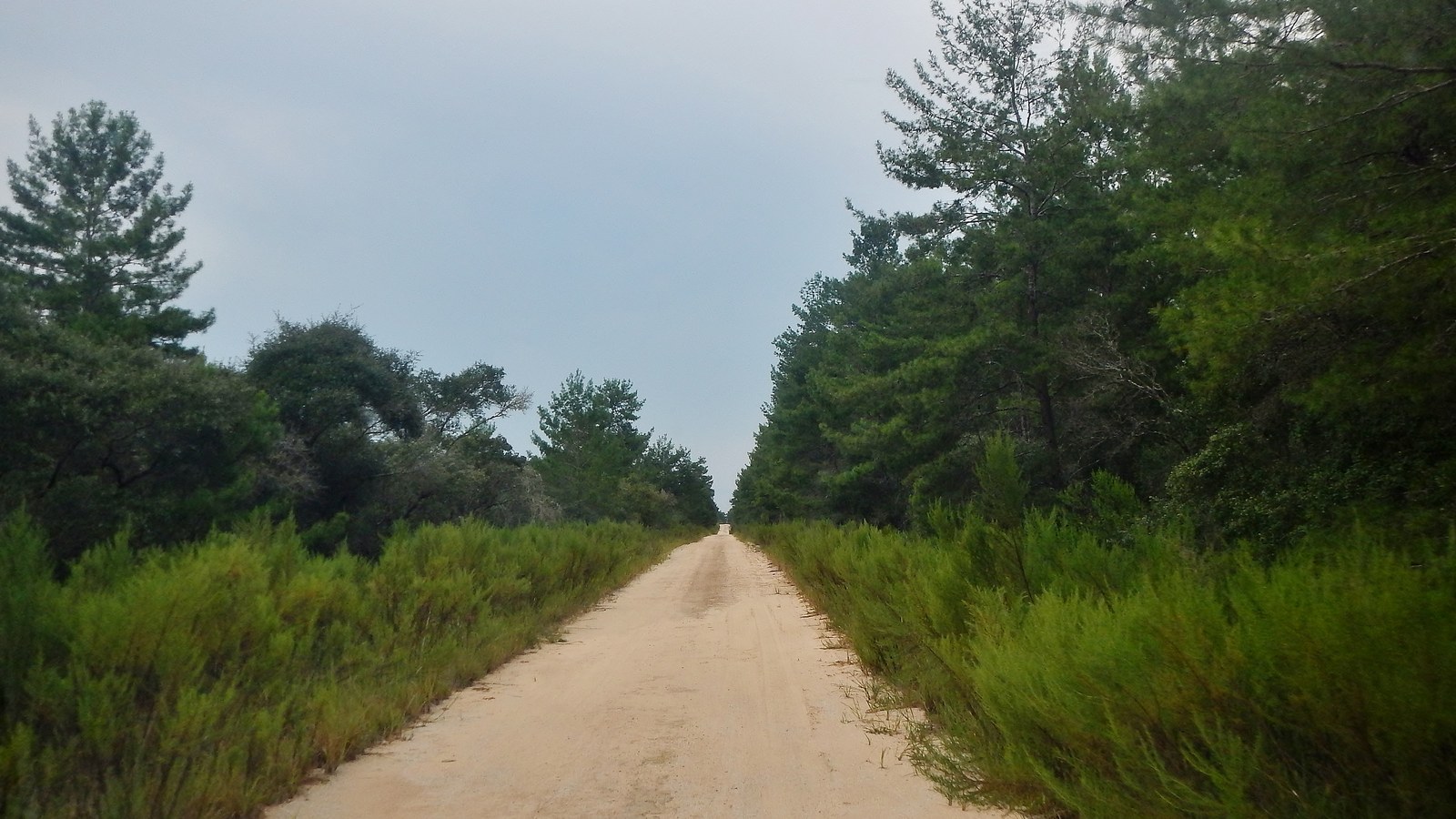 Photo: qwesy qwesy / Wikimedia Commons (CC BY 3.0)
This is also why a properly set up rig matters more than raw power. A stock truck on highway tires will struggle. Real all-terrain or mud-terrain tires, four-wheel-drive, and the discipline to air down will get you through almost everything in the forest. Bring a set of traction boards and a way to recover yourself, because getting stuck in sand is a when, not an if, for most people who ride here enough.
The country you ride through
What makes the Ocala worth the sandy effort is the scenery, which is unlike anywhere else on this site. The sand pine scrub is a strange and beautiful ecosystem, dry and open in places, dense and junglelike in others. You will pass through stands of longleaf pine, cross open grassy prairies, and skirt the edges of spring-fed wetlands. This is some of the wildest country left in central Florida.
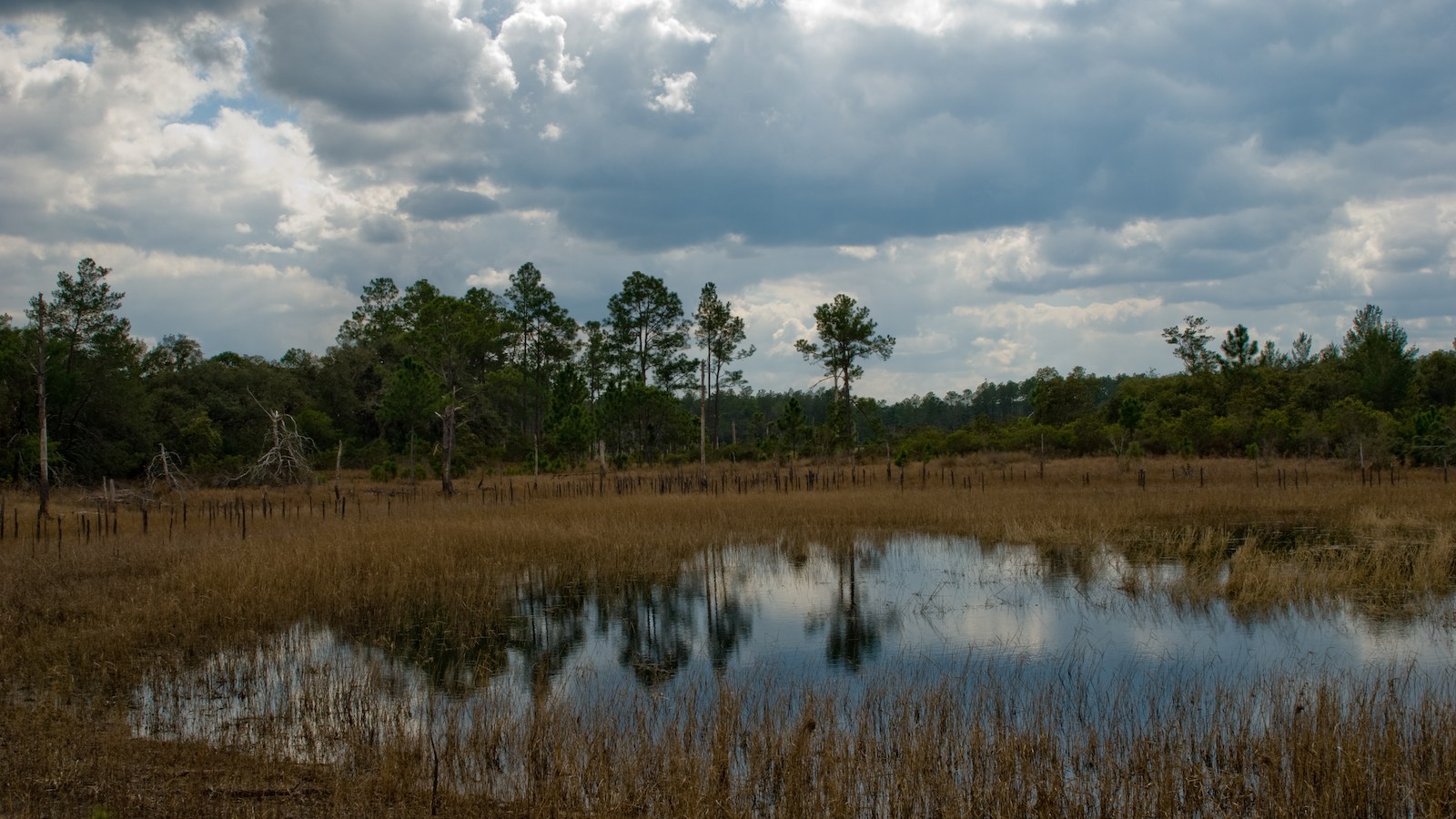 Photo: Sandra Friend / Wikimedia Commons (Public domain)
This is also genuine wildlife country. The Ocala is famous for its Florida black bear population, one of the largest in the state, and the surrounding scenic route is literally named the Florida Black Bear Scenic Byway. You may see deer, turkey, gopher tortoises, and all manner of birds. Store your food properly at camp, give any wildlife you see a wide berth, and remember you are a visitor in their home. The forest is also dotted with famous crystal-clear springs like Juniper and Alexander, well worth a cool-off stop on a hot day.
When to go and where to camp
The Ocala trails are open year-round, but that does not mean every day is a good day to ride. The big variable is rain. Florida gets serious summer thunderstorms and the occasional hurricane, and the Forest Service closes trails when conditions get too wet, both to protect the trails and because flooded sand is miserable to ride. After major storms, expect closures while crews clear downed trees and assess damage. Always check current conditions before you drive out.
Season-wise, the cooler months from late fall through early spring are the sweet spot. Florida summers are brutally hot and humid, the bugs are relentless, and the afternoon storms roll in like clockwork. Riding in the fall, winter, and early spring means comfortable temperatures, fewer bugs, and more stable weather. If you do ride in summer, go early, carry far more water than you think you need, and watch the sky.
For camping, the Ocala is a dispersed camping paradise. Beyond the developed campgrounds near the springs, the forest allows primitive dispersed camping that lets you set up a basecamp deep in the woods and ride right from the tailgate. Know the rules, practice your limits, and pack out everything you bring. The solitude out here is the whole point for a lot of riders.
Ride it right
The Ocala OHV system exists because riders fought for legal places to ride, and it stays open because riders respect it. Stay on the designated trails, buy your permit, do not mud bog or cut new lines, and pack out your trash. This is shared public land in a state where legal riding areas are precious and easy to lose. One torn-up wetland or one viral video of somebody doing donuts in the scrub gives the agencies all the reason they need to add restrictions.
Yield to other users, keep your noise and speed down around campers and hikers, and leave the place better than you found it. The Ocala is proof that great off-road riding does not require mountains or famous rock obstacles. Sometimes it is just deep sand, wild scrub, and a permit in your pocket. Air down, gear up, and go see a side of Florida that most people drive right past on their way to the beach.
Hero photo: Trish Hartmann / Wikimedia Commons (CC BY 2.0)