
Most of the famous places in this hobby are rock or desert. Moab, the Rubicon, the Mojave. Silver Lake is the odd one out, and that is exactly why it is worth the drive. This is sand. Open, wind-built, Lake Michigan sand, roughly 450 acres of it, and it is the only place east of the Mississippi where you can buy a couple of permits, bolt a flag to your rig, and drive your own truck out onto open dunes. Not a guided tour. Not a fenced course. Your vehicle, your line, your whole day on a shifting field of sand that ends at the shore of one of the largest lakes on the planet.
People who have only ever wheeled rock tend to underestimate it. Sand is not easy. It is its own discipline, with its own way of stopping a capable rig cold, and the dunes here change shape by the hour. Here is the honest version of what Silver Lake is, how the permit system actually works, and how to set your rig up so you spend the day riding instead of digging.
What Silver Lake actually is
Silver Lake State Park sits on the Lake Michigan shore in Oceana County, about eight miles southwest of Hart and a short hop off US-31. The park has a campground, nearly three miles of shoreline, and a day-use area on the inland Silver Lake. But the reason rigs come from all over the Midwest is the ORV Area: a 450-acre stretch of open dunes set aside by the Michigan Department of Natural Resources specifically for off-road vehicles to roam.
That word “open” is the whole point. There is no marked trail to follow out there. Once you clear the entrance road and crest into the bowl, the dune field spreads out in front of you and you pick your own way across it, within the boundaries. You will be sharing that sand with everything from dirt bikes and quads to side-by-sides, full-size Jeeps, lifted trucks, and purpose-built sand rigs on giant paddle tires. It is loud, it is busy on a summer weekend, and when the wind is right and Lake Michigan is glinting off to the west, it is genuinely one of the better views in off-roading.
The dunes are split into three uses, and it matters that you know which is which. The ORV Area is the part you drive. There is a separate pedestrian dune area where no vehicles are allowed at all. And on the south end, Mac Wood’s Dune Rides has run guided dune-schooner tours since the 1930s on its own private acreage. Those are three different things. If you bring a rig, you ride the ORV Area, and only the ORV Area.
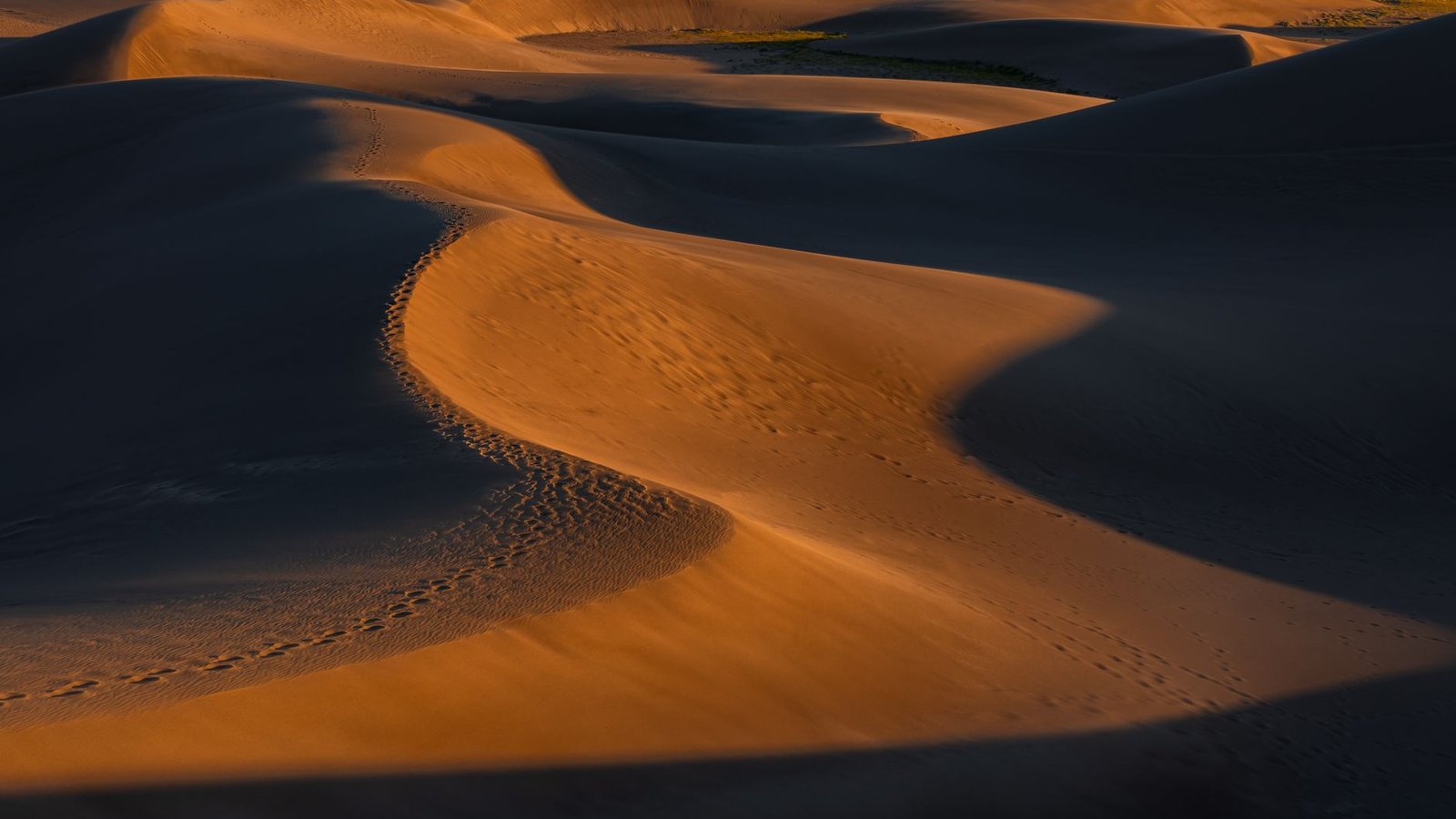 Photo: Sergey Guk / Pexels
The dunes themselves, and Test Hill
Drive in off the entrance road and the landscape opens up into the main bowl, with Lake Michigan laid out to the west. The first real feature most people meet is Test Hill, and the name is not marketing. It is the climb right at the entrance to the directional dunes, and it does exactly what it says: if your rig and your setup are not ready for sand, Test Hill will tell you in the first thirty seconds. Plenty of trucks get a third of the way up, lose momentum, and slide back down to try again with more speed and lower tire pressure. Clear it cleanly and you have earned the rest of the day.
Past Test Hill the area runs as a string of hill climbs and bowls leading toward the exit road on the far side. There are flat sandy stretches where you can open it up, steep faces that demand commitment and momentum, and low spots that hold water and can swallow a vehicle that wanders in without scouting it first. Drag racing on the dunes is actually a legal activity here now, so you will see rigs lined up on the flats running side by side. All the other rules still apply while they do it.
The single most important thing to understand about this place is that it is never the same twice. Wind and weather reshape the dunes daily, sometimes hourly. Wet sand after rain behaves completely differently than dry, wind-blown sand on a hot August afternoon. A line that worked this morning can be a different obstacle by evening. Treat every crest as blind, because on the other side of that hill there may be a stalled rig, a parked group having a picnic, or a buried stump. Keep your head on a swivel and drive like you cannot see what is coming, because often you cannot.
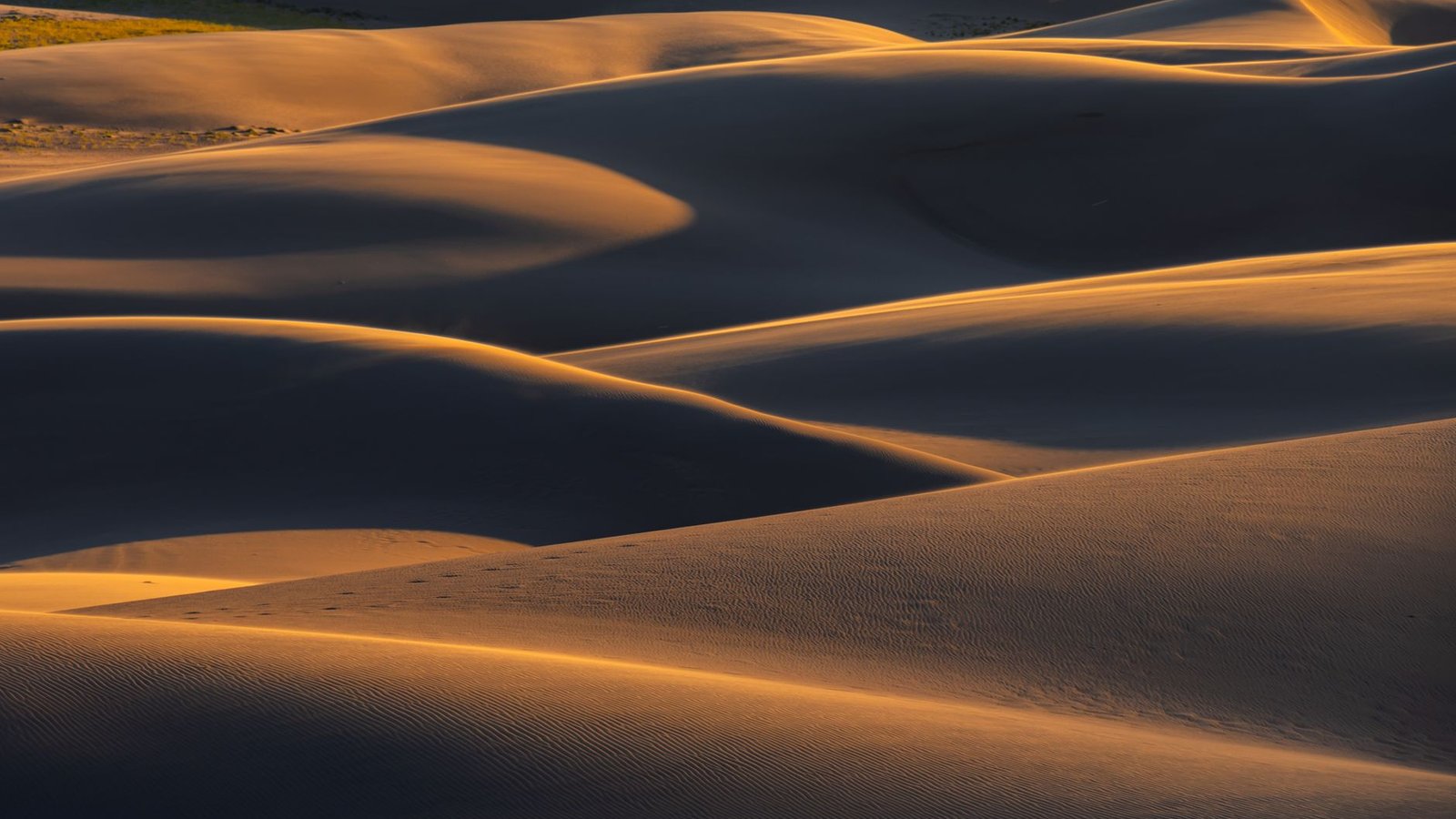 Photo: Sergey Guk / Pexels
Getting there and the permit system
Silver Lake is one of the more paperwork-heavy off-road destinations in the country, and it is worth getting it right before you tow in, because the DNR has been tightening how entry works. Every motor vehicle that goes out on the dunes needs the same stack of credentials:
- Registered through the Secretary of State. All vehicles must be titled and registered. Non-plated dune buggies and sand rigs count too.
- A valid Michigan ORV license and ORV trail permit. As of the 2025 season the ORV license is $26.25 and the trail permit is $10, for $36.25 total. These are annual and good statewide, not just here.
- A Recreation Passport (the state parks pass). Required for every dune vehicle, including non-plated rigs, which still have to buy and display one. If you are towing, your tow vehicle needs its own Recreation Passport on top of that.
The DNR has moved away from selling permits at the entrance, so do not count on rolling up and buying everything in the booth. Get your ORV license, trail permit, and Recreation Passport ahead of time. The state’s “what do I need to ride” flowchart on the DNR site walks you through your exact vehicle type.
On top of the permits, there is a parking and staging system you need to plan around. On summer weekends and holidays, defined as the period from two weeks before Memorial Day through the Sunday after Labor Day, anyone towing an ORV on a trailer or needing a parking space has to get a parking lot voucher from the welcome center. The voucher holds your place in line for a parking spot and staggers arrival times so the lot does not overflow. It is the closest thing Silver Lake has to a daily vehicle limit, and on a busy Saturday it is the difference between riding by mid-morning and waiting. Get to the welcome center early.
Hours are seasonal and strict. The dunes are open to ORVs April 1 through October 31. In April it is 9 a.m. to 8 p.m., May 1 through September 15 it stretches to 9 a.m. to 10 p.m., and from September 16 through October 31 it goes back to 9 a.m. to 8 p.m. Access to the dunes stops a half hour before closing each evening, so the last entry is earlier than the posted close.
The rig you actually need, and airing down
You do not need a built rock buggy to enjoy Silver Lake, but you absolutely need the right setup, and the biggest mistake first-timers make is showing up on hard street pressure. Sand rewards a long, soft contact patch and punishes a narrow, hard one.
Air down. This is not optional here, it is the whole game. The DNR caps tire inflation at 15 PSI in the ORV Area and strongly recommends 12 to 15. Plenty of experienced sand drivers run lower than that depending on the rig and tire. Drop your pressure at the staging area before you ever hit Test Hill. A truck that bogs down at 30 PSI will float across the same sand at 12. Bring a way to air back up before you tow home.
Drivetrain. Make sure four-wheel drive is actually engaged, and if your rig has traction control, turn it off. Traction control cuts power exactly when you need to keep your wheels spinning to stay on top of soft sand, and it will get you stuck. Momentum is your friend out here. Hesitation is what buries you.
Tires. Real sand riders run paddle tires, and on the steep climbs they make an enormous difference. You can run aggressive all-terrains or mud-terrains aired way down and have a great day, but understand you will be working harder than the rig next to you on paddles, especially on Test Hill and the bigger faces.
The whip flag. This is the rule everyone associates with Silver Lake, and it is non-negotiable. Every vehicle must fly an orange safety flag, solid orange material, minimum 5 by 10 inches, mounted so the top sits exactly 10 feet off the ground and never drops below 8 feet. Where you mount it depends on the vehicle: rigs that require seat belts (trucks, Jeeps, side-by-sides, dune buggies) mount it on the front-most part of the vehicle. Vehicles that do not require seat belts (ATVs, dirt bikes) mount it on the rear. The flag has to be bolted, welded, or solidly attached, not zip-tied to flap loose. The reason is simple and the reason you should never grumble about it: those flags are how you see a rig coming over the far side of a blind dune crest before the rig itself appears. They save lives here.
 Photo: AaronJoePick / Wikimedia Commons (CC BY-SA 4.0)
Safety rules the DNR actually enforces
Silver Lake is patrolled, and the rules are written in blood from decades of dune crashes. The big ones:
- Helmets and eye protection. A DOT-approved helmet (or equivalent) is required in both the parking lot and the dunes for ATVs, dirt bikes, and any truck or Jeep passenger not protected by a metal roof or roll bar above and behind their head. Eye protection is required.
- Seat belts and rollover protection. Any vehicle with automotive-style sit-in seating needs individual seat belts and rollover protection for every occupant. Michigan’s child passenger safety law is in effect on the dunes.
- Operator age and license. You must be at least 16 with a valid, unrestricted driver’s or chauffeur’s license to operate most vehicles. A 12-to-15-year-old can run a four-wheel ATV or two-wheel bike only with a valid ORV safety certificate and direct adult supervision. Youth-marketed side-by-sides do not qualify and cannot be operated by anyone under 16.
- Sound and exhaust. Noise cannot exceed 94 dB, and rigs need a USFS-approved spark arrester and/or reverse-flow muffler.
- Directional travel. You have to ride within the orange boundary markers and follow the established directional pattern. There is no northbound traffic allowed in the high dune areas. Pay attention to the signed flow.
- No alcohol. You may not possess or consume alcohol anywhere in the ORV Area, the welcome center, or within a quarter mile of the ORV boundary. They take this seriously.
- Stay off the water’s edge. Vehicles are not permitted on the Lake Michigan shoreline or the water’s edge. You can park in the ORV Area and walk the 50 to 100 yards down to the beach, but you do not drive your rig to the waterline.
- Slow on the entrance ramp and beach area. No passing on the entrance ramp, and be ready to stop at any time for a stalled vehicle or a natural hazard on the far side of a crest.
If something goes wrong, you report accidents and injuries to park staff or call 911. Cell coverage out on the dunes is spotty, so do not assume you can always reach help quickly.
A little history, and best season
Silver Lake has been a dune-riding destination since long before the ORV Area was formalized. The dune-schooner tours on the south end have been hauling visitors over the sand since the 1930s, and the open dunes drew private dune buggies for decades. The tradition continues today every time a rig crests one of these hills exactly the way drivers have for generations.
The riding season runs April 1 through October 31, and within that window the sweet spot is late spring through early fall. Summer is the busiest by far, which is when the weekend voucher system matters most and the lot fills early. Late spring and September can be quieter and cooler, which makes for easier riding, though the days are shorter on the September-into-October hours. Whenever you go, check the wind and recent rain before you commit to a line. Wet sand after a storm is a completely different surface than dry, wind-packed sand, and the dunes will have rearranged themselves since the last time anyone described them online.
Keep it open
Silver Lake is special precisely because it is rare. There is no other open, drive-your-own-rig dune area like it in the eastern half of the country, and places like this stay open only when the people who use them act like they want to keep them. That means flying your flag, staying inside the markers, following the directional pattern, packing out everything you bring, keeping your speed down where it is posted, and giving dirt bikes and quads the room they need when you are in a full-size rig sharing the same crest.
The DNR has been studying how visitors use the area to guide future management, which is a polite way of saying the future of dune access depends on the area not turning into a free-for-all. Ride it like you plan to bring your kids back in twenty years. Drive defensively, treat every crest as blind, respect the flag and the rules, and Silver Lake will keep being the one place out here where the sand is yours to read.

Hero photo: Soumith Soman / Pexels